
Getting winter feeding right for dairy calf-to-beef weanlings
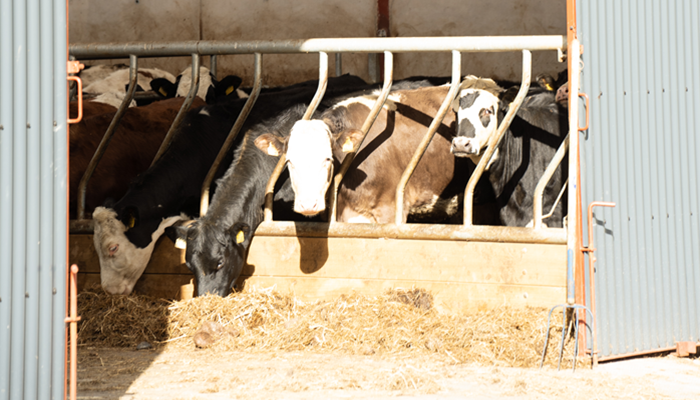
With the grazing season drawing to a close for weanlings, DairyBeef 500 Advisor, Fergal Maguire writes now is the time for dairy calf to beef farmers to put a winter-feeding plan in place.
While the quantity and quality of silage available on farms is largely determined at this stage, there is still plenty that farmers can do to ensure their weanlings achieve the required levels of performance over the winter months.
A winter-feeding plan should take account of three key factors:
- 1). The quantity of forage available on the farm,
- 2). Its nutritional quality
- 3). And the level of animal performance required.
The first winter – important for future performance
The first winter is often a period where dairy calf-to-beef farmers struggle to achieve the average daily gain (ADG) targets required to keep cattle on track for finishing. Poor performance during this period can have significant consequences for the overall profitability of the system.
Weanlings that fail to achieve adequate weight gains over the winter may require additional feeding later in life to reach their target finishing weights. This can result in longer finishing periods, increased feed costs or lighter carcasses at slaughter, all of which can have a negative impact on farm profitability.
The main objective during the first winter is to ensure that weanlings are well developed and in a position to make the most of high-quality grass when turned out the following spring.
Target levels of performance
The target liveweight gain for weanlings over their first winter is 0.6 kg/head/day. Over a typical 120-day housing period, this equates to a total liveweight gain of 72 kg.
There is little benefit in pushing weanlings to achieve significantly higher growth rates during their first winter, as cattle can make up some of the difference through compensatory growth when turned out to grass in spring.
However, this does not mean that winter performance can be neglected. Where silage quality is poor and concentrate supplementation is insufficient, weanlings can fall too far behind their target weights. In these situations, compensatory growth at grass may not be enough to make up the shortfall, resulting in cattle failing to reach their target finishing weights.
Silage quality determines meal requirements
Dry matter digestibility (DMD) is one of the most important factors influencing the feeding value of grass silage and, ultimately, the performance of growing cattle.
The better the silage quality, the less concentrates required to achieve the target winter growth rate of 0.6 kg/head/day. Conversely, poorer-quality silage must be supplemented with higher levels of concentrates to achieve the same level of performance.
Table 1 outlines the expected liveweight gains from feeding different qualities of grass silage alone, along with the level of concentrate supplementation required to achieve the target growth rate.
Table 1: Effect of silage quality on weanling performance and concentrate requirements
| Silage DMD | ADG on silage alone (kg/day) | Meal required (kg/day) | Meal cost over 120 days (€/head) |
| 75 | 0.50 | 0.5 | €22 |
| 70 | 0.35 | 1.5 | €65 |
| 65 | 0.20 | 2.0 | €86 |
| 60 | 0.00 | 3.0 | €130 |
| 55 | -0.20 | 3.5 | €151 |
| Meal costs calculated at 360/t over a 120-day housing period | |||
However, it is a false economy to try and cut costs by reducing meal fed if you have poorer quality silage. For example, weanlings fed 65 DMD silage alone would be expected to gain just 0.2 kg/day, or 24 kg over a 120-day winter. Supplementing with 2 kg of meal daily would increase average daily gain to 0.6 kg, resulting in 72 kg of liveweight gain over the winter.
At a liveweight value of €3.50/kg, the additional 48 kg gained is worth €168 per head. With meal costing €360/t, the total concentrate cost over the winter is €86.40, leaving a potential net benefit of €81.60 per animal, or €8,160 for 100 weanlings.
The nutritional value of concentrates
Along with silage quality, farmers need to consider the nutritional value of the concentrates being fed.
Growing weanlings typically require a diet containing 13–14% crude protein. Where silage crude protein is below 12%, a concentrate containing approximately 15–16% crude protein may be required to balance the overall diet. Where silage protein exceeds 12%, a 14% crude protein ration will generally be sufficient.
However, while protein is important, energy is the main driver of liveweight gain in growing cattle and should be a key consideration when selecting a ration.
Concentrates should have a medium to high energy content, typically 0.92–0.96 UFL/kg. Rations containing good-quality energy sources such as cereals and pulps, along with suitable protein sources such as soya bean meal, are well suited to growing weanlings.
Farmers should focus on the overall nutritional value of the ration rather than simply purchasing concentrates based on price or crude protein content.
Feeding strategies
Research has shown that front-loading concentrate supplementation during the first half of the winter housing period can help maximise compensatory growth following turnout to grass.
This approach involves feeding a higher level of concentrates during the early part of the winter before reducing supplementation as turnout approaches.
For example, where a farmer has 70 DMD silage and is targeting an average winter growth rate of 0.6 kg/day, concentrates could be offered at 2 kg/head/day for the first 60 days of housing before being reduced to 1 kg/head/day for the final 60 days.
This gives an average supplementation rate of 1.5 kg/head/day over the full housing period.
The aim is to achieve satisfactory overall winter performance while leaving cattle in a position to take full advantage of compensatory growth at grass the following spring.
The first winter plays a crucial role in determining whether dairy calf-to-beef cattle remain on track to meet their target finishing ages and carcass weights.
The objective is not to maximise winter liveweight gain at any cost, but to achieve the required level of performance as economically as possible.
By analysing silage, matching concentrate supplementation to forage quality and ensuring that housing conditions are suitable, farmers can control winter feeding costs while keeping cattle on target.
For more tips and advice, visit the DairyBeef 500 webpage here.