
Good sheep handling facilities – An investment that delivers
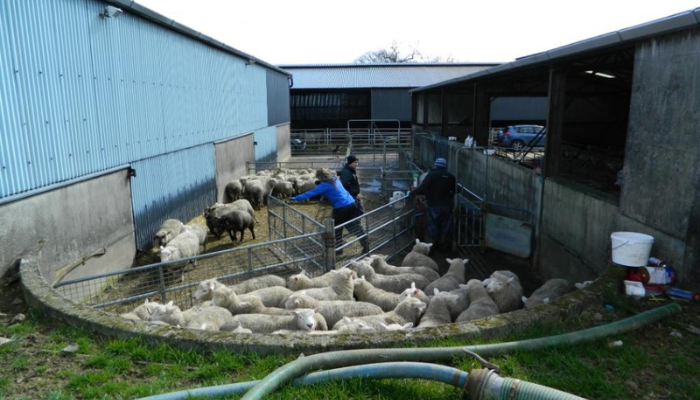
With summer management now in full swing, sheep handling is becoming a regular task on many farms. John Enda Flannelly, Teagasc Advisor, discusses the importance of good sheep handling facilities.
Weaning, dosing, vaccinating, foot care, weighing lambs, drafting lambs for sale and preparing ewes for breeding all require sheep to be gathered and handled efficiently. During this busy period, the quality of a farm’s handling facilities has a significant impact on the time required to complete these jobs, the safety of those carrying them out and the welfare of the flock.
Handling sheep is often viewed as a routine part of flock management, but poor facilities can make simple jobs unnecessarily difficult. Narrow gateways, unsuitable pens and poor sheep flow increase labour requirements and create frustration for both the farmer and the animals. In contrast, a well-designed handling unit allows sheep to move naturally, reducing stress while making routine management considerably easier.
Safety should be one of the main considerations when assessing existing handling facilities. Livestock handling remains a significant cause of farm accidents, with slips, falls and injuries occurring regularly. Farmers often place themselves at unnecessary risk by lifting sheep over gates, climbing fences or working in confined spaces that were never designed for livestock handling.
Modern handling facilities reduce these risks by allowing sheep to be controlled safely through forcing pens, races and drafting gates. Good lighting, secure gates, non-slip flooring and safe escape routes all contribute to a safer working environment. Well-designed systems also reduce the amount of physical handling required, lowering the risk of back and shoulder injuries that can result from repeatedly lifting or restraining sheep.
Labour efficiency is another important benefit. As flock sizes increase on many farms, handling facilities must be capable of processing larger numbers of sheep quickly. Jobs that once required several people can often be completed by one or two operators where sheep flow efficiently through the handling system. This is particularly valuable during the summer and autumn months when labour is often stretched between sheep, grassland management and other farm enterprises.
Time savings should also not be underestimated. Gathering sheep is only one part of the job. Delays often occur when animals are difficult to sort, treatments take longer than expected or sheep repeatedly turn back in poorly designed races. A well-planned handling system reduces these delays, allowing routine jobs to be completed efficiently while minimising disruption to grazing. Less time handling sheep also allows farmers to spend more time on grass management, fencing and other important tasks.
Good facilities also support better flock health. When sheep are easy to handle, routine health measures are more likely to be carried out on schedule. Dosing, vaccination programmes, foot inspections, body condition scoring and weighing become less labour-intensive, encouraging more regular monitoring of flock performance. Early identification of health issues allows prompt treatment, reducing production losses and improving overall flock performance.
Animal welfare is also enhanced through good facility design. Sheep naturally move more willingly through curved races with solid sides that minimise distractions. Calm handling reduces stress, lowers the risk of injury and improves the effectiveness of routine procedures. Reduced stress is particularly important for young lambs during weaning and drafting, when unnecessary pressure can affect both welfare and performance.
For farmers considering upgrading their existing facilities or thinking of installing new handling facilities, the Targeted Agricultural Modernisation Scheme (TAMS) provides an opportunity to reduce the cost of this investment. Grant aid is available at 60% for a range of eligible sheep handling equipment, including handling races, forcing pens, drafting systems and associated infrastructure. There is a range of mobile sheep handling equipment also eligible for this TAMS grant of 60%.
Farmers planning improvements should ensure facilities are designed to suit both current flock size and future expansion, while providing good sheep flow, safe operator access and flexibility for a range of management tasks.
Good sheep handling facilities should be viewed as a long-term investment rather than a cost. When designed correctly, they improve daily management, reduce physical strain and make routine flock tasks safer, quicker and more labour efficient for many years to come.