
30 April 2025
Grass a go
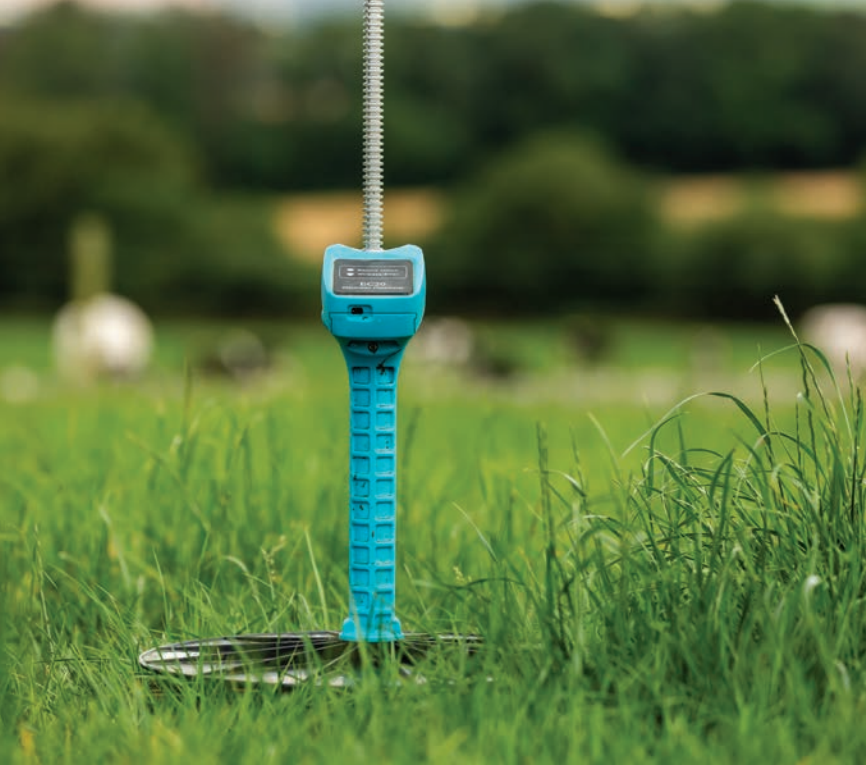
With higher grass growth rates beginning to leave surpluses, farmers are being encouraged to carefully monitor grass supplies.
Reported in the Grass10 weekly newsletter, grass growth rates – as recorded on farms measuring through PastureBase Ireland – have increased to 55kg DM/ha/day and 51kg DM/ha/day on dairy and drystock farms, respectively, this week.
Additionally, with warmer soil temperatures forecast at 12-13°C over the next week and moisture present in the ground, daily grass growth rates are predicted to reach their highest level thus far this year; predictions from the Teagasc Grassland Department point to growth rates of 60-79kg DM/ha/day over the next week.
Given this, the Grass10 team is reminding farmers to walk their farm every week to assess grass supply. When entering a cover on PastureBase Ireland, it has reminded farmers to make sure animal number and grass/supplement intakes are updated weekly.
To ensure quality grass is maintained ahead of stock, the Grass10 team is advising farmers to target a cover per livestock unit (LU) of between 170 and 220kg DM/LU over the coming weeks. Careful attention also needs to be given to the average farm cover (AFC). As of April 29, 9% of the dairy farms measuring grass through PastureBase Ireland had an AFC of above 900kg DM/ha. This, the Grass10 team reports, is too high and pre-grazing yield will be 1,700-1,800kg DM/ha. To rectify, paddocks must be removed on these farms this week for surplus bales.
Third grazing rotation, reseeding and fertiliser applications
The Grass10 team has also shared key tips on starting the third rotation, reseeding and oversowing clover, and fertiliser applications.
As growth rates are expected to rapidly increase this week, pre-grazing yield must be kept at 1,400kg DM/ha at all times. If paddocks at the start of the third rotation are approaching 1,400kg DM/ha, graze and remove paddocks from the second rotation as surplus bales.
The increase in grass growth rates may provide farmers with an opportunity to reseed – something which has been limited over the last two years due to poor weather. The Grass 10 team encourages farmers to identify their poorer-performing paddocks, or those with a high weed burden, through PastureBase Ireland for reseeding. Reseeding is important to support grass production, as it enables more grass to be grown, especially in spring, and the production of higher quality grass to support animal performance. Additionally, reseeded pastures are more responsive to nitrogen (N) applications and enable the incorporation of clover.
The Grass10 team has also offered tips on fertiliser applications, these include:
- Review N, phosphorus, potassium and sulphur (S) spread to date.
- 100kg N/ha (80 units/ac) chemical & organic is the target for dry farms with 212Kg N/ha allowance to May 1.
- 80kg N/ha (60 units/ac) is the May 1 target on heavy soils.
- For farmers with 237kg N/ha allowance, target 110kg N/ha (85 units/ac) spread
- Apply S now on grazing ground – 5kg/ha (2-3 units) per rotation up to a total of 20kg/ha/year by July 1.
More insights are available in the Grass10 Weekly Update below:
For more tips and advice from the Grass10 team, visit here.
More from Teagasc Daily: Nitrogen application strategies for grass-white clover swards
More from Teagasc Daily: Grazing grass-white clover swards – Dr. Áine Murray’s key tips
More from Teagasc Daily: Key tips for weed control on grazing and silage ground
More from Teagasc Daily: Make reseeding a priority
More from Teagasc Daily: Dr. Michael Egan’s tips on establishing grass/white clover swards