
Grass, body condition scoring and drying off – preparing for the 2027 dairy season
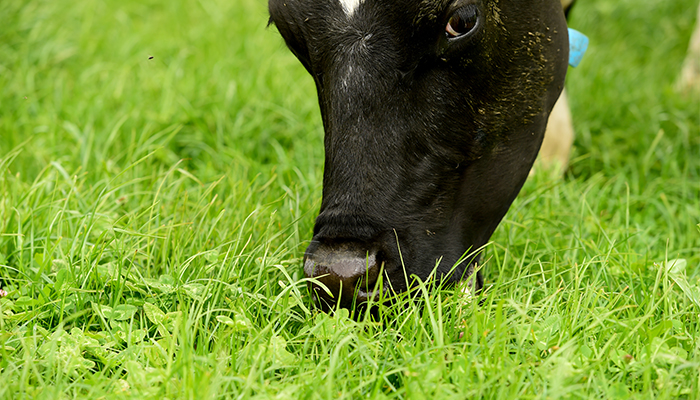
With the National Ploughing Championships finished for another year and the evenings beginning to close in, Dairy Advisor in the Teagasc Galway/Clare Advisory Region, Michael Donoghue reminds us that the decisions made over the next few weeks will have long lasting consequences for the profitability of your dairy business in 2027.
Grass
If you want to have grass for cows/stock on your farm next spring, there are roughly 30 days left to grow it. After a dry summer and recent rain, 2026 is finishing on a positive note from a grass perspective. However never forget that spring grass is twice as valuable to stock as autumn grass. So, take full advantage of the current conditions and clean out swards well.
The target for starting the last round of grazing will vary but a general date of 5th of October is a good target for most farms. Don’t be tempted to go back in and graze fields again. Grass grown in October will be the grass that will provide that vast bulk of the grass available until mid to late March. Indeed, about 70% of the farm should be closed by the 1St of November to ensure enough grass for the spring.
When the cows finally finish grazing may well be determined by wet weather and that’s fine. For those that will keep grazing into November, continue to walk to the weekly and finish grazing when Average Farm Cover (AFC) hits about 750 Kg/ Ha.
Body condition score
The general rules for dry cow periods are 8 weeks for cows and 12 weeks for first lactation cows.
So, for a first lactation cow calving in the first week of February, she will be due to be dried off in late October. Indeed, if that same cow needed a bit extra TLC (lame, thin or expecting twins, etc.), she would need an extra two to four weeks dry. Given this, over the next two or three weeks a milk recording should be organised. From this, cows that may be suitable for selective dry cow therapy can be selected.
Drying off cows
Drying off cows is often viewed as a tedious and time-consuming job, but it is probably one of the most important jobs of the dairy year. Getting it right offers the opportunity to potentially cure cows with mastitis and permanently lower the SCC. Get it wrong, however, and quarters can be lost or cows get very sick.
The critical thing when drying off cows is hygiene and not rushing. Cows should be clipped and separated before drying off. Small batches, 10 to 20 depending on help, should be done in a day. Wear gloves and disinfect the teat end well before inserting dry cow tube/sealer. Ideally cows should go out to a dry field for a week. If this is not possible, cubicles need to be kept very clean while the cows soak up.
Personal time
2026 is finishing on a positive, in terms of weather and hopefully dairy markets beginning to recover. However, the spring was very wet, and costs have been high during the year. So, try to take the next three to four months a bit easier, get away if possible and definitely take six to eight weeks without milking to refresh both body and mind. February will come around quickly, and it will be all hands to the pump again.
Above are three key areas that will affect the profitability of the dairy business in 2027. Of course, there are more that will need to be addressed but get the above three correct and 2027 will start off a lot easier.
Michael Donoghue is a Dairy Advisory working in the Teagasc Galway/Clare Advisory region.