
Grass growth recovering, but supplementary feeding ongoing
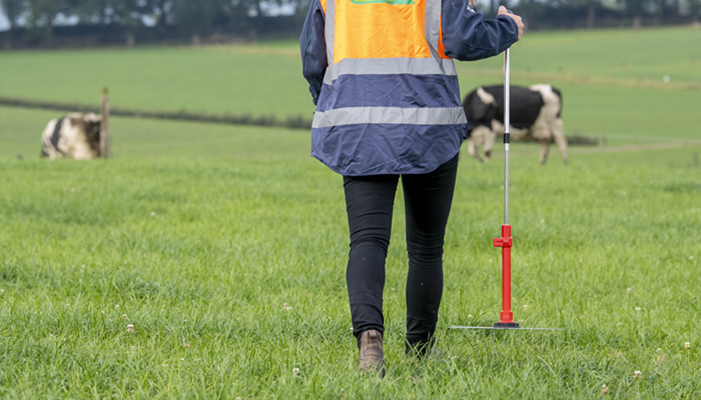
A meeting of the National Fodder and Food Security Committee took place in Oak Park, Carlow, today, 7 September, to review the continuing impact of the 2026 drought on grass production and fodder supplies, and to consider the actions that can be taken now to support farmers through the autumn and into next spring.
The meeting, chaired by Mike Magan, heard an updated assessment from Teagasc on grass growth, fodder availability and the ongoing advisory activities response to the drought, followed by contributions from farm organisations, industry, advisors, financial institutions and the Department of Agriculture, Food and the Marine.
“Events have adjusted and changed since our last meeting,” Mike Magan, Chairperson of the Committee, said in his opening remarks.
“This forum is useful to meet to assess the recovery in grass growth on farms. The message to our fellow farmers is that we are here to help them, and it’s important that we help each other across the farming community. Maximising the feed production on farm for the remainder of the growing season is now a critical issue for all farmers.”
Grass growth recovery
Teagasc data presented to the meeting showed that grass growth has recovered significantly over the past 10 days following recent rainfall. However, cumulative grass production for 2026 remains behind normal levels.
PastureBase Ireland farms have grown an average of 9,219 kg DM/ha year-to-date, which is 412 kg DM/ha below the five-year average, 1,148 kg below 2025 and 1,072 kg below the 10-year average. The data highlights that there is no room for complacency, and that individual farms should continue to assess their fodder stocks as we approach the winter housing period.
The meeting heard that the recovery is not uniform; the South-East remains the area of greatest concern, with many farms having experienced considerably larger grass-production deficits and are continuing to use significant quantities of supplementary feed.
Fodder budgets
Current PastureBase Ireland fodder budgets from 595 farms indicate an average of 4.3 months of conserved feed available, with Leinster averaging 4.2 months compared with 4.5 months in Munster and Connacht/Ulster. The Carlow-Kilkenny-Laois-Kildare area recorded the lowest regional figure in the dataset at 4.0 months. Of course, average figure always mask the range across individual farms, which again highlights the need for individual farms to review their own situation and act now as needed.
Recent feeding information also illustrates the continuing pressure. Across 1,815 farms reporting on 4 September, supplementary feeds accounted for approximately 44% of the diet, with higher levels of silage feeding evident on many farms in the drought-affected eastern and south-eastern counties.
The presentation from today’s meeting is available to view here (PDF).