
Grass quality and reseeding focus on Teagasc/Lakeland Dairies demo farms
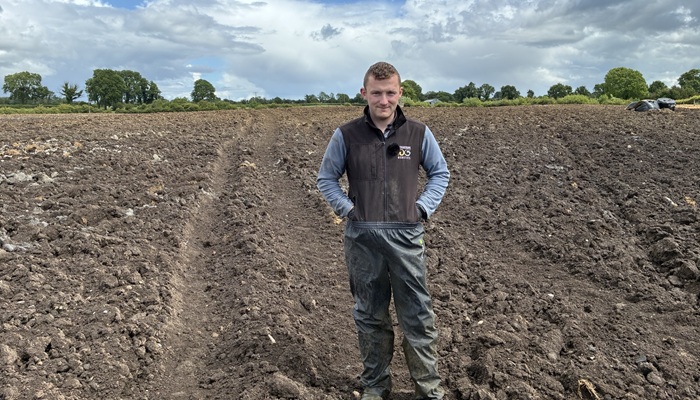
Advisor on the Teagasc / Lakeland Dairies joint programme, Sean Callan visits Cian Jobe in Co. Longford to see how his breeding and reseeding plans are progressing. He also provides an update on milk and grassland performance from the monitor farms.
Farmer update – Cian Jobe
Cian is happy with overall herd performance, with the cows currently producing 2.08 kg MS per cow, while averaging 2.13 kg MS throughout June. Maintaining this level of production over the summer is a key priority, with good grassland management central to achieving this.
Regular farm walks (target every 4-5 days), allow Cian to closely monitor grass growth and ensure supply matches herd demand. Where growth exceeds demand, surplus paddocks are removed promptly to maintain grass quality. Farming on a fully leased block, Cian knows efficiency is critical, with high-quality grass at the centre of the system.
Reseeding
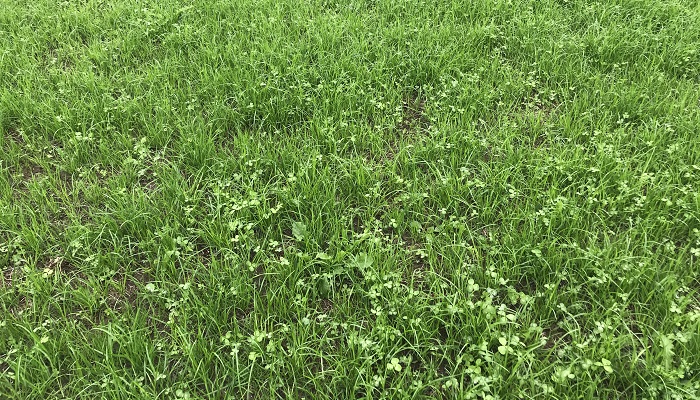
Reseeding is a major focus this year, with 16% of the farm already reseeded and a further 24% planned before year-end. A red clover mix is being used on silage ground, while an intensive perennial ryegrass and clover mix has been sown on grazing paddocks. Regular grass walks have also helped identify underperforming and less palatable paddocks, allowing Cian to prioritise these areas for reseeding.
Breeding
Breeding has also been a major focus this season, with Cian targeting a 90% six-week calving rate. Although breeding is still ongoing, having started on May 7, he is pleased with progress to date, having achieved an 89% submission rate within the first 21 days.
He knows that achieving a high submission rate early in the breeding season is key to improving next year’s six-week calving performance.
Any cows that were more than 45 days calved and had not shown signs of heat were scanned and placed on the appropriate CIDR programme. High-DBI, short-gestation stock bulls are now running with the herd to serve repeat breeders and complete the breeding season.
For more on Cian Jobe’s story, listen into a recent episode of the Dairy Edge podcast below:
Milk performance update
Now well into the mid-season period, the demo farms are focused on minimising the decline in milk solids production, targeting a reduction of less than 6% in kg MS per month.
Across the group, production declined from 2.24 kg MS to 2.12 kg MS per cow during June, representing a reduction of just over 5% and remaining within target.
Alongside maintaining production, the farms are aiming for a steady increase in both milk fat and protein percentages throughout the remainder of the year. During June, average protein increased from 3.64% to 3.67%, while butterfat increased from 4.31% to 4.36%. These results are particularly impressive given the challenging weather conditions experienced during the month, which resulted in variable grass growth and grass quality across the farms.
Table 1: Milk production on the Teagasc/Lakeland demo farms (week starting June 29, 2026)
| Farmer | Location | Litres/cow | Fat % | Protein % | Kg MS/cow | SCC ‘000 | Meal kg |
| Julie Mullarkey | Monaghan | 26.5 | 4.14 | 3.54 | 2.10 | 89 | 3 |
| Cian Jobe | Longford | 24.8 | 4.54 | 3.59 | 2.08 | 82 | 3 |
| Killian Brennan | Cavan | 23.6 | 4.33 | 3.84 | 1.96 | 80 | 3 |
| Sean Murtagh | Westmeath | 27.0 | 4.11 | 3.67 | 2.16 | 120 | 2 |
| Eoin Corrigan | Meath | 25.0 | 4.67 | 3.81 | 2.20 | 191 | 2.5 |
| Andrew Cluskey | Louth | 28.3 | 4.37 | 3.58 | 2.21 | 130 | 4 |
| Average | 25.9 | 4.36 | 3.67 | 2.12 | 115 | 2.83 | |
Grass performance update
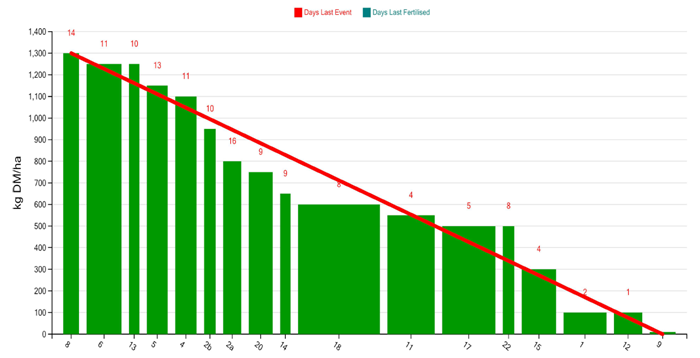
June proved to be a mixed month for grass growth, with the demo farmers facing a range of challenges as weather conditions fluctuated. During periods of high growth, surplus paddocks were removed as bales to maintain pre-grazing yields within the target range of 1,300–1,400 kg DM/ha.
At the same time, concentrate feeding was reduced to maximise milk solids production from grazed grass.
The group is currently feeding an average of just under 3 kg of meal per cow per day, with the aim of reducing this further if grass growth remains strong. In contrast, some farms experienced significant grass deficits later in the month and introduced high-quality silage at the feed barrier to maintain adequate dry matter intake for the milking herd until grass supply recovered.
Despite the variable growing conditions, the group remains on target for grass covers, with an average farm cover of 661 kg DM/ha (target 650 kg DM/ha) and an average cover per livestock unit of 176 kg DM/LU, comfortably within the target range of 160–190 kg DM/LU.
Table 2: Grassland performance on the Teagasc/Lakeland Demo farms (week starting June 29, 2026)
| Farmer | Location | Average farm cover | Cover/LU | Pre-grazing yield | Demand/ha | Growth rate/ha |
| Julie Mullarkey | Monaghan | 943 | 165 | 1,807 | 103 | 95 |
| Cian Jobe | Longford | 609 | 152 | 1,300 | 68 | 100 |
| Killian Brennan | Cavan | 669 | 201 | 1,440 | 64 | 103 |
| Sean Murtagh | Westmeath | 470 | 181 | 1,300 | 42 | 92 |
| Eoin Corrigan | Meath | 622 | 168 | 1,700 | 63 | 66 |
| Andrew Cluskey | Louth | 650 | 187 | 1,400 | 58 | 65 |
| Average | 661 | 176 | 1,491 | 66 | 87 |