
Grazing focus: Keeping enough ‘spark’ in your electric fence
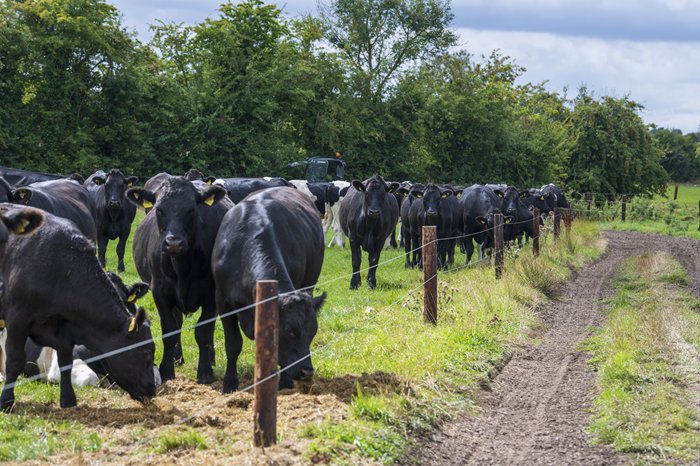
With the grazing season now in full swing, Teagasc Beef Specialist, Catherine Egan shares some essential reading and some areas to troubleshoot if your fencer isn’t working as it should.
On many farms, a mains fencer is used on the home block and perhaps battery or solar options are used on outblocks if there is no electricity available. When selecting a fencer, also choose one with a capacity greater than the area needed to be fenced to ensure that adequate power is supplied. There are many benefits of each fencer type, as outlined in table 1 below.
Table 1: Installation, use and key benefits with mains, battery and solar fences
| Mains | Battery | Solar | |
| Installation | Easy-medium | Simple | Medium |
| Use |
|
|
|
| Key benefits |
|
|
|
| Caution |
|
|
|
What size fencer?
Fencers are mainly advertised in terms of output joules and stored joules. Don’t get these confused and be aware of which is on the charger. A charger may advertise 30 joules but only refer to the stored joules (a fence charger will always store more joules than it outputs). Stored joules represent the amount of power stored inside your charger. This is ran through an output transformer, which converts the power to a higher voltage. Some of the power is lost during this conversion.
Output joules refer to the actual output of the charger – the power available to shock the animal. The size of fencer depends on the area to be fenced. Always choose a fencer to match the area. It is better to choose a fencer greater than your requirement rather than less than recommended and expect it to cover more area than advertised.
Table 2: A guide to mains fencer output and area covered
| Output joule | Distance (km) | Area (acres) | Earthing rods |
| 0.12 | 1.5 | 4 | 1 |
| 1 | 1.6 | 10 | 1 |
| 1.10 | 10 | 30 | 2 |
| 2.5 | 11 | 50 | 1-2 |
| 3.3 | 15 | 50 | 3 |
| 4.9 | 22 | 75 | 4 |
| 6.1 | 32 | 110 | 4 |
| 7 | 32 | 100 | 3 |
| 15 | 72 | 200 | 5 |
| 33 | 145 | 300 | 6 |
Note: This is a guide. Always read and follow the manufacturer’s guidelines
Battery fencers
Battery fencers are used for short or temporary fences where portability and flexibility are the main considerations. A dry battery is used in many cases. While a wet 12V Battery allows rechargeable batteries to be used and facilitates a more powerful battery powered fencer.
Table 3: A guide to battery fencer output and area covered
| Output joule | Distance (km) | Area (acres) | Earthing rods | Recommended use |
| 0.2 | 1.5 | 4 | 1 | Strip grazing |
| 0.35 | 4 | 12 | 1 | Small/medium area |
| 0.43 | 5 | 14 | 1 | Medium area / strip grazing |
| 1 | 8 | 25 | 2 | Small/medium area |
| 2 | 11 | 40 | 1-2 | Medium/large area |
Note: This is a guide. Always read and follow manufacturer’s guidelines
For further insights, view the Teagasc Beef Farm Infrastructure Book here (PDF).
Related reading: Growing more grass with the wire: 4 steps for beef farmers