
Grazing management to achieve dairy-beef cattle growth targets
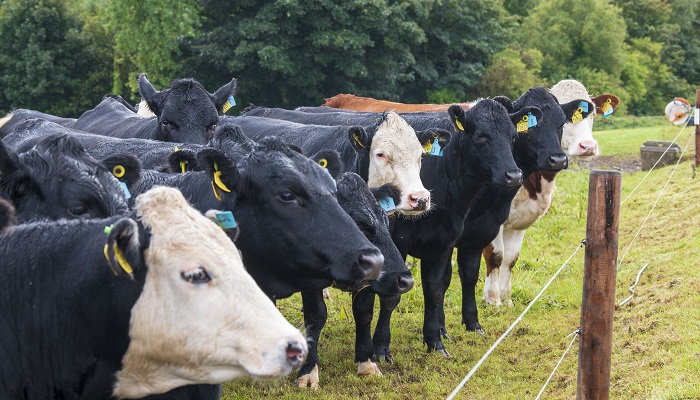
Improving grassland management is one of the most cost-effective tools to improve the profitability and viability of dairy-beef production, Dr Ellen Fitzpatrick and Dr Nicky Byrne tells us more.
Optimising grassland management is a vital strategy to achieve the desired levels of animal performance within dairy-beef systems.
Nationally, there are a number of targets to reach in terms of lessening the environmental footprint of beef production (to reduce finishing age by three months) while adhering to factory carcass specifications from a predominately pasture-based diet.
Targets
Thus, a number of targets must be met at pasture for dairy-beef steers and heifers in terms of animal growth. During the first grazing season, the target average daily gain (ADG) is 0.7 to 0.8 kg, during which calves should be offered high quality pasture.
The target ADG for dairy-beef animals during the second grazing season is 0.9 kg from a grass-only diet.
Farmers should aim to reach these targets at pasture, to maximise animal growth potential in a cost-effective manner. Combining high genetic merit animals, with legume-rich swards along with improved grazing management practices can create more efficient grass-based dairy-beef systems that will ultimately be more profitable and will have a reduced environmental impact.
Grazing management for dairy-beef systems
Dairy-beef systems with good grassland management are more labour and cost efficient. Good infrastructure (roads and paddocks) maximises grass utilisation.
Each grazing group requires 10-12 paddocks that can each support a 48-hour grazing allocation. This ensures that animal intake is not restricted and offers flexibility in terms of grazing management during poor weather conditions and splitting paddocks for calves. An inadequate number of paddocks leads to increased residency time which reduces grass utilisation and dry matter (DM) production.
Clover can also play an important role in efficient dairy-beef systems. Therefore, soil testing should be carried out regularly to ensure optimum soil fertility to maximise herbage production, response to nitrogen (N) fertiliser and improve the persistence of perennial ryegrass and clover. A minimum of 20 grass measurements must be carried out each year.
During the grazing season, animals should be monitored regularly to ensure animal performance is not hindered due to an internal parasite infection (weight recording and faecal egg counts).
Post-weaning, calves should be turned out to pasture, where, for the first three weeks, they are offered 1-1.5 kg of concentrate/day, along with full time access to straw, to ease the transition to a grass-based diet.
Calves should be offered high quality pasture, with a target pre-grazing herbage mass of 1,200 kg DM/ha initially, which can be increased up to 1,400-1,600 kg DM/ha when they acclimatise to grazing.
Concentrate is reintroduced in the autumn, to complement the decline in grass nutritive value. From mid-September, to housing, 1.5 kg of concentrate/day per animal is offered to maintain energy intake and to extend the grazing season.
Over the first winter period, a moderate growth rate of 0.6-0.7 kg/day is desired to maximise the compensatory growth potential of animals when returned to high quality pasture for a second grazing season.
Typically, dairy-beef heifers and steers are turned out to pasture from mid-February to mid-March with an average farm cover of 600-700 kg DM/ha.
It is vital that dairy-beef farmers aggressively close area for first cut silage, targeting to close 45-55% of the farm area, to inflate grass demand with expected grass growth and to make sufficient high quality silage.
During the mid-season period, pre-grazing cover needs to be maintained at 1,500-1,600 kg DM/ha and the target post-grazing sward height is ~5 cm to maintain sward quality and animal performance for calves and cattle. An 18 to 21 day rotation should be implemented and any surplus herbage should be removed as bales.
Planning for spring begins during the previous autumn. In order to start building cover, demand should be reduced and rotation length should be extended by 1.5 days/week from August. The target closing average farm cover is 450-550 kg DM/ha on the 1st of December.
Improving grassland management is one of the most cost-effective tools to improve the profitability and viability of dairy-beef production.
Johnstown Castle dairy calf to beef study
A recent study was conducted at Teagasc, Johnstown Castle, to determine the interaction between pasture type and dairy-beef heifer physical performance.
In 2021 and 2022, 105 and 108 beef × dairy heifer calves, respectively, were purchased at approximately 20 weeks of age and were assigned to one of three pasture treatments: 1) PRG-only, receiving 150 kg N/ha, 2) CLOVER (red and white clover), receiving 75 kg N/ha, and 3) MSS (PRG, red and white clover, plantain, and chicory) swards receiving 75 kg N/ha.
When a post-grazing sward height of 5 cm was maintained across the three pasture treatments, heifers consuming the MSS and CLOVER herbage (with a sward clover content 21 and 22%, respectively), had greater lifetime growth compared with the PRG heifers (Table 1). During the 1st grazing season, calves consuming a MSS diet grew an additional 0.17 kg per day compared with the CLOVER and PRG diet.
While during the 2nd grazing season, the yearling animals performed best on a grass-clover diet. Dairy-beef heifers consuming PRG, CLOVER and MSS achieved carcass weights of 243, 250, and 249 kg at 19.6, 19.2, and 19.2 months of age, respectively.
Table 1: Effect of pasture treatment on live weight gain of dairy-beef heifers from pasture, managed on PRG-only swards (PRG), PRG plus red and white clover swards (CLOVER), and multispecies swards (MSS)
| ADG Period | Target | PRG | CLOVER | MSS |
| First grazing season, kg | 0.7-0.8 | 0.61 | 0.62 | 0.79 |
| First winter, kg | 0.6-0.7 | 0.65 | 0.65 | 0.68 |
| Second grazing season, kg | 0.9 | 0.81 | 0.81 | 0.87 |
| Lifetime, kg | >0.7 | 0.74 | 0.74 | 0.79 |
Conclusion
When the correct grassland management strategies are implemented, dairy beef animals can achieve the desired level of animal performance from a grass-only diet. The incorporation of legumes and herbs into well managed swards can also improve the level of animal gain achieved from a grass-based dairy-beef production system, under a reduced chemical N regime. However, a >20% sward clover content must be maintained to achieve an animal and sward production benefit.
The above was prepared by Dr Ellen Fitzpatrick and Dr. Nicky Byrne and first published in the Moorepark 2025 Open Day Book (PDF).