
03 April 2025
Growing heifers more on grass
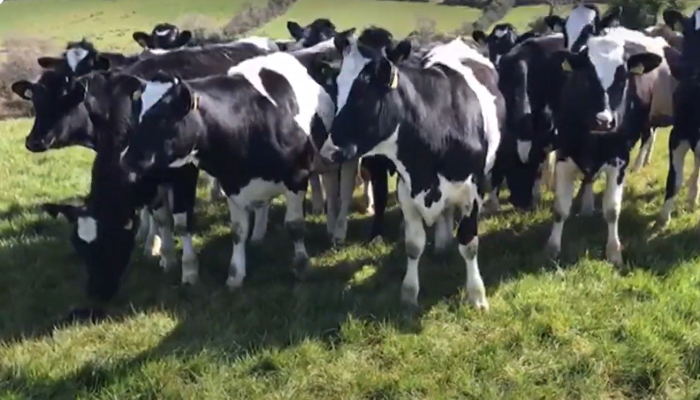
Producing replacement heifers on a dairy farm is a costly exercise, but one of the best ways of making sure they get to the parlour is by hitting target weights – whether that be at weaning, housing for the first winter or the start of the breeding season.
As part of a recent Grass10 TV video from the Teagasc Grass10 Campaign, Advisor on the Teagasc/Dairygold Joint Programme, Nora O’Donovan visited Joe Morrissey’s Rostellan Farm in Co. Cork, to touch base on his grazing and breeding plan for heifers.
The future of his dairy herd, the replacement heifers on Joe’s farm were turned out to grass in mid-March, allowing for a six week window between turnout and the start of breeding. With an average EBI of €250, these heifers will be bred using a synchronisation programme to fixed time AI in late April.
More from Teagasc Daily: Ensuring the best performance from synchronisation programmes
After being on a winter diet of silage and 1.5kg of ration, excellent quality spring grass plays a key role in ensuring Joe’s heifers perform and are on a rising plane of nutrition ahead of the breeding season. Managed on an out block, divided into eight separate grazing conditions, these heifers are grazed under a rotational basis, allowing for weight gains in excess of 1kg/head/day to be achieved in the run into breeding.
Along with being the cheapest source of feed available, the nutritional benefits of spring grass will allow Joe’s heifers to reach their target weight at breeding – 345kg based on a mature cow weight of 575kg.
For more insights from Nora O’Donovan and Joe Morrissey, watch the full video below:
To find out more about the Grass10 or Teagasc/Dairygold Joint Programme, visit the below links:
Teagasc/Dairygold Joint Programme