
19 October 2023
Growing Organics: Establishing an organic suckler enterprise in Kerry
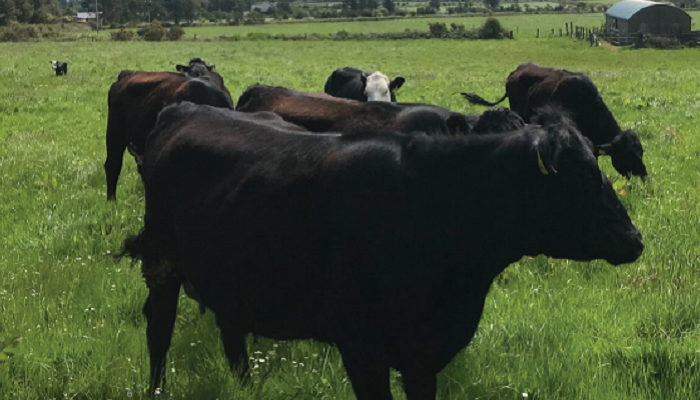
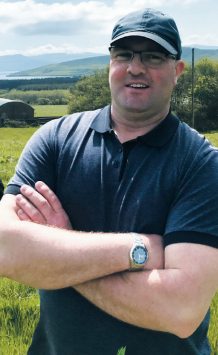
Thomas and Noreen Kavanagh joined the Growing Organics Monitor Farm Programme in 2023. Their participation will run for five years and is aimed at promoting the adoption of best practices at farm level to increase the future viability and sustainability of the Irish Organic sector.
The Kavanaghs farm in the historic townland of Ballymoreigh Upper. They have three children, Louise, Cliona and Ronan. Both Thomas and Noreen have full time jobs off farm. Thomas and Noreen joined the Organic Scheme in March 2022, principally due to frustration at large inflation in the prices of fertiliser, fuel and feed.
In addition, the production of cattle in an organic capacity appealed to them. The farm has recently converted from store beef production to a suckling system. The Kavanaghs both feel that this system can work well within the organic system, using grass and the excellent housing present to drive a high level of sustainable production.
Farm details and land use
The holding is made up of one block of land, all of which is owned. The total area of the farm is 78ha, 34.3ha of which is under grassland, with the remaining 42ha being under forestry.
Soil type in this area is a good Brown Podzol type on a bedrock of sandstone gravel. The farm is south facing and sloped with a range in altitude from 29m up to a peak of 270m. A decision was made years ago to take 46ha of lower ground out and plant Ash, Sycamore and Sitka Spruce in this block. Thinning and routine forestry management have developed into a successful side enterprise of dried log supply to local households.
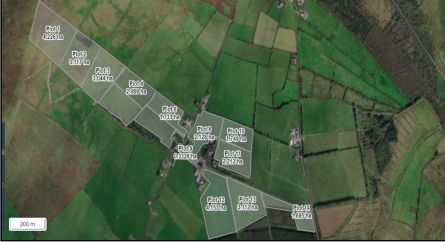
Figure 1: Farm map
Prior to switching to organic suckling beef Thomas and Noreen purchased 60 weaned Aberdeen Angus / Hereford heifer calves at approximately three months of age. They were normally retained until 18-20 months of age and sold as forward stores at weights of approximately 400kg. Beef output per LU in 2022 was 343kg, whilst output per hectare was 266kg.
Given the layout of the land in one block and the suitable infrastructure, a move to suckling took place in 2023. 24 Aberdeen Angus cows calved down in 2023 with a plan to have 27 calf in 2024. Calves born in the spring of 2023 will be held until March 2024. Thomas feels that there will be an excellent market for these type of organically-certified cattle for both breeding and fattening for slaughter in the future. Thomas is also a participant in the Suckler Cow Efficiency Programme.
Calf management
Calving took place from mid-April to mid-July. The in-calf heifers were housed in a purpose-built shed with adequate straw bedding and ad-lib access to good-quality baled silage. Most were calved outdoors in a sheltered stone wall surrounded paddock, which allowed for close observation. After a number of days, each mother and calf were amalgamated with the larger group. Rotational grazing was operated with creep feed offered to young calves throughout the summer.
Winter feed management
Silage is predominantly cut from the lower plots on the farm, with cows and calves able to graze higher plots for long periods during dry and wet weather. Land is generally fertile with no major element deficiencies. Given high rainfall, regular liming is required. 40t of lime was spread in September 2023.
Farm yard manure was retained on a suitable concrete base until mid-September 2023. Silage was cut on May 26th and on July 8th 2023. A total of 234 silage bales were made in 2023 with a further 35 bales of hay available if necessary.
Clover content of the swards is variable and this will be looked at as a means of growing sufficient silage. The winter housing period is very weather dependent in west Kerry and long winters are planned for.
Topping is carried to improve grassland performance and to control weeds. Thomas is a firm believer in the use of regular topping to assist with grass quality and palatability. Approximately 10 tonnes of organic feed is purchased annually from Reg Roeper. Thomas feeds this liberally to ensure cattle perform suitably.
Where and when are nutrients spread?
Management of organic farms should ensure regular inputs of manures and a level of microbial and earthworm activity sufficient to breakdown organic matter and ensure continuous and efficient nutrient cycling. Keeping soils at a pH that facilitates organic matter breakdown and nutrient recycling is essential for successful organic farming. Organic manure nutrient content can vary widely depending on the source of nutrients and it is advisable to have the nutrient content of manures checked through laboratory analysis.
On June 17th, cattle slurry was applied at a rate of 2,700 gallons per acre to Plots 10, 11, 12 and 13. Slurry was applied to Plot 12 at a rate of 1,750 gallons per acre in September also. Supersoil was also applied on a number of plots.
In the autumn, all stored farm yard manure is applied to suitable fields – primarily the silage ground. The farmyard manure is stored in a clamp. Because of space limitations, regular turning is not possible. Nevertheless it handled well and was spread on plots in early September. It will contribute to the organic matter and nutrient content of the soil over the next few months as it is broken down.
Calf performance 2023
Calf performance is regularly assessed. Under organic rules, a derogation for disbudding and dehorning must be sought in advance of treatment. Similarly the use of medicines must be addressed in advance of joining the Organic Scheme by means of a Veterinary Health Plan, which must be prepared in conjunction with you vet.
The plan outlines anticipated herd health needs for the year and advises on the use of medications. So far in 2023, the only medication used was a veterinary sanctioned Multi Mineral injection based on soil test results showing certain mineral deficiencies.
Calves were weighed on August 26th 2023. All calves had put on over one kilogram per day since birth. Average daily gain from all calves since birth was 1.29/head/day. Teagasc targets from male suckled calves from beef x dairy cross cows 1.15-1.30kg/day. The target for females is 1.05kg average daily gain. Given that this is a first year suckler conversion with all calving from heifers, the performance on this farm has been very satisfactory.
Livestock health on the farm
According to Thomas, the switch to organics has not lead to any adverse effects with regard to herd health. Faecal analyses will be taken to assess the level and identify the type of internal parasites – if present. If faecal test results show that animals need to be treated, an appropriate and permitted product will be administered and the extended longer withdrawal period is observed.
Future plans
Knowing the market and offering a type of animal for that market is key. Here Thomas has clearly identified the growing number of organic farmers which will be looking for lighter stores in springtime.
Given the breed quality of heifers produced on this farm, there may also a possible suckler cow replacement market available to Thomas. Farm stocking rate in 2022 was 0.78LU/ha – with the conversion to suckling farming in 2023, it currently stands at 0.88LU/ha. Thomas aims to calf down 28 sucklers in 2024, potentially allowing for a stocking rate of over 1LU/ha. Given that excellent quality housing is in place on the farm, the key requirement will be to maximise grass grown and silage conserved with FYM / slurry use and incorporation of clover.
This article was adapted from the booklet for Thomas Kavanagh’s Growing Organics farm walk held in Dingle, Co. Kerry. To access the full publication, click here. For more information on the Growing Organics Programme, visit its webpage.