
27 December 2022
Growing Wild – Holly Berries and Scot’s Pine
Catherine Keena, Teagasc Countryside Management Specialist takes a closer look at some of our native Irish biodiversity to look out for in the countryside.
Holly Berries
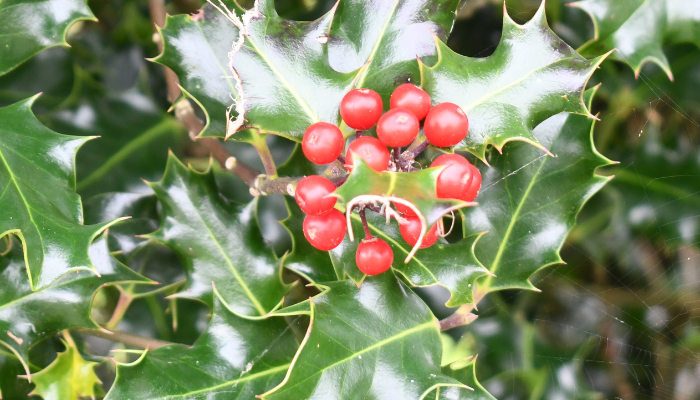
Look out for bright red holly berries on female trees. Holly is the only native tree species where male and female flowers are carried on separate plants. While holly drops its leaves particularly in summer, it is one of only three evergreen native trees – the others being scot’s pine and juniper. The dense prickly, leathery foliage provides good roost sites for birds in winter. And now that we are at the 8 December, we can use holly as the most traditional Christmas decoration, as our ancestors did. Make sure to leave some berries for the birds such as song thrush and mistle thrush.
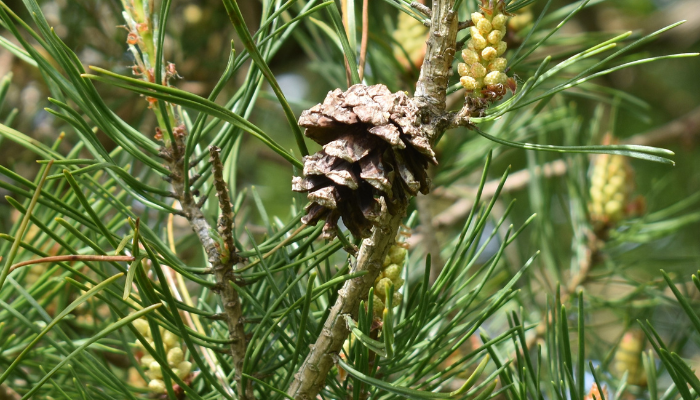
Scots Pine
Look out for scot’s pine cones to make beautiful, free Christmas decorations – either natural or painted. The scales on the outer face of the cone do not have the sharp spine present on lodgepole pine. Scot’s pine is a native Irish conifer, growing up to 30 metres with a regular conical outline when young but older trees have a bare trunk surmounted by a flat crown of foliage. Leaves are pale bluish green. The rugged bark of the upper part of older trunks is orange red in colour. It provides nest and roost sites for birds and red squirrels love the seeds in the pine cones.
See previous Growing Wild articles below:
- Growing Wild – Rose Hips and Flowering Ivy
- Growing Wild – Yarrow and Herb Robert
- Growing Wild – Elderberries and Blackberries
- Growing Wild – Haws and Spindle
- Growing wild – Guelder Rose and Sloes
- Growing wild – Purple loosestrife and Lord and Ladies
- Growing Wild – willowherb and water mint
- Growing Wild – dandelion and greater stitchwort
- Growing Wild – willow, primrose and lady’s smock
- Growing Wild – whitethorn and cow parsley
- Growing Wild – bluebells and guelder rose
- Growing wild – Honeysuckle and Foxglove
- Growing Wild – Elder and Ragged Robin
- Growing wild – dog rose and meadowsweet
- Growing wild – Privet and Lady’s Bedstraw
- Growing Wild – Bird’s foot trefoil and Knapweed
Keep an eye on Teagasc Daily for another Growing Wild later in the month. Learn more from Teagasc about Biodiversity & Countryside