
06 May 2024
Growing Wild: Charlock and Lady’s Smock
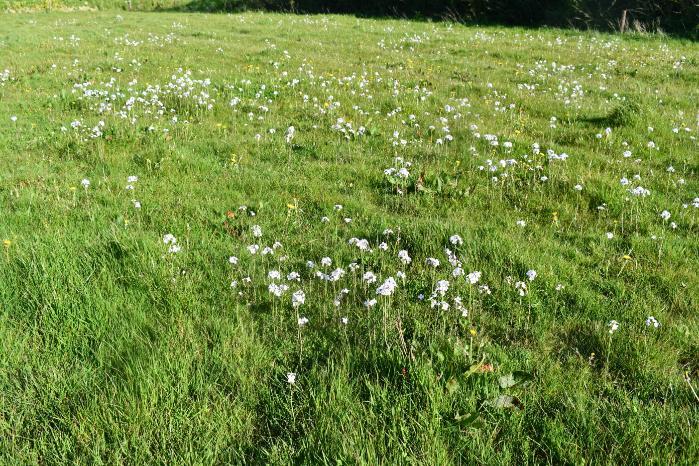
Catherine Keena, Teagasc Countryside Management Specialist, takes a closer look at some of our native Irish biodiversity, focusing this time on Charlock and Lady’s Smock.
Charlock
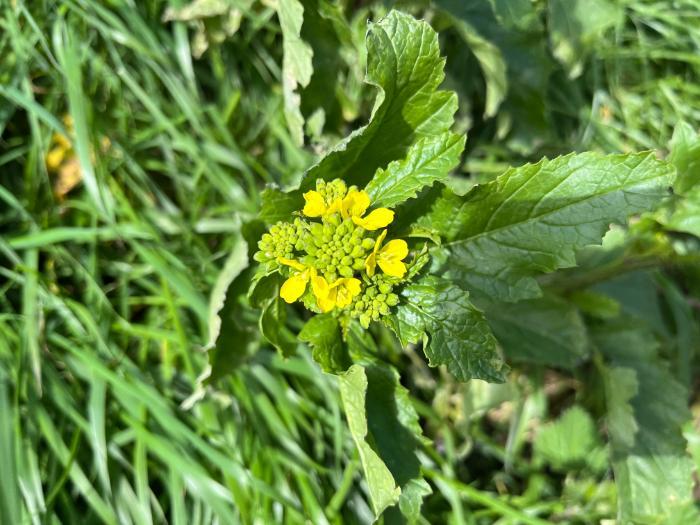
Look out for charlock growing on recently disturbed ground on roadsides or new house sites where the seed gets a chance to germinate, as it is an annual plant. Charlock is an annual weed of tillage crops. It is similar to brassicas like oilseed rape with bright yellow flowers with four petals. Nectar is easily accessible by insects. Branched stems grow up to a half a metre with variable lobed leaves, the upper ones stalkless. Its name as Ghaeilge as praiseach bhuí appears in placenames such as Cloonprask in Galway and Trafrask in Cork. Valued as a food during the famine, charlock is part of our native Irish biodiversity.
Lady’s Smock
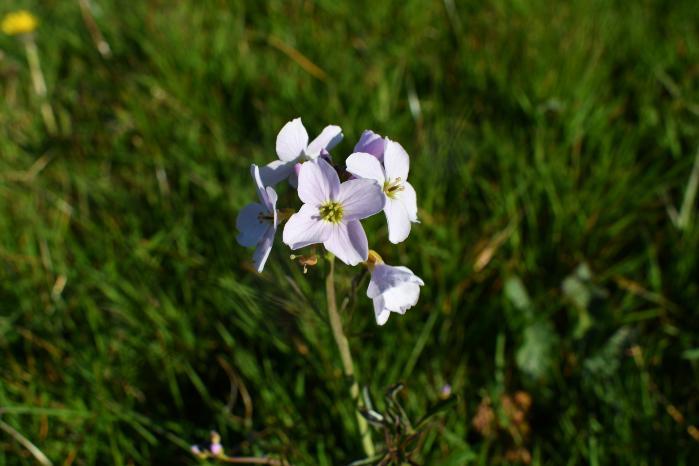
Look out for Lady’s smock also called cuckooflower and cuckoo spit, with four petalled pale lilac flowers in a spike. It is one of the few flowers that can persist in ryegrass fields as it tolerates moderately fertile soil, and flowers before grass growth takes off. It grows in wetter areas. It is the main larval foodplant and source of nectar for orange-tip butterflies. The male is distinctively coloured white with bright orange tips on forewings. The female is less conspicuous with black tips on forewings. Lady’s smock and orange-tip butterflies are a good example of plants and invertebrates co-existing for the past ten thousand years – part of our native Irish biodiversity.
Previous Growing Wild articles
- Growing Wild – Cleavers and Herb Robert
- Growing Wild – Tutsan and Woodrushes
- Growing Wild – Shamrock and Primrose
- Growing Wild – Blackthorn flowers and whitethorn leaves
- Growing Wild – haws and spindle fruit
- Growing Wild – Crab Apples and Elderberries
- Growing Wild – Ivy flowers and Common knapweed
- Growing Wild – Meadowsweet, Ox-eye Daisy and Selfheal
- Growing Wild – Marsh marigold and Ribwort plantain
- Growing Wild – Dandelions and cowslips
- Growing Wild – Lesser Celandine and Ivy berries
- Growing Wild – Winter Heliotrope and frogspawn
- Growing Wild – Willow Catkins and Birds Nests
- Growing Wild – Harts Tongue and Hazel
- Growing Wild – Holly Berries and Scot’s Pine
- Growing Wild – Whins and Ferns
- Growing Wild – Rose Hips and Flowering Ivy
- Growing Wild – Yarrow and Herb Robert
- Growing Wild – Elderberries and Blackberries
- Growing Wild – Haws and Spindle
- Growing wild – Guelder Rose and Sloes
- Growing wild – Purple loosestrife and Lord and Ladies
- Growing Wild – willowherb and water mint
- Growing Wild – dandelion and greater stitchwort
- Growing Wild – willow, primrose and lady’s smock
- Growing Wild – whitethorn and cow parsley
- Growing Wild – bluebells and guelder rose
- Growing wild – Honeysuckle and Foxglove
- Growing Wild – Elder and Ragged Robin
- Growing wild – dog rose and meadowsweet
- Growing wild – Privet and Lady’s Bedstraw
- Growing Wild – Bird’s foot trefoil and Knapweed