
23 June 2024
Growing Wild: Foxgloves, Cock’s Foot, Yellow Flag Iris and Sedge
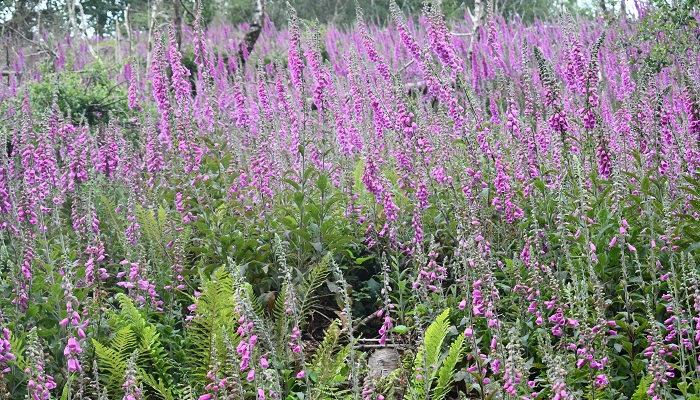
Catherine Keena, Teagasc Countryside Management Specialist, takes a closer look at some of our native Irish biodiversity, focusing this time on Foxgloves, Cock’s Foot, Yellow Flag Iris and Sedges.
Foxgloves
Look out for Foxgloves – tall, stately, graceful, purple flowers with petals fused into a tube, with two lips and dark polka dots fringed with white that guide long-tongued carder bumblebees in for nectar.
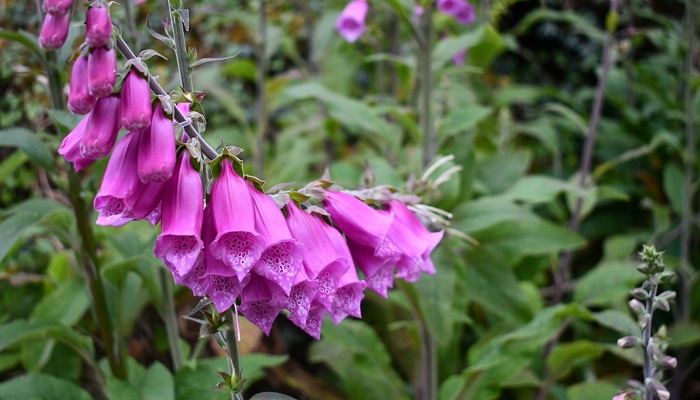
Enormous spikes contain drooping bell flowers and fruits at every stage of development. Wind-dispersed tiny seeds remain viable for years in soil, from where plants appear when exposed to light if ground is disturbed.
Foxglove is a biennial, spending the first winter as conspicuous rosettes of downy, felted leaves. It needs cold weather for vernalisation to produce tall, stout, unbranched stems and flowers in their second year. Foxglove is part of our native Irish biodiversity.
Cock’s Foot seed heads
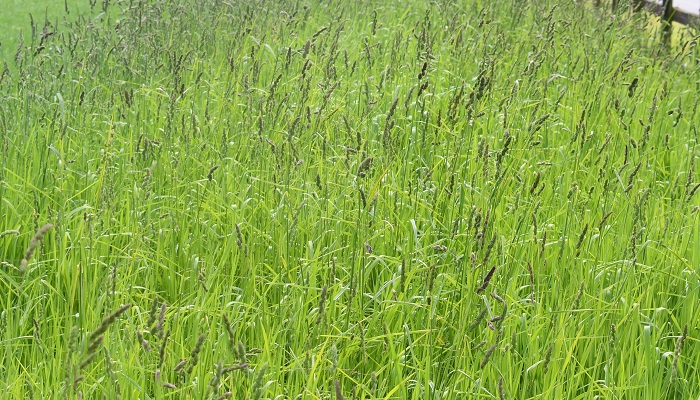
Look out for Cock’s Foot seed heads – tufted, triangular flower heads comprising clumps of spikelets. As its name as Gaeilge suggests, garbh fhéar or rough grass, which becomes coarse and unpalatable after flowering.
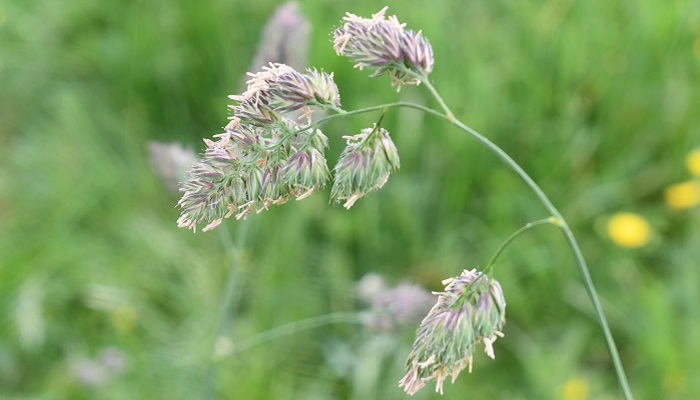
It does yield well, especially early, and withstands drought because of its deep roots. While normally best to let nature take its course and not sow ‘wild’ flowers, where ground cover is needed to outcompete problem weeds or invasive alien species, sowing Cock’s Foot seed is recommended and is sown in arable grass margins in ACRES. Cock’s Foot grows in dense tussocks, ideal for overwintering spiders and sites for egg-laying invertebrates and is part of our native Irish biodiversity.
Yellow Flag Iris
Look out for Yellow Flag or Wild Iris, our only native iris species, with large, dramatic, showy yellow flowers with three wide downward-pointing petals and three narrow, smaller upward-pointing petals.
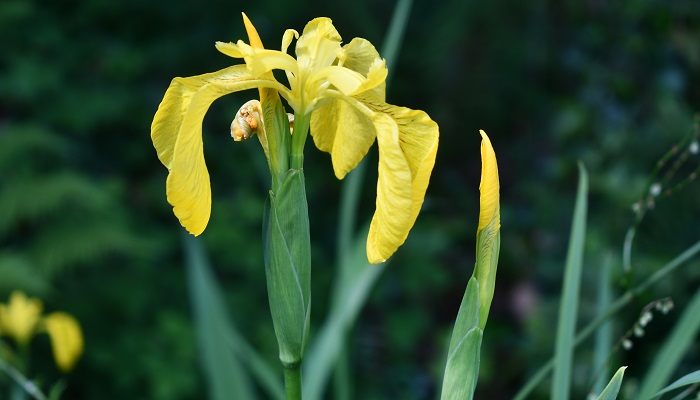
They grow on tall stalks up to a metre high surrounded by pale green, wide, firm, sword or strap like leaves. It grows in wet fields, marshes and along watercourses.
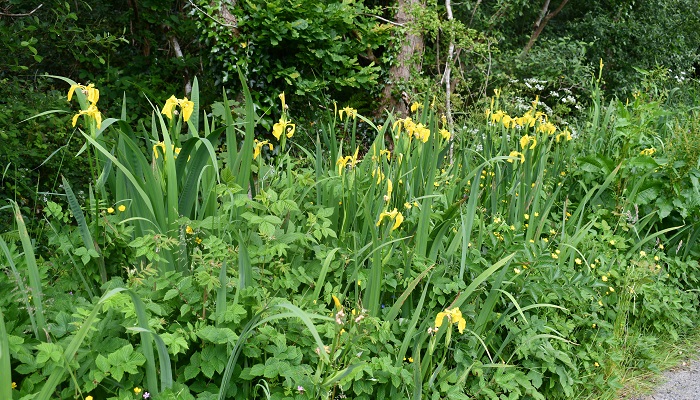
Rhizomes or underground stems creep underground forming clumps. The flowers are full of nectar, available only to bumblebees and larger hoverflies who can reach down. Also called flaggers, it is one of the positive flowers in ACRES, increasing scores and payments. It is part of our native Irish biodiversity.
Sedges
Look out for sedges, which look like grasses but have three-sided as opposed to circular stems. Sedges have edges. Their bluish-green leaves spread outwards in three directions. Carex sedge plants bear both male and female flowers, with the male spikelet on top, fluffy with anthers, while lower female spikelets get fuller as seeds develop.
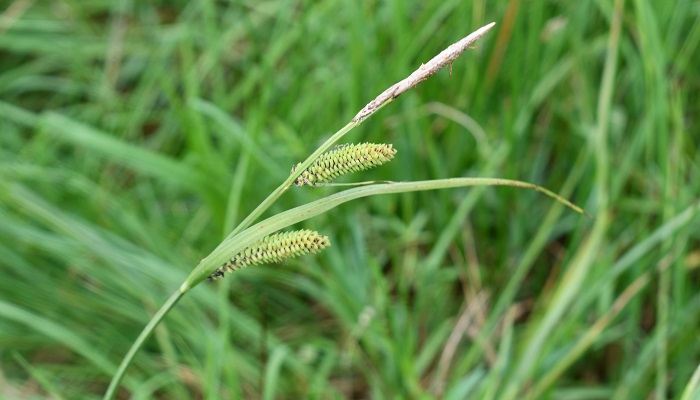
The fifty carex sedge species grow in wet peatlands and grasslands including species rich Shannon callows. They are a pioneer species, colonising bare peatland. Sedges are positive indicator species in ACRES, increasing scores and payments for farmers with Low Input Grassland and in CP areas and are part of our native Irish biodiversity.
Previous Growing Wild articles:
- Growing Wild – Bird’s Foot Trefoil and Whitethorn
- Growing Wild Lousewort and Meadow Foxtail
- Growing Wild – Charlock and Lady’s Smock
- Growing Wild – Cleavers and Herb Robert
- Growing Wild – Tutsan and Woodrushes
- Growing Wild – Shamrock and Primrose
- Growing Wild – Blackthorn flowers and whitethorn leaves
- Growing Wild – haws and spindle fruit
- Growing Wild – Crab Apples and Elderberries
- Growing Wild – Ivy flowers and Common knapweed
- Growing Wild – Meadowsweet, Ox-eye Daisy and Selfheal
- Growing Wild – Marsh marigold and Ribwort plantain
- Growing Wild – Dandelions and cowslips
- Growing Wild – Lesser Celandine and Ivy berries
- Growing Wild – Winter Heliotrope and frogspawn
- Growing Wild – Willow Catkins and Birds Nests
- Growing Wild – Harts Tongue and Hazel
- Growing Wild – Holly Berries and Scot’s Pine
- Growing Wild – Whins and Ferns
- Growing Wild – Rose Hips and Flowering Ivy
- Growing Wild – Yarrow and Herb Robert
- Growing Wild – Elderberries and Blackberries
- Growing Wild – Haws and Spindle
- Growing wild – Guelder Rose and Sloes
- Growing wild – Purple loosestrife and Lord and Ladies
- Growing Wild – willowherb and water mint
- Growing Wild – dandelion and greater stitchwort
- Growing Wild – willow, primrose and lady’s smock
- Growing Wild – whitethorn and cow parsley
- Growing Wild – bluebells and guelder rose
- Growing wild – Honeysuckle and Foxglove
- Growing Wild – Elder and Ragged Robin
- Growing wild – dog rose and meadowsweet
- Growing wild – Privet and Lady’s Bedstraw
- Growing Wild – Bird’s foot trefoil and Knapweed