Halloween in Ireland – Turnips, Bats and Pumpkin Facts
This Halloween, Teagasc Daily explores the stories behind three seasonal favourites: pumpkins, bats and turnips. Plus, hear what Éanna Ní Lamhna has to say about bats, Bram Stoker and vampires on The Environment Edge podcast.
Pumpkins
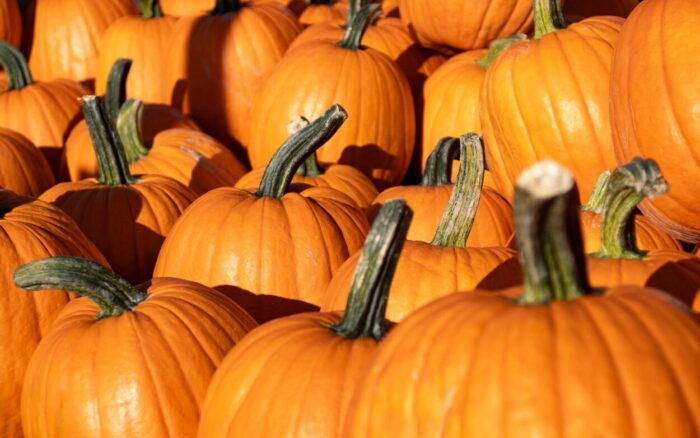
Pumpkins are a Halloween staple, but growing them in Ireland can be a bit tricky. Originally from the tropical regions of the Americas, they belong to the same family as squash, marrows and courgettes. They come in a variety of shapes and colours, from yellow and orange to white.
The biggest challenge for Irish growers is the weather. Pumpkins are sensitive to cold, particularly early in the season, so plants are usually started under cover and transplanted outdoors after the last frosts. A warm summer can mean a good harvest, while a poor one can leave pumpkins struggling to ripen. Pumpkins are usually harvested in September, once the foliage dies back and the fruit develops its characteristic colour.
Top tips for growing pumpkins
- Choose the right spot: Pumpkins prefer rich, well-drained soil in a sheltered, south-facing location.
- Get them off to a warm start: Sow seeds individually in pots under glass or polythene. Plants are generally ready to transplant after around four weeks, once the risk of frost has passed.
- Give them space: Avoid growing pumpkins in the same spot in consecutive years.
- Let the bees do their work: Male and female flowers grow on the same plant, with bees and other insects helping pollinate the flowers and develop the fruit.
- Watch out for disease: Powdery mildew is a common problem, often appearing in late summer. Fruit rots can also cause significant losses.
Pumpkin Production Webinar
To learn more about commercial pumpkin production, watch the Pumpkin Production Webinar below, featuring Teagasc specialists Eoin Sweetman and Andy Whelton alongside horticultural consultant Chris Creed. The webinar covers varieties, sowing dates, soil preparation, pollination, pest and disease control, harvesting, storage and marketing.
Turnips
Long before pumpkin carving became a Halloween tradition, people in Ireland carved faces into turnips on Oíche Shamhna, Halloween night, to ward off evil spirits.
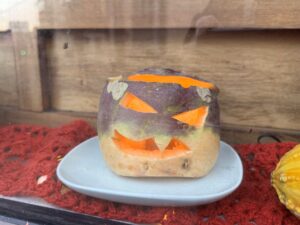
Turnips are a fast-growing, versatile crop that can go from seed to harvest in as little as six weeks. They come in a variety of shapes and colours, including purple, green and white. Harvest them young, when they’re about the size of a golf ball, for salads, or leave them to grow to tennis-ball size for cooking. The leafy tops are edible too and can be harvested like spring greens, particularly from late-summer sowings.
- When to sow: Make small sowings every three to four weeks from March to August.
- How to sow: Sow seeds thinly in drills 30cm apart and around 2cm deep. Thin seedlings gradually to 5–15cm apart.
- When to harvest: Pick young for salads or leave to grow larger for cooking.
- Watch out for pests: Cabbage root fly, flea beetles and slugs can all cause problems. Cover crops with horticultural fleece to help protect against cabbage root fly and flea beetles. Monitor for slugs and use appropriate controls if needed.
- Varieties: Oasis, Purple Top Milan, Goldenball, Green Globe and Sweetbell F1.
Whether you’re growing them for the kitchen or carving a traditional Irish Halloween lantern, turnips deserve a place in the garden!
Bats
Bats have a spooky reputation, thanks to their nocturnal habits, vampire myths and Bram Stoker’s famous tale of Dracula. But these fascinating mammals are an important part of our ecosystems, and there’s no reason to fear them.
Bats are mammals, not rodents. Like humans they give birth to live young and mothers suckle their pups. Females typically give birth to a single pup each year, gathering in maternity roosts to raise their young.
Bats are the only mammals capable of true, sustained flight. Found across most of the world, they come in a surprising range of sizes.
Ireland is home to nine species of bat. Our smallest, the pipistrelle, has a body roughly the size of your thumb, yet a wingspan of around 25cm. The largest, the Leisler’s bat, can fit in the palm of your hand but has a wingspan of approximately 32cm. A small pipistrelle can eat up to 3,000 insects in a single night. This helps it build the fat reserves needed to survive winter hibernation.
Bats play a vital role in our ecosystems by feeding on insects and helping keep insect populations in balance. Bats can also provide valuable clues about the health of our habitats. A healthy bat population can be an indicator of good habitat quality.
Surveys at Teagasc Kildalton College recorded seven of Ireland’s nine resident bat species on the college farm, highlighting its rich variety of habitats.
Bat activity was particularly high around a pond beside woodland, with hedgerows providing important routes between habitats. Bats were frequently recorded travelling along hedgerows and through woodland, while activity was lower in open fields.
Many bats prefer to follow linear features such as hedgerows, waterways and woodland edges, using echolocation, a natural sonar system, to navigate. Daubenton’s bats were associated with the pond, while common and soprano pipistrelles were recorded in woodland and the orchard.
How can you help protect bats?
Bat Conservation Ireland is a wildlife charity dedicated to conserving bats in Ireland. Its work includes the Irish Bat Monitoring Programme, which offers volunteers an opportunity to learn more about bats and contribute to monitoring their populations. The annual Daubenton’s bat waterway survey takes place in August, introducing participants to bat detectors and helping them survey bats along local waterways. For children and primary schools, free educational resources are available at Learn About Bats.
Discover more in Bats and their habitats.
Listen: Bats and their habitats
On The Environment Edge podcast, Éanna Ní Lamhna explores whether Bram Stoker got bats and vampires right, or whether fiction has given them an unfair reputation.
The discussion also explores their role in the environment, how farmers can improve habitats, and what to do if you find a bat in your house.
For more episodes and information from the Environment Edge, visit the show page
Keep up to date with Teagasc Daily for more news, advice and insights from Teagasc Advisory, Research and Education.