
03 May 2022
Harvest high feed value silage to reduce pre-lambing concentrate costs
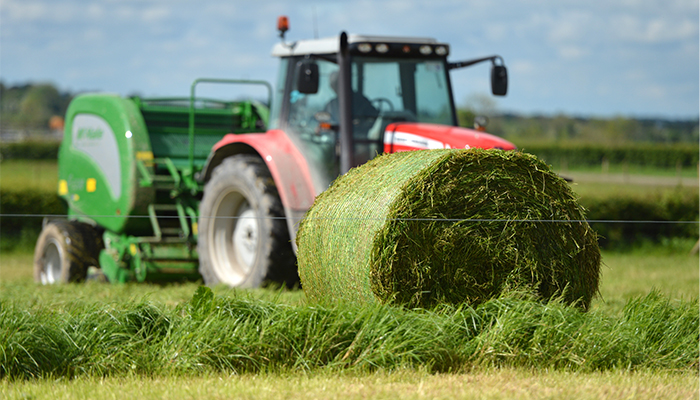
With silage season fast approaching, focusing on producing high quality silage for sheep has many advantages. Dry matter digestibility (DMD) is the key factor influencing silage feed value as Damian Costello, Teagasc Sheep Specialist, Mellows Centre, Athenry explains
High DMD silage has a high metabolisable energy (ME) concentration along with high intake characteristics. Ewes eating high DMD silage will have a high ME intake which results in high animal performance. In studies conducted at Teagasc Athenry, feeding high DMD silage to housed ewes was found to have a positive impact on ewe body condition at lambing and lamb birth weight. Each 5% rise in silage digestibility improved ewe bodyweight immediately after lambing by 6.5kg and lamb birth weight increased by 0.25kg which in turn resulted in lambs being on average almost 1kg heavier at weaning time (Keady & Hanrahan 2011, 2012).
Potential to reduce concentrate feeding in late pregnancy
The research carried out in Teagasc Athenry has also highlighted the potential to reduce amount of concentrates fed to ewes in late pregnancy when high feed value silage is available. Table 1 summarises the total pre lambing concentrate supplementation required by twin bearing lowland ewes when fed along with both precision chopped pit silage and unchopped silage bales of varying DMD values. The total concentrates required for single bearing ewes is 5kg less than twin requirements listed with 8kg to be added to figures in Table 1 for ewes carrying triplets. Feeding ad lib high feed value silage along with lower levels of concentrate supplementation clearly offers financial benefits whilst still hitting key performance targets in relation to ewe body condition, colostrum production and optimum lamb birth weights. Short chop length silage increases ewe intake which further lowers concentrate requirements relative to the similar DMD unchopped silage. Although chopped silage is preferred for sheep, the bigger savings on concentrates can be attributed to the high digestibility silages. An added advantage to chopped silage is that it is more suitable for feeding to ewes that are on slatted floors.

The aim should be to make at least 75% DMD silage, the table below looks at the potential financial reward for a number of different concentrate prices with a range of DMD% baled silage. The example given is for ewes carrying twins. If we look at concentrates costing €500/ton, the difference in pre-lambing concentrate spend between the top and bottom quality silage is €14/ewe. In an era where there is much concern over both the price and availability of concentrates for the coming winter, the financial reward for conserving high quality silage for the ewe flock has never been more tangible.

Key points when aiming for high feed value silage
The majority of factors determining silage dry mater digestibility (DMD) are within the control of the producer with the primary one being harvest date/stage of growth at which silage is harvested.
Other factors include:
- length of wilting
- crop lodging
- graze out pre-closing
- mowing height and
- quality of preservation.
It is important to calculate the amount of silage you require but don’t unduly delay harvest date to increase bulk.
Aim to cut leafy material before seed heads emerge and go for a short active wilt to reach the desired dry matter content.
In the case of bales that you feel are likely to be suitable for sheep, ensure they are marked and stored so that they will be accessible when needed – the actual quality should be determined later with a number of representative silage samples.
The Teagasc Sheep Specialists and Researchers issue an article on a topic of interest to sheep farmers on Tuesdays here on Teagasc Daily. Find more on Teagasc Sheep here. For any further information or assistance contact your local Teagasc Office here: Advisory Regions.