
21 November 2024
Harvest Report: 2024 cereal production estimated to be 1.9mt
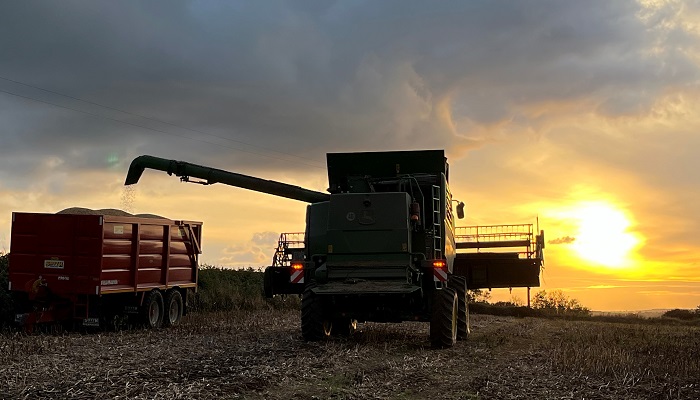
Ciaran Collins, Tillage Specialist at Teagasc, shares some of the headline figures from the Teagasc Harvest Report 2024, which was published earlier this week.
In what was a difficult year for tillage farmers, cereal production for 2024 is estimated at 1.9mt. This is similar to 2023, but 0.3mt below the five-year average of 2.2mt.
The area of winter crops declined due to the wet weather last autumn and this was compounded by a very late spring. Spring crops yielded above expectations, which was helped by cooler than average conditions, particularly in June.
The full Harvest Report 2024 is available to view here.
Headlines
Overall cereal grain quality was good. Hectolitre weights in feed wheat and barley were 2 to 3 points higher than 2023. The majority of malting barley reached minimum specification, with a low level of rejections.
There was a small decrease of 9,500ha (3.5%) in cereal area in 2024. Winter oilseed rape declined by 30% in 2024 and spring bean area increased to a record 17,600ha.
The decline in winter crop area was due to intense rainfall and saturated ground in October. October was the second wettest month of the year. November saw more rainfall and flooding. Much of the area planted was damaged due to flooding, resulting in patchy crops with sub-optimal plant counts.
Spring 2024 was the sixth wettest on record. Rainfall in February, March and April was above average, 149%, 146% and 130%, respectively. There was virtually nothing planted until April 20th. This led to a further change in cropping plans for the season. There was also the added complication of a scarcity of spring barley seed due to the wet autumn/spring.
Spring barley area increased to 133,400ha (12,500 ha > five-year average). Grain yield in spring barley was above expectations at an average 7.32t/ha which was largely due to cooler than normal temperatures during the growing season, particularly in June.
The cool summer also favoured spring beans. Despite very late planting, the average yield was 5.2 t/ha which is only 0.5 t/ha below the five-year average of 5.7 t/ha. However, late planting resulted in a very late harvest and high moisture content.
Straw yield was below average but this was compensated for by a significant increase in price due to increased demand.
Tillage Edge podcast
A year ago, many farmers faced significant challenges due to the unusually wet weather, which disrupted their crop rotations. For this week’s Tillage Edge, John Pettit, a Teagasc tillage advisor from South Wexford, shares his insights into how farmers are adapting their crop rotations to suit both their land and the local markets.
Listen in below: