
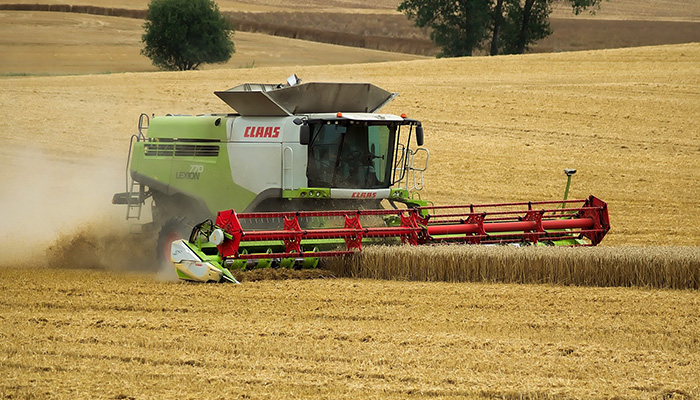
Michael Hennessy, Teagasc Head of Crops Knowledge Transfer, writes on preparing your combine for harvest, sharing tips for a trouble-free season.
As harvest approaches, now is the perfect time to ensure your combine has been thoroughly checked through. The combine is often the most expensive machine on the farm, and proper preparation can save you breakdowns, stress and expense when the weather breaks and every hour counts.
Here are some practical steps to get your combine ready for the busy weeks ahead.
Clean thoroughly
Start by giving your combine a full clean-down. Ideally, this should have been done after last harvest, but it’s never too late. Use a compressor, brushes and an industrial vacuum to remove straw, chaff, soil and dust. Pay special attention to stone traps, sieves, the grain pan, straw walkers and under guards where debris builds up. Wearing goggles and a dust mask is strongly recommended when blowing down the machine.
If mud or crop residue has hardened on augers and elevator housings, it should be removed before it causes premature wear. Run the machine briefly with elevator and auger covers open to shake loose any remaining debris – but make sure no tools or people are in the vicinity before starting.
If washing down the panels, avoid directing water at sealed bearings or electrical components. If you steam clean, protect electrics and re‑grease bearings afterwards.
Service and repair
Next, inspect for worn or damaged parts and carry out repairs now rather than in the middle of harvest. Key areas to check include:
- Header: Check the reel, knives, lifters, auger and elevator chains for wear or damage. Chains should deflect about 6mm per 300mm of length, and belts about 12mm per 300mm. Replace or adjust as necessary.
- Drum and concave: Look for worn rasp bars, broken concave wires, or a “bellied-out” concave, which will reduce threshing performance.
- Bearings and belts: Spin bearings to check for dryness or roughness and inspect belts for cracks. Worn bearings heat up quickly and checking with a handheld thermal imaging camera can be invaluable to spot problems before they fail completely. Replace worn parts now – bearings and belts are inexpensive compared to a harvest delay.
- Augers and elevators: Ensure chains are properly tensioned and not running slack or rubbing, which can lead to cracked grain or failure.
Use the operator’s manual for guidance on service intervals, correct lubricants and tension settings specific to your machine.
Engine and electrics
Drain and replace the engine oil and filters, and check fuel and hydraulic filters. Clean the radiator and oil cooler fins of dust and chaff. Keep the fuel tank full to prevent condensation and water contamination.
Check battery terminals, starter connections and ensure the isolator switch is working; loose or corroded connections can cause fires.
Spares and backup
Carrying some spares of the most common breakage parts is essential, as these always seem to break after office hours or at the weekends. Finally, having a good relationship with your machinery dealer and their mechanic is essential, as it often the case you will be relying on their good will to fix you machine at short notice or after hours.
Working without damaging soils during the harvest
Once your machine is ready, it’s equally important to operate it with care in the field to protect your soils. Although soils are relatively dry at the moment with a 40mm soil moisture deficit, there are always parts of the field/farm which have damper soils. Modern combines are large and heavy, and repeated passes or working when soils are damp can cause compaction and rutting that affect future crops.
Use tramlines or a controlled traffic approach to keep wheels on the same tracks throughout the field. This limits the area of soil affected and makes it easier to alleviate compaction later.
Check tyre pressures and consider fitting wider or dual tyres to reduce ground pressure. Some contractors now use tracks rather than wheels to spread the load even further.
Plan your route through the field to minimise turning on soft ground and avoid unnecessary crossings. Always empty the grain tank in designated areas rather than at random and keep trailers on headlands or firm ground where possible.
Taking a few of these precautions helps maintain good soil structure and drainage, which pays off in future crops.
Tillage Edge podcast
The Tillage Edge podcast’s coverage from the recent Teagasc Crops and Technology Open Day continues this week, sharing updates on the Tillage AgNav Programme, winter rye and wheat diseases.
Listen in below:
In part one of the podcast series from the Crops and Technology Open Day, Dr. Ewen Mullins discussed the event and farmer feedback, Veronica Nyhan took us on a tour of the Oak Park soil pit and Jack Jameson discussed his wheat variety trials.
Listen in to part one below: