
Hedgerows – a lifeline for birds and insects
As part of National Hedgerow Week 2026, a partnership between the Heritage Council and Teagasc, we take a look at hedgerows and their important role as a lifeline for birds and insects.
A hedgerow is much more than a field or land boundary or roadside presence. It can be one of the busiest places for wildlife. Around half of Ireland’s regularly recorded countryside bird species use hedgerows, with 35 species nesting in them.
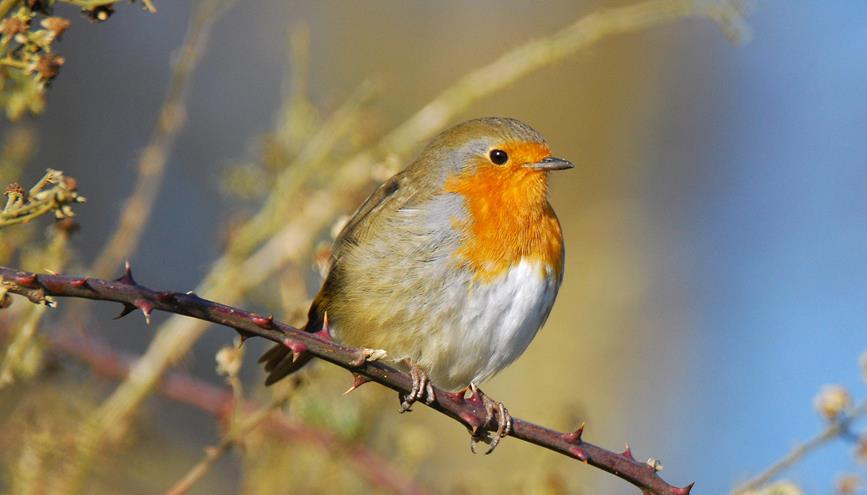
Many of our familiar birds, including robins, wrens, blackbirds and yellowhammers, build their nests in hedgerows. The dense branches provide a safe place to nest, while the insects living in and around the hedge help feed hungry chicks. Later in the year, berries from hawthorn, blackthorn, holly and bramble become an important food source when insects are less plentiful.
A good hedge is alive with insects, even if much of that activity goes unnoticed. In spring, hedgerow flowers provide some of the first nectar and pollen of the year for bees, butterflies and hoverflies. Through the summer, thousands of insects live among the leaves and flowers, helping to pollinate crops and wild plants while also keeping some pest populations in check.
Hedgerows also connect the countryside. They allow birds, insects and small mammals to move between woodlands, rivers, wetlands and grasslands in search of food and new territories. As fields become larger and infrastructure developments and housing grows, many habitats are disappearing. Maintaining these green corridors is becoming even more important.
Making a hedge better for wildlife
It doesn’t take much to make a hedge even better for wildlife. Allowing some hedges to flower and produce berries, leaving an unsprayed grassy margin at the base and retaining the occasional mature tree all add to their value. Cutting hedges on a rotation, rather than every year, encourages more flowers and fruit while creating a mix of hedge ages and structures across the farm.
From spring blossom feeding pollinators to autumn berries feeding birds, a healthy hedgerow works all year round. It might look like a simple field or land boundary or a common roadside sight, but for wildlife it’s one of the richest and hardest-working habitats in the landscape.
National Hedgerow Week 2026 is a partnership between the Heritage Council and Teagasc.
Click here for more information on National Hedgerow Week 2026.