
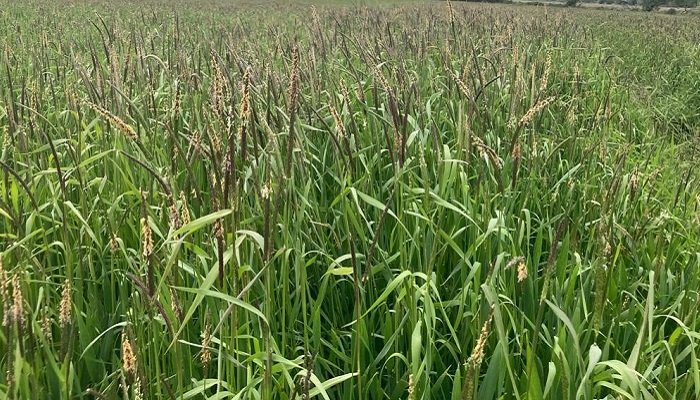
Testing suspect weeds is the ideal way to help you stay ahead of the issue and protect the effectiveness of programmes into the future. Ciaran Collins and Vijaya Bhaskar tell us more.
Do you have weeds in your crop that didn’t die after spraying?
If you used the correct herbicide and sprayed in good conditions, but the target weeds are still present, it may be worth testing them for herbicide resistance.
Recent sampling has highlighted potential resistance issues. Testing suspect weeds could help you stay ahead of the problem and protect the effectiveness of your herbicide programmes into the future.
The EVOLVE project, funded by the Department of Agriculture, Food and the Marine (DAFM), has launched the Weed Watch 2025 campaign. Now is the ideal opportunity to get involved by testing suspect weeds on your farm.
Stark findings
Resistance testing carried out on suspect weed samples has uncovered some concerning results:
- Over 60% of blackgrass and more than 80% of Italian ryegrass tested were resistant to ACCase and/or ALS herbicides.
- The first confirmed case of triple-resistant Italian ryegrass (resistant to glyphosate, ACCase, and ALS herbicides) has been reported.
- 34% of wild oats tested showed resistance to ACCase herbicides.
- Some meadow grasses were confirmed resistant to ALS herbicides.
- Resistance to ALS herbicides was also detected in several broad-leaved weeds, including poppy, chickweed, common field-speedwell, and corn marigold.
These findings show that resistance is not only spreading but also evolving, and it’s not limited to grasses alone.
Without proper identification and management, resistant weeds can:
- Significantly reduce yields
- Increase production costs
- Limit herbicide options for future seasons
This is especially important where blackgrass and Italian ryegrass are present, as they should always be treated as resistance suspects.
What you can do
To stop the spread of resistant weeds, resistance testing is an essential tool. It helps identify which herbicides will still be effective and supports better long-term management through integrated weed control strategies. As part of the Weed Watch 2025 campaign, Teagasc are offering free resistance testing for both grass and broad-leaved weed samples. All you need to do is to collect and send in samples of weeds that have survived herbicide treatments or appear suspect. You can then use the test results to guide the best herbicide and cultural control options for your specific situation.