
Hitting the ‘sweet spot’ for cow performance
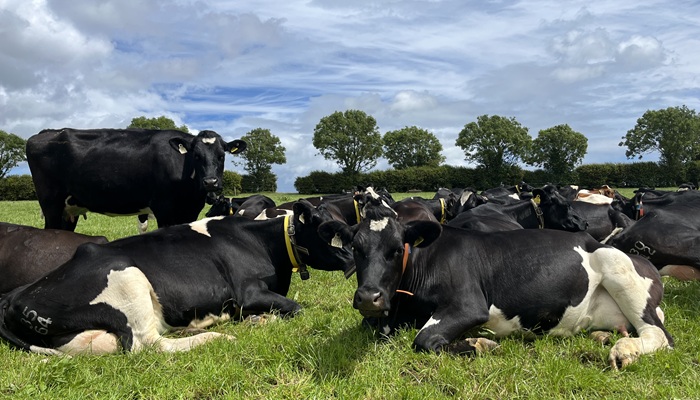
With June grassland management being critical, Teagasc Dairy Specialist, Mark Treacy writes on the key grazing targets for maintaining cow performance, yield and milk solids production.
Grassland management is always important on dairy farms. June, however, is a critical month as we are now in the main heading phase for perennial ryegrass, which can quickly result in a drop in sward quality.
Recent weather conditions have made the situation more difficult to manage in many areas; ground conditions have become challenging and opportunities to bale surplus bales have been few and far between.
While a rise in temperatures is welcome, it is likely to drive on grass growth, compounding quality issues where they are not addressed. Grass supply and quality can change dramatically in a short period of time at this time of year, and it is vital that farms are walked every 4 to 5 days to make timely management decisions.
Surplus grass and cow performance
PastureBase Ireland data suggest that there is currently surplus grass on many farms, and that animals are being expected to graze paddocks with excessive grass covers.
Unless this situation is rectified, cow performance will suffer while grass quality will further decline. For every 4% drop in grass quality, milk solids production declines by 5%. In addition, milk protein % will drop as grass quality declines, reducing the milk price received. At current milk prices, a decrease in milk protein of 0.1% will decrease milk price received by about 0.7 c/l.
Monitoring protein and yield
Monitoring milk protein % and overall milk solids yield are good indicators of grass quality. Protein % should be increasing over the summer period; if you see stagnation or a decline in protein % this month compared to May, it indicates issues with grass quality. Overall, we should be looking for milk protein % to increase by at least 0.05% per month, with milk solids production per cow not declining by more than 6% per month.
The grazing ‘sweet spot’
At this time of year, over 90% of the cow’s diet should be coming from grazed grass. Adjustments to concentrate feeding will at best reduce the effects of poor-quality pasture. However, it will never be able to fully compensate for the reduction in quality, as well as increasing the cost of production.
Maintaining high-quality grass in front of cows is therefore essential. The target pre-grazing yield during the mid-season is 1,400 kg DM/ha, as this is the ‘sweet spot’ for grass quality, production, clean outs and sward recovery after grazing.
At this stage, the grass plant will have 2.5–3 leaves. It is important to understand that a grass tiller will only support 3 growing leaves; once a 4th leaf emerges the oldest leaf will start to die off, resulting in a decline in overall sward quality.
As a new leaf appears on average every 7 days in mid-season, a rotation length of 21 days is appropriate, but in periods of very high growth this interval will need to be further reduced.
Walk your farm and assess the grass supply available for your herd. Where sufficient high-quality grass in available, reduce concentrate feeding rates to maximise the amount of grass that the cow will consume. Target a cover per cow of 160 to 190 kg DM/cow and a pre-grazing yield of 1,400 kg DM/ha. Where surplus grass is on farm, plan to remove as surplus bales as soon as possible to ensure that the paddock will be available again in the next rotation.
More from Teagasc Daily: Maintaining momentum at breeding – practical actions for June
More from Teagasc Daily: Why grazed grass still wins on feed costs