
How Irish farmers are growing more eco-friendly grass
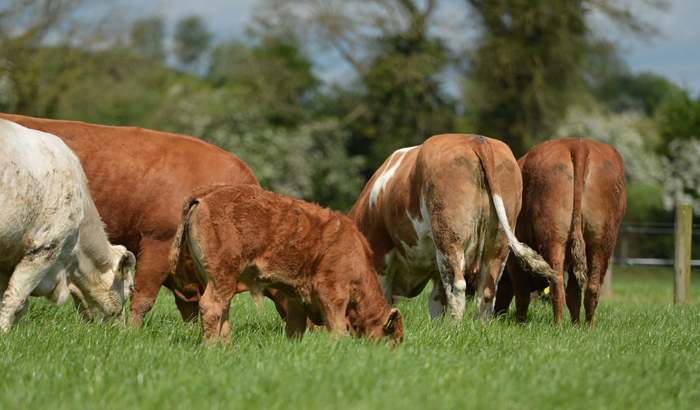
Beef farmers are finding new ways to grow quality grass and feed cattle, while reducing reliance on chemical fertilisers. Niall Kerins, Teagasc Cattle Specialist, tells us more in a recent RTÉ Brainstorm article.
Modern farming is changing and farmers are adopting ways to improve the efficiency of nitrogen on their farms. Beef farmers are finding creative, environmentally friendly ways to grow quality grass, feed their cattle and produce food while reducing reliance on chemical fertilisers. Their goal is to grow grass to feed their livestock and manage a demanding business while protecting water and air quality.
Key ways they’re doing this
Nutrient management
Every three to four years, some farmers analyse their farm’s soil health by testing for pH, phosphorus and potassium levels. This indicates to farmers what nutrients are already in the soil and where the shortfalls are. With this information, farmers aim to apply fertiliser only where it’s needed during the grazing season so there’s less guess work involved.
Clover
Clover has a unique ability to take nitrogen from the air and ‘fix’ it into the soil through its root system, turning it into a form of nitrogen plants can use for growth. A healthy grass sward with a high clover content could make up to 100 to 150 kg nitrogen per hectare available for grass growth. That means fewer greenhouse gas emissions from fertiliser application, and it means lower input costs.
LESS slurry spreading
Slurry was often spread in the past using a splash plate, which spread the slurry across the field. This method resulted in nitrogen escaping into the atmosphere as ammonia, reducing its fertilising value and contributing to greenhouses gases. Today, many beef farmers apply slurry through Low Emission Slurry Spreading (LESS) technology. These modern systems, using trailing shoe or dribble bar applicators, places the slurry near the ground, where grass can absorb it more efficiently.
Grass seed varieties
Grass varieties have come a long way in recent decades. New grass varieties can grow longer each grazing session and give better grass growth response from applied nutrients. When a farmer reseeds a field, they replace poor growing grass varieties that respond poorly to fertilisers. New grasses respond quicker to fertilisers and reduce the loss of nutrients to nearby water courses.
Red clover
Red clover is making a comeback on many beef farms, mainly in fields designated for silage. Red clover sown with grass in a silage mixture fixes nitrogen naturally, so the crop needs little or no chemical nitrogen fertiliser. It is also high in protein, meaning farmers can grow more of their own high‑quality feed and depend less on imported protein for animal feed.