
How is your flock’s breeding season going?
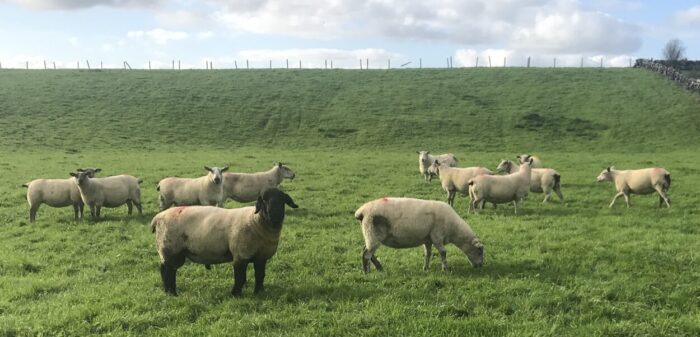
Andy Ryder, Teagasc Drystock Advisor, discusses key tasks for sheep farmers in November, focusing on ram and ewe management, replacements and grassland planning ahead of next year's lambing season.
On most sheep farms, November is a quiet time of year, with most of the management jobs completed. Depending on lambing date, the rams are either with the ewes for a few weeks more or will be let out with the ewes over the next few weeks. The ideal situation would be to have all the handling tasks, such as dosing, dipping, vaccination and foot bathing, completed prior to the ewes joining the rams, trying not to disturb the flock too much during mating.
Farmers still need to keep an eye on the flock, as it is a critical time of year for every flock owner. If there are issues with the ram, such as lameness, infertility or poor health, it will result in a drawn-out lambing season or no lambs at all next spring if the problem is not picked up.
Ram Management
Rams, as they say, are half your flock and are expensive to replace. It is important to keep a close eye on them to see if they are working and remain healthy during the breeding period. Raddling of rams allows farmers to keep track of mating progress. Changing the colour every 17–18 days will help identify possible infertility problems with rams. It also helps predict lambing dates based on what raddle mark is on the ewe, with lighter colours indicating ewes that will lamb first and darker colours indicating those that will lamb last. If you put the effort in now, issues with ram infertility will be spotted early.
It is also important to have enough rams on the farm. The preferred ratio of rams to ewes is 40–50:1 for mature rams and 25:1 if using a ram lamb. If the ratios are higher, it may cause lambing to last longer, as rams may miss ewes when cycling and the ewes will only be mated during the following cycle.
Rams, at the end of the mating season, should be gathered up, housed or put in a sheltered field and fed to build up body condition. A lot of rams never survive the first mating season, as they did not receive the attention they needed during this period.
Ewe Management
Prior to mating, the key is to have ewes in a body condition score of 3 to optimise conception rates and litter size. During mating and early pregnancy, the priority is to maintain ewes on an upward plane of nutrition. Therefore, ensure there is a sufficient supply of grass during this period. Depending on the location of the farm and its history of fluke, ewes will need to be treated for fluke. This autumn has been mild and wet, providing ideal conditions for fluke.
Replacements
This group of sheep is often neglected on farms. A study by Keady and McNamara in Teagasc Athenry concluded that ewe lambs maintained on a high plane of nutrition for the first winter increased lambing weight at weaning by 0.6 kg at all lambings up to five years of age and reduced the incidence of ewe barrenness from 6.1% to 3.6%. Look to increase body weight by 40–50 g per day over the winter. Attention to dosing and the management of lameness is key to achieving this liveweight gain.
Grassland Management
To ensure a sufficient supply of grass at lambing, try to target 40% of the farm to be rested by mid-November. Ideally, these should be the fields closest to the yard. It is also an ideal time of year to take soil samples to assess the fertility status of the soils. Once the results come back, a fertiliser plan can be put in place for next year. If lime is required and ground conditions allow, some of this lime could be applied now.