
Ideal opportunity to carry out drainage works and maintenance
Dry summer conditions provide an ideal opportunity to carry out drainage works and maintenance on farms. Caitlin Looney, Teagasc Moorepark, tells us more.
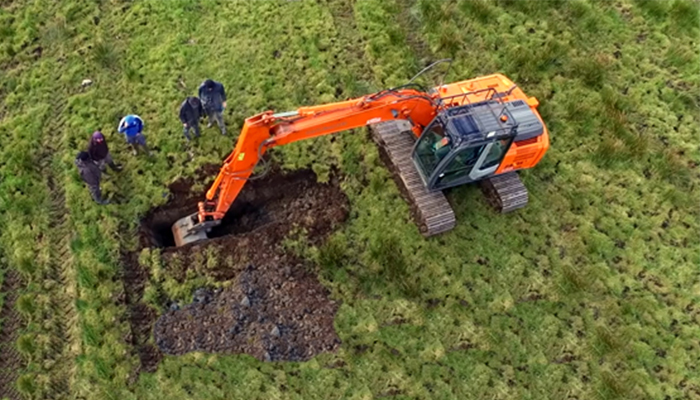
Maintenance of surface drains is important, and these should only be cleared between July and September to protect water quality. If the farm is in a position to carry out drainage works, the first thing that needs to be identified is paddocks suitable for the work. Paddocks that have consistently poor ground conditions and struggle to be grazed should be considered for drainage to extend the grazing season. When a paddock is identified the first step is to dig a test hole 1.5m deep and 2m wide to examine the soil profile and identify the cause of poor drainage. When looking at the soil profile permeability of the soil and the water table should be evaluated. An example of test hole and drainage implementation is outlined in the video and paragraph below.
An event on Larry Dunphys Farm, Co. Clare shows a paddock where water travels over the brow of a hill and seeps out causing poor ground conditions and was identified for drainage. In the test hole the first layer is of good profile, the second layer, however, does not allow water to flow through and water saturates the first layer. The basic principle of the drainage implemented is to run a pipe and stone at this second layer (approximately 5-6 feet deep) across the slope and into the outlet on the far side. This traps most of the water and allows the top layers to dry out.
John Maher, Grass 10 Campaign Manager, tells us how effective drainage can enhance land productivity, improve grazing conditions, and support better overall farm performance in the video below: