
18 August 2023
If you go down to the woods today you just might find a forest school
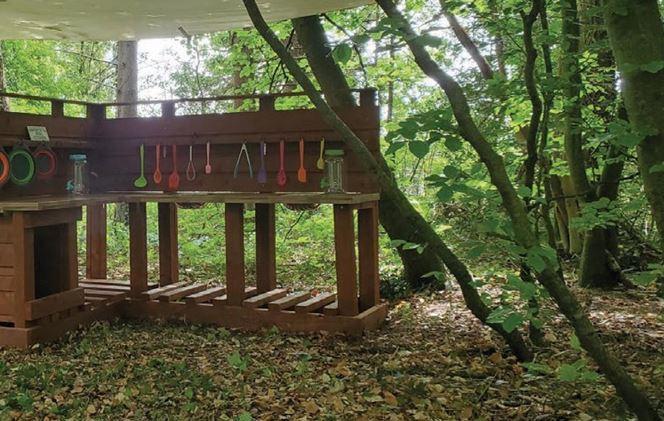
In a forest school setting, children can run, climb and play in ways that are not always possible in traditional classrooms. This can help them build strength, co-ordination and self-confidence. Michael Somers, Teagasc Forestry Development Officer, found out more.
Forest schools are innovative educational programmes delivered in outdoor environments. One of the aims is to connect children with nature. The Forest Schools Initiative provides children with hands-on, experiential learning opportunities. Benefits include fostering a love of nature but also facilitating children to develop essential life skills, such as problem-solving, teamwork and creativity.
In a forest school programme, children spend most of their time outdoors, engaging in activities which promote exploration, observation, and discovery. Children might plant trees, build shelters or cook food over an outdoor fire. Through these experiences, the students learn to appreciate and respect the natural world and develop a deeper understanding of the importance of conservation and sustain- ability. Forest schools are becoming increasingly popular as parents and educators recognise their value.
One of the main differentiators of forest schools is that they provide opportunities for hands-on, experiential learning. This contrasts with traditional classroom-based education by allowing children to learn through exploration and discovery rather than being simply told information. By participating in activities like building shelters, planting trees and cooking food over a fire, children develop a deep understanding of concepts and ideas, which helps them retain this knowledge for longer.
Forest schools also foster essential life skills like teamwork and problem solving. Children are encouraged to work together in a forest school setting to achieve common tasks, such as building a shelter. This fosters creativity and collaboration, essential skills for success in life. By facing challenges and overcoming obstacles in the natural environment, children can become more creative and innovative.
Forest schools also provide children with opportunities to learn about the natural world, fostering a lifelong love of nature. Children who spend time in nature are more likely to appreciate and protect the environment, and to make sustainable choices in the future. This can have a positive impact on the health of the environment and help to ensure the survival of important species and ecosystems.
Forest school, Cloughjordan Co. Tipperary
In 2022, Mark Murphy set up a forest school. Since graduating as a primary school teacher, he has spent 16 years in the profession. “I noticed a growing disconnect between the children and the natural environment at the coalface of learning,” he says.
“This was made worse during the pandemic, where the adverse social and emotional effects of COVID-19, added to pre-existing concerns about increased screen time and rising anxiety levels in children.”
This was the main driving force for Mark to set up the forest school in his family’s farm forest in Cloughjordan.
“Groups range from primary and secondary schools, after-school programmes, and customized programmes with an organisation or group, e.g. home-school networks, at-risk groups, or funded projects,” said Mark.
“Sometimes a forest school leader will be hired by an organisation, or an organisation can have a certified forest school leader within it. For example, a school can have teachers trained as forest school leaders to run programmes for the school community as part of the curriculum. We offer bespoke forest school experiences to children of all ages that encourage connection to nature and each other in community and collaboration, an opportunity to learn and share ancient skills and get to know the plants, the trees and the other living beings. Our learning and wellbeing experiences take place in nature, are learner-led and fun. They encourage adventure, curiosity and play, reflection and rest, and are an invitation to each participant to meet their wild selves!”
“Forest school is an opportunity to develop confidence through new skills and learn lifelong personal skills in communication and resilience.”
Maura Brennan is also a qualified primary school teacher based in Kilkenny. From an early age she fostered a love of nature and herbalism and used it in her teaching. In 2012 she got a gift of a book about Forest Schools in the UK. In 2016, forest school training arrived in Ireland through Forest Schools Ireland. Maura completed the course, and even before she qualified, she had her first forest school running in Kilkenny. Maura says her approach is to centre the child’s learning in nature. Today she has 12 schools involved in a six-week programme. “I believe in a small one to eight teaching ratio,” she adds. “Nature- based learning benefits the child’s physical, mental and emotional health. While spending time in nature has been shown to reduce stress, improve mood and increase overall wellbeing, my approach is based on the heritage of trees and the use of wood. Understanding shade and light in a forest, shelter building, and how both live and dead wood encourage biodiversity in forests.”
Read more about forest schools and the Acorn Project in Today’s Farm