
16 October 2023
Impact of changes to Nitrates Derogation
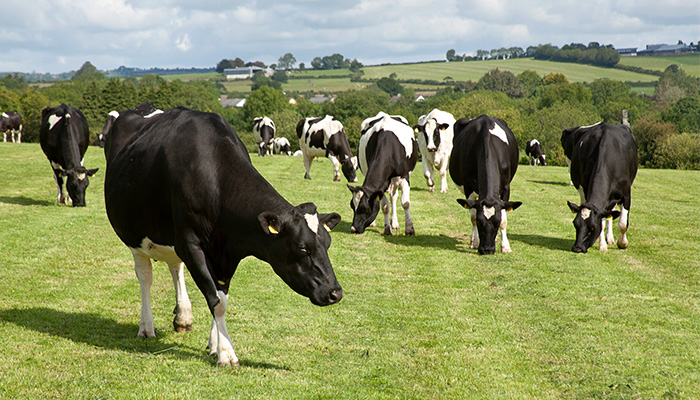
The EU Commission decision to reduce the upper limit on organic N from 250kg N per ha to 220kg N per ha for Nitrates Derogation farms in designated catchment areas will have significant consequences for many dairy farms in 2024 and beyond.
The Teagasc Nitrogen Report 2023 (see link below) indicates a reduction in margin of up to 400 per ha, based on modelling the required change in stocking rate on a high-performing dairy farm. Table 1 outlines the effect of the upper limit for organic N and herd banding category in tandem for illustration.
Table 1: Maximum herd size for a combination of organic N limits per ha and herd banding categories
| Nitrates band | Land area | Maximum herd size (cows only) | |
| 250kg N/ha | 220kg N/ha | ||
| <4,500kg (80kg N) | 50ha | 156 | 137 |
| 4,501-6,500kg (92kg N) | 50ha | 135 | 119 |
| >6,501kg (106kg N) | 50ha | 117 | 103 |
Evidently, the physical and financial consequences of these changes will vary depending on individual farm circumstances. For farms that are currently stocked below 220kg N per ha, the short-term impacts may be relatively minor. Nonetheless, future growth opportunities may be curtailed. For farms exceeding 220kg N per ha, decisions will need to be made to maintain compliance status.
Some of the possible approaches include:
- leasing additional land to reduce organic N stocking rate;
- reducing cow numbers where stocking rate is beyond the economic optimum for the farm;
- discontinuing a beef enterprise;
- contract rearing of young stock;
- reducing herd average annual milk yield to limit organic N excretion rate per cow; and,
- exporting slurry
There are pros and cons to these options and it is difficult to give generic advice due to the range in farm circumstances. We therefore encourage all clients likely to be affected to contact their advisor to discuss the best response for their farm, including the costs and practical outworkings of each.
Finally, nutrient management on individual farms (i.e., slurry storage and handling, fertiliser application rate and timing, watercourse management) has a very significant role to play in maintaining and improving water quality at a catchment level, so ensure best practice is adhered to.
The Teagasc Nitrogen Report 2023 is available here
Listen to the Dairy Edge Podcast episode below for more information on the topic:
Read the full Teagasc Dairy Newsletter