
Improving piglet welfare through commingling and better hygiene
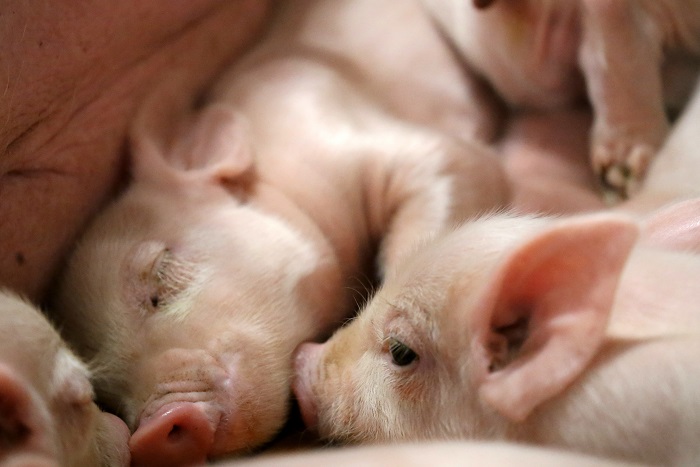
Mario Ornelas, Postdoctoral Researcher, explains how commingling and improved hygiene can reduce post-weaning aggression and diarrhoea.
The pig industry faces increasing pressure from recent legislation restricting the use of antimicrobials and zinc oxide, as well as growing demands to improve animal welfare. As a result, there is a need for management strategies that can improve animal health and welfare, especially at weaning, when diarrhoea and social stress are key challenges. Good farm hygiene practices can help reduce infection pressure and the need for antimicrobials. Commingling can also benefit piglet health and welfare and can be implemented on commercial farms.
A recent Teagasc study at four farms investigated the effects of commingling and improved hygiene at lactation on post-weaning performance, including diarrhoea, aggression and growth.
On each farm, three study groups were defined:
- Commingling and improved hygiene
- Improved hygiene alone
- Control group (no interventions)
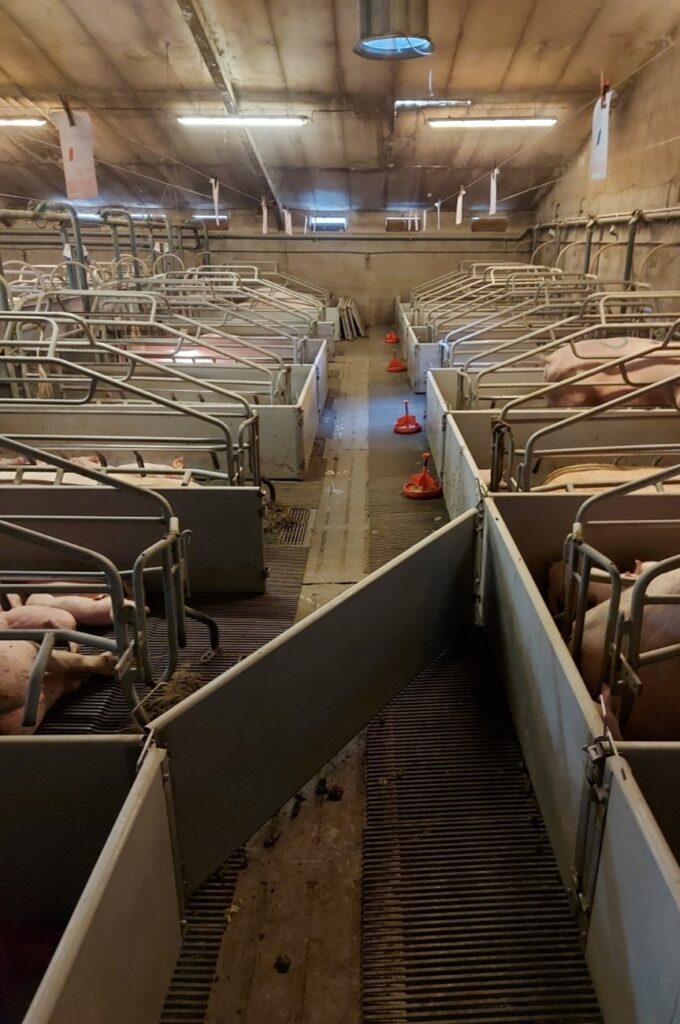
Commingling took place at 10 days of age, when the rear barriers of farrowing pens were removed, creating a shared area which included the corridor as shown in the figure below. Improved hygiene consisted in the adequate removal of organic matter, followed by detergent application, disinfection with chlorocresol at 3% and at least two days of drying before bringing in sows due to farrow. In control groups, no interventions took place and the disinfectant used was a quaternary ammonium compound or hydrogen peroxide. At weaning, animals were mixed within their experimental treatment.
Results
Lesions due to fighting were assessed individually two days after weaning and revealed a substantial difference between groups. The proportion of animals with such lesions was 5 times lower in pigs which had been commingled at lactation compared to non-commingled pigs (4% vs 21%).
Improved hygiene was associated with diarrhoea scoring, as pens of control groups had a mean diarrhoea score of 1.75/2 compared to 0.88/2 in the two other groups.
With regards to growth, no notable differences were observed between the three study groups when comparing average daily weight gain during lactation, weaner and finisher stages. Likewise, the number of animals removed due to death or disease did not differ.
Commingling allows pigs to establish a social hierarchy prior to being weaned, while non-commingled pigs are mixed for the first time at weaning, often resulting in considerable post-weaning fighting. Commingled pigs also benefit from increased space allowance during lactation, despite a subsequent decrease after weaning.
Benefits
Importantly, commingling and improved hygiene are interventions which can be implemented in commercial farms without compromising labour efficiency. In fact, the study revealed several advantages from a labour perspective. Instead of having a creep feeder on every pen, feeders were placed on the corridor, where they were accessible to all piglets and could be refilled more easily by staff. Although feed intake was not analysed in the study, some farms with commingling have reported an increase in creep feed intake and a consequent higher daily weight gain.
Another relevant observation from the study was that some piglets which struggled to compete with littermates for milk would go to another pen with less competition and obtain milk there. No instances of sows rejecting piglets from other litters were observed in any farm.
It should also be mentioned that while commingling took place at 10 days, other studies have described younger and older ages for the intervention. In the study, waiting until 10 days before commingling provided a protected environment for piglets during early life, as well as detecting litters with signs of infectious diseases, such as diarrhoea. Where the latter is present, commingling should be avoided to mitigate disease transmission across litters.