
John Enda Flannelly, a Drystock Advisor based in Teagasc Claremorris, shares some useful tips for farmers looking to improve their ACRES score.
It is that time of year for farmers who are in ACRES Co-Operation (CP) or farmers in ACRES General who availed of the Low-Input-Grassland action to have their land scored.
This scoring refers to the results-based assessment of land parcels to determine their ecological integrity and environmental quality, which then influences the payment rate a farmer receives. Each parcel receives a score of 1-10 and farmers receive a payment based off what score they get. The higher the score the higher the payment.
The grassland scorecard
There are 10 different types of scorecards, however I will focus on the grassland scorecard which is the most common type of scorecard. But you will find that similar questions repeat throughout all these scorecards.
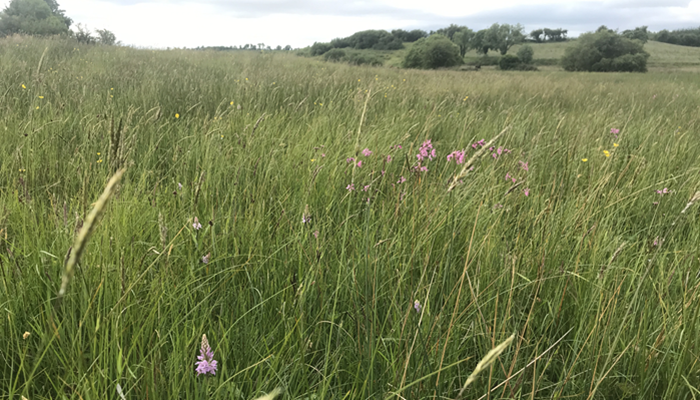
The first section of the scorecard deals with ecological integrity. The first question in this section asks how many positive plant indicators are present in the parcel? If these positive indicators are present, it is a sign that the grassland is semi-natural and has been managed extensively in recent years. The more positive indicators and the greater their cover, the higher the land will score.
Here are a few things farmers can do to have the best possible chance of having more of these positive indicators in their parcels:
- Firstly, reduce fertiliser rates in these parcels. Fertiliser will encourage more grasses to grow and not these positive indicators.
- Secondly and very importantly is to not spray the parcel, as this will kill off a lot of these positive indicators.
- My final tip on this is to get your adviser out to score the parcel before topping. This will give your advisor the best chance to find as many positive indicators as they can.
Another scorecard question a farmer may easily gain marks on is the vegetation structure question. To gain maximum marks in this question a farmer needs their field sward to be medium height throughout with positive indicators flowering when your adviser is scoring it. It is important not to have the field over-grazed or under-grazed or else you will receive less marks for this question.
Threats and pressures
Threats and pressures are the next section on the scorecard. The first question in this section deals with any damaging activities in the parcel. One common area where farmers will lose marks on this question is having a round feeder in the field with severe poaching around it. It is not against the rules to have a round feeder in the field but, it is important to keep moving it to different areas of the field to prevent poaching. Other damaging activities to look out for are dumping, burning or the removal of mature scrubs or trees.
Risks to the quality of waterbodies
The next question where farmers can easily gain or lose marks is the risk to the quality of waterbodies in the parcel. If livestock are drinking out of a waterbody in the parcel that is being scored and the there is a clear pathway for sediment or nutrients to pollute the waterbody, the farmer will lose marks. To prevent this, farmers could put up a fence to prevent livestock entering the waterbody or take other corrective measures.
Bracken and encroaching scrub
Other areas where farmers may lose marks is the cover of bracken or encroaching scrub in a parcel.
If the bracken is forming in dense parts of the field this is where farmers may start to lose marks. It is important to keep control of this bracken and not let it spread throughout the field.
Likewise, it is important to prevent immature scrub from developing in the field. So, the land needs to be managed and not just abandoned in order to gain a high score.
Scoring deadline
There are many other ways in which you can improve your score in each parcel, so it is important to contact your advisor and discuss the best way to improve it.
Any farmer in ACRES Co-Operation can avail of Non-Productive-Investments at the end of each year. There are many actions available which will receive a separate payment if approved. These actions can potentially help improve the farmers score in the following years. Farmers must have their scoring completed by the 31st of August 2025 by their advisor.