
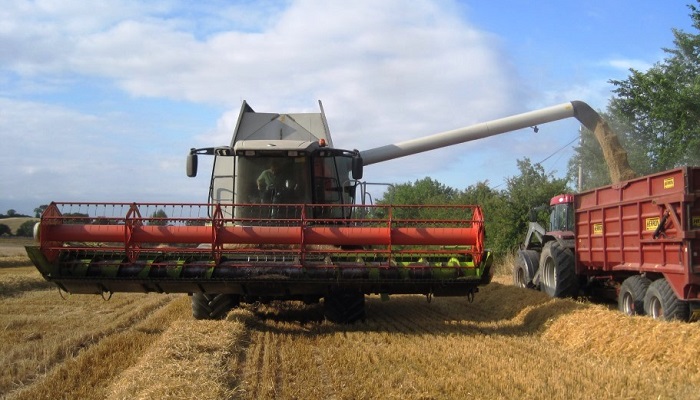
Irish grain offers exclusive sourcing, low carbon footprint and full traceability, Head of Crops Knowledge Transfer, Michael Hennessy tells us more on this high-value feed option.
Grain produced in Ireland, like anywhere else in the world, is a commodity. Each year, we produce around 2 million tonnes of grain, and we import 4–5 million tonnes of other feed ingredients. This year, however, a lack of demand has created the unusual situation where grain assemblers are being forced to export feed oats at a €30 discount on their true feed value – all while millions of tonnes of other feed ingredients are still being imported. Irish research clearly shows that oats perform just as well as barley in ruminant diets.
Millers and compounders generally base their decisions on nutritional factors such as energy, fibre, protein, etc., rather than the origin of the grain. But Irish grain is different in three important ways:
- Exclusivity – Irish grain can only be purchased directly from Irish farmers.
- Sustainability – Irish grain has one of the lowest carbon footprints in the world, lower than most of our European neighbours.
- Traceability – All Irish grain is fully traceable and produced to strict EU standards.
This differentiation is vital as the country works to reduce the carbon footprint of agricultural production, particularly in the livestock sectors. While some livestock are fed on native grain, many animals never see Irish grain in their diet.
When ruminant rations are maximised with native grains, their carbon footprint is roughly half that of rations made entirely from imported ingredients – despite having the same feed value.
Research shows that choosing rations with native grains rather than imported ones can reduce the life cycle assessment (LCA) of milk by 7.4%, and beef by 3–5% (depending on the system). These reductions are significant and highlight the role Irish grown grain can play in supporting the livestock sector as it works to lower emissions.
More from Teagasc Daily: Research verifies low carbon footprint of Irish grain