
Keep sheep schemes tasks on track
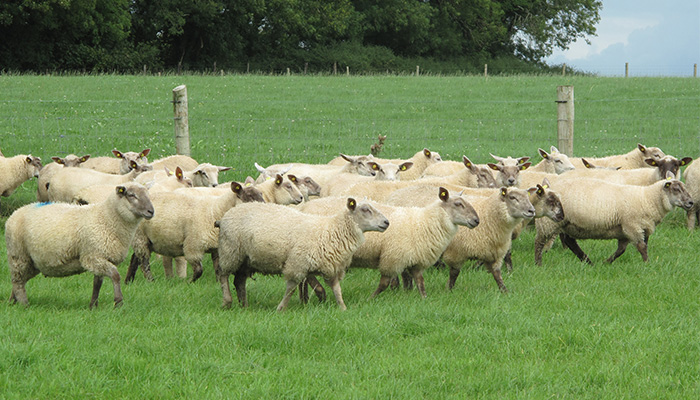
With the favourable weather a good chunk of the heavy work is complete and now there is an opportunity to look over some paperwork and particularly the sheep scheme task requirements. Eamonn Patten, Teagasc Advisor, tells us more.
Sheep farmers can have applied for two key support schemes in 2026 – the ongoing Sheep Improvement Scheme (SIS) and the National Sheep Welfare Scheme (NSWS). Together, they can deliver meaningful income support while driving better flock health, labour efficiency and sustainability. Here is a rundown on the requirements of each scheme and some dates to watch.
Sheep Improvement Scheme (SIS) – Ongoing
To comply with the terms of the SIS, there are two tasks that require completion each year. The Department of Agriculture, Food and the Marine pays €12 per eligible breeding ewe for completing specified flock-welfare measures across areas such as:
- Lameness control (A)
- Mineral supplementation of ewes post‑mating (A)
- Meal feeding of lambs post‑weaning (A)
- Parasite control using faecal egg counts (FEC) (A)
- Management of pregnant ewes (scanning) (B)
- Flystrike control (B)
- Mineral supplementation of lambs pre‑weaning (B)
- Genotyped ram action (B)
A standout element is the Genotyped Ram Action, which requires participants with fewer than 150 ewes to purchase one genotyped ram in the first three years, while those with more than 150 ewes must purchase two. For lowland farms, the criteria include being genomically tested on the Sheep Ireland database, having four or five stars on the Replacement or Terminal index, and being Scrapie type 1, 2 or 3.
Hill rams (Blackface Mountain/Cheviot type) must also be genomically tested, sire DNA‑verified and Scrapie type 1, 2 or 3. The qualifying criteria applies on the date of purchase so the farmer must retain proof. New entrants to sheep farming should be aware of the year they have picked for the ram task (most participants would now be in year 4).
Each year of this scheme the same tasks must be carried out – one A and one B on list. The year the ram task is selected replaces the other task B for that year.
It is important to be aware of the requirement to retain the full payable reference number (or census number if lower) of Breeding ewes for the full calendar year. If reducing numbers below this level – you must notify the Department.
National Sheep Welfare Scheme (NSWS) 2026 – Annual scheme
The NSWS provides €13 per eligible breeding ewe when three specified actions are completed, bringing the total potential support to €25 per ewe when combined with SIS. Payment is based on the number of eligible breeding ewes, using the average of the 2023–2025 Sheep Census returns. If the 2025 census figure is higher than that average it is possible to claim up to the 2025 number. Note that the tasks must be completed on this higher number.
Farmers must complete two actions from Category A (mandatory list) and one from Category B (optional list):
- Category A (choose two, mandatory):
- Shearing (A)
- Body Condition Scoring (BCS) of ewes with appropriate follow‑on management (A)
- Clostridial vaccination of ewes (A)
- Category B (choose one, optional):
- Footbathing (B)
- Plunge dipping for external parasite control (sheep showers do not qualify) (B)
Key dates and specifications
Shearing
Must be completed by the date selected at application, either 17 October or 28 November 2025, with documentary evidence e.g. photos, receipts for shearing or sale of wool.
Body Condition Scoring
Conduct BCS on all ewes twice, eight weeks apart. First assessment between 15 April – 15 July, second between 1 August – 17 October.
Clostridial vaccination
Complete by your selected date, 17 October or 28 November 2025. Ewes previously vaccinated require an annual booster 4–6 months pre‑lambing. If part or all the breeding ewes are unvaccinated, vaccinating lambs is permitted as an alternative – first dose from three weeks of age with a booster 4–6 weeks later.
Footbathing (optional)
Carry out twice between 1 April and 1 October 2025 with the overall aim to keep lameness below 5% at any one time.
Plunge dipping (optional)
Complete by your selected date, 17 October or 28 November 2025, with evidence. Note: sheep showers are not eligible for payment.
Compliance and penalties
You must perform all three selected actions on the full payable number of breeding ewes declared in the application. If you fail to complete both selected Category A and Category B actions, no payment is made and a 20% administrative penalty (€2.60 per ewe) is applied to the overall amount that would have been paid. If the optional task is applied on this must be completed.
Keep dated records and receipts for shearing, vaccinations, footbathing and dipping. For BCS, note dates, average scores and any follow‑up nutrition actions. So, take a little time now to see are you on track with the requirements of both schemes.
Document everything to prove you have completed the tasks and take a break!