
10 February 2024
Keeping a finger on the pulse
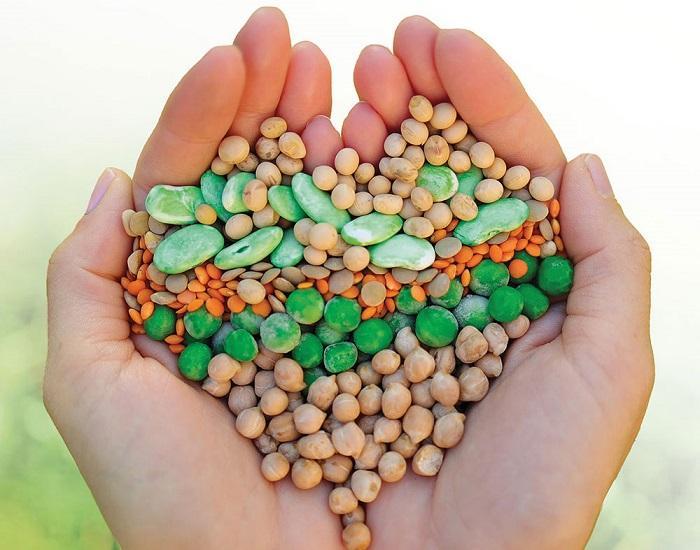
Richard Lynch, VALPRO Path project manager, tells us about the Teagasc led project focusing on adding value to pulse crops, this World Pulses Day, Saturday 10 February.
Pulse crops, with their incredible versatility, nutritional richness, and environmental benefits, hold the power to revolutionize both our food and feed systems. However, the European Union’s heavy reliance on plant protein imports hampers the potential for local farmers to fully capitalize on the value of their crops. The absence of premium supply chains results in missed opportunities to unlock the true worth of these protein sources. Furthermore, the existing business models and strategies fail to embrace crucial aspects like nutrient capture, climate resilience, and circularity, hindering progress towards a sustainable and thriving future.
A European funded and Teagasc led project known as VALPRO Path, is aiming to create sustainable pathways for plant protein production by validating and showcasing added value opportunities for plant protein production in food and feed. A core part of the project is the implementation of 5 Innovation Production Systems (IPSs) located across the EU, which as ‘living labs’ will generate data on novel production/processing systems optimum for specific regions that exploit the highest value potential from protein crops such as Field Pea, Lupin, Chickpea, Faba bean and Lentils. Within Ireland Teagasc researchers are investigating the potential of three of these crops; Faba bean, Field Pea and Lupin.
Ireland regularly achieves some of the highest yields globally for pulse crops and both Faba beans and Field peas are renowned as excellent sources of in-demand plant protein. They are effective break crops in cereal rotations, interrupting the cycle of diseases such as take-all and can fix atmospheric nitrogen thereby reducing N requirements in the following cereal. Their inclusion in a cereal rotation also increases biodiversity and enhances soil structure and health.
However like all crops, Faba beans and peas each have their own weaknesses. Peas are prone to lodging and spring sown Faba beans can struggle in dry summers. Current research being carried out at Teagasc Oakpark is investigating the potential of intercropping Field pea and Faba bean to mitigate yield losses. To date the research has shown that the mechanical support provided by Faba beans to the Field pea in mixed plots effectively prevented the peas from lodging in all experiments, compared to plots where peas were the sole crop.
Further research is being conducted at Teagasc Oakpark on drought resilient crops for lighters soils. In this regard, Lupin has been identified as a viable protein crop that performs well under such conditions. Its ability to fix atmospheric nitrogen combined with its favourable amino acid profile and high protein content, indicate that it has potential as a pulse crop of high value. Current research has demonstrated the potential for high protein yields from the varieties being trialled.
In order to further evaluate the added-value potential of these crops, research is also being conducted at Teagasc food research centres, Moorepark and Ashtown, to evaluate the potential of Irish grown pulses as high value food ingredients. By refining these crops into their individual components of protein, starch and fiber, multiple food applications are being explored such as in sports beverages, nutritional bars and confectionary products.
For further information on the project please visit the projects website here
Acknowledgements: The VALPRO Path project has received funding from the European Union’s Horizon Europe programme under Grant Agreement: 101059824.