
15 March 2025
Key management strategies for reducing respiratory disease on dairy-beef farms
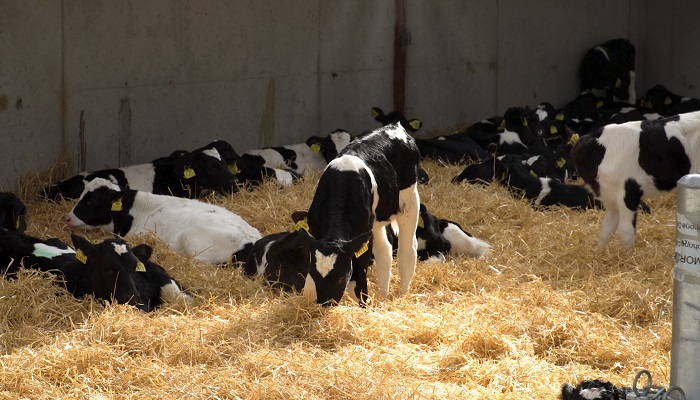
Bovine respiratory disease (BRD), also known as pneumonia, is one of the most prevalent diseases of dairy-beef calves, and is caused by a range of bacteria and viruses.
It is the most common cause of calf mortality pre-weaning, and remains a consistent cause of mortality in weanlings and adult cattle according to the All Island Disease Surveillance Report.
Additionally, BRD increases calf-rearing costs, through expenditure on treatment and reduced animal performance. Research conducted in Teagasc Grange has shown that calves with lung lesions, which is an indicator of BRD, had a reduced live weight gain (0.12 kg/day).
The number of calves that are affected by BRD will be influenced by a multitude of factors that can be broadly split into three main categories: 1) Calf immune competency, 2) Farm environment, and 3) Pathogens. Addressing all three of these areas is essential to a successful BRD management programme.
Sourcing calves
The sourcing of dairy calves will have a major impact on all health issues in the pre-weaning period. Approximately 15% of the dairy beef calves acquired for a recent experiment in Teagasc Grange had lung lesions at the time of purchase. These calves were purchased from multiple farms with some farms having a greater proportion of calves with lung consolidation than others. Thus, it is clear that identifying source farm(s) that produce ‘healthy’ calves is the first step in managing BRD.
Source farms with good colostrum management are more likely to produce calves without health issues. Calves with concurrent health issues such as scour or navel ill should not be purchased as these calves are likely to be immune compromised and so at a higher risk of developing BRD after purchase.
Ideally sourcing calves from fewer farms is advised. Previous work conducted in Grange using novel diagnostics has identified a wide variety of BRD pathogens in purchased cattle. Limiting the number of herds from which calves are purchased should reduce the risk of introducing BRD pathogens to a group of calves.
Housing
Management of the housing environment in the pre-weaning period plays an important role in the respiratory health of dairy-beef calves. Air quality and thermal stress are the major factors that need to be managed in calf housing.
The rate of ventilation and the level of pollutants being produced determine air quality in calf housing. Key air pollutants include: ammonia, dust, and microbial air contamination.
Ammonia is produced from the breakdown of urine by bacteria in soiled bedding. Ammonia is released from the bedding into the air and can irritate the respiratory tract of calves making them more vulnerable to infection. Regular removal of soiled bedding so that a deep wet pack does not form is recommended. This practice should reduce the production of ammonia within calf housing.
Dust in calf housing can come from several sources including bedding and feed. Similar to ammonia, airborne dust can enter calves respiratory tract and cause inflammation, which may make calves more vulnerable to a BRD infection. Where possible, avoid generating dust with machines such as straw blowers.
Microbial air contamination reflects the bacteria and viruses that are produced through the respiration of calves and other natural processes within the calf house. The most appropriate method to address microbial air contamination is through the provision of adequate ventilation.
Ventilation
Ventilation in calf housing can be provided through two means: 1) natural ventilation and 2) mechanical ventilation.
Natural ventilation will rely on the ‘wind effect’ to drive fresh air into the calf house; the ‘stack effect’ does not occur in calf housing. To achieve adequate natural ventilation it is important that the calf housing has adequate inlets and outlets. Inlets should be located along both of the ‘long’ sides of the calf house. The building should be orientated perpendicular to the prevailing wind, and out of the wind shadow of other buildings. An outlet must also be provided at the apex of the calf house to allow for contaminated air to be removed.
Mechanical ventilation may be useful in calf houses that cannot generate adequate natural ventilation due to design or location. Generally, these systems work by driving air into the building using an electrical fan and ducting.
Through a combination of reducing the level of air pollutants and providing adequate ventilation, an environment that predisposes calves to BRD can be avoided.
Cold stress
Cold stress during the pre-weaning period has been associated with increased risk of BRD. This is due to immunosuppression associated with increased metabolic demand when ambient temperatures are low.
Calves less than one-month-old have a thermo-neutral zone between 10oC and 20oC, thus in spring-time in Ireland they are exposed to temperatures that necessitate burning more energy to keep warm.
As calves grow older the thermo-neutral zone widens. For this reason it is important to focus efforts on mitigation of cold stress on the youngest calves on the farm. As it is not practical to heat calf houses, management is centred on reducing factors that exacerbate cold stress, particularly draughts and moisture.
Draughts at calf level will act to lower the effective temperature felt by calves and thus should be avoided. Draughts can be due to lack of appropriate inlet design or because doors are left open/ have gaps which air can pass through. Inlets that are completely open to the outside are likely to be too exposed. Instead, in calf housing inlet designs such as Yorkshire boarding provide a good balance of adequate ventilation and protection from draughts.

Diligent management of bedding can also protect younger calves from thermal stress. Wet bedding will result in increased thermal stress in calves. To avoid damp bedding, ensure that the calf pens have good drainage (1 in 20 slope) to a drain in the front of the pen. Water drinkers and automatic feeders also produce moisture and should be located where there is good drainage and such that they are not wetting the bedding.
Bedding can also provide thermal insulation for calves if it is regularly refreshed. When calves are able to nest in deep bedding, they are thermally insulated and at a reduced risk of BRD. Straw is the only bedding material that can provide the ability for calves to nest. Other materials such as woodchip do not provide this but can be used in older calves that are more thermally robust.
High temperature can also result in immunosuppression and increase the risk of BRD occurrence, but this is less common in Ireland. However, ensuring that adequate ventilation is provided in calf housing should help to mitigate this risk.
Vaccination
In Grange, dairy beef calves currently receive intranasal vaccines (Bovine respiratory syncytial virus (BRSV), Para influenza virus 3 (PI 3), Infectious bovine rhinotracheitis virus (IBR)) the day after arrival on farm. The initial vaccination is delayed by a day to improve immune response to the vaccine.
There are several vaccines available against BRD on the Irish market. They can be broadly divided into two major categories: 1.) Intranasal, and 2.) Injectable. Typically, intranasal vaccines provide protection against viral pathogens (IBR, BRSV, PI-3, Bovine Coronavirus (BCoV)). Intranasal vaccines typically provide a more rapid onset protection (approximately 1 week after administration) but for a relatively shorter period (approximately 12 weeks). This can be useful in high-risk situations where protection is needed rapidly e.g. mixing of calves from several sources. Injectable vaccines may also provide protection against bacterial pathogens such as Mannheimia haemolytica; however, they often require multiple doses prior to onset of immunity meaning calves are not protected for several weeks. In Grange, injectable vaccines are used later in the pre-weaning period. They provide protection for calves during the stress of weaning as the protection from the intranasal vaccines begins to decline.
Vaccination against BRD pathogens is an important management practice; however, it does not guarantee protection against BRD. Vaccination failure may be seen in several situations. Maternally derived immunity (immunity from colostrum) can inhibit immune response to injectable vaccines. Therefore, it is advisable to use intranasal vaccines in younger calves. Calves that are vaccinated during a stress period (transport, weaning, disbudding) or during a period of concurrent illness (scour, joint ill, pneumonia) may not have the expected immune response to the vaccine and will still be vulnerable to infection. Bovine respiratory disease can be caused by pathogens, such as Mycoplasma bovis. For this reason, it is important not to solely rely on vaccination as a management strategy for BRD. In herds using a vaccine where an outbreak occurs, it is advisable to take samples and identify the causative pathogen.
BRD detection
If BRD infections do occur it is important that they are detected early and treated appropriately. Early detection and treatment should reduce losses associated with poor animal performance and reduce the risk of disease spread when affected calves are quarantined.
Regular monitoring of calves and further investigation of calves showing clinical signs such as coughing, nasal discharge, and rapid or unusual breathing is the key to detecting cases of BRD.
In recent years, Teagasc Grange has screened incoming calves using lung scanning. This procedure is relatively simple using the same ultrasound scanner used for pregnancy diagnosis. This has allowed the detection and treatment of BRD prior to development of clinical signs, thus reducing the impact of BRD on animal performance. In the future, this is a service that may be provided by veterinary practitioners.
Conclusion
BRD is a challenge in dairy calf-to-beef rearing operations. Management of BRD risk is multifaceted. Consideration and planning is required to mitigate risk. Design a vaccination plan that provides cost-effective protection.
The above paper was written by Dr. John Donlon, Beef Herd Health Research Officer at Teagasc Grange, and was first published in the proceedings from BEEF 2024. For more information, access the full Beef 2024 publication here.
More information