
Key take-home messages from the Teagasc Drystock Grass Workshops
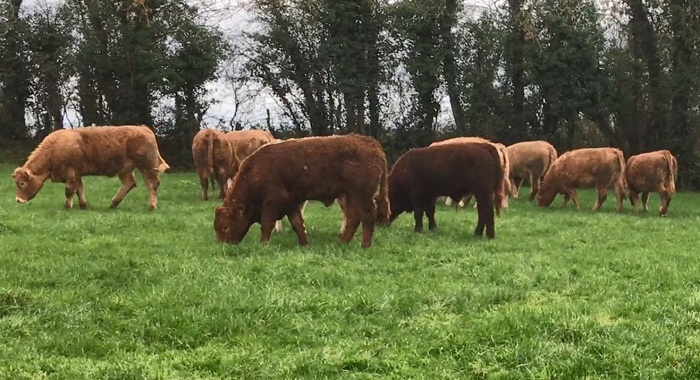
Walk the farm, turn lighter stock out first and plan your fertiliser and slurry applications; Catherine Egan, Teagasc Beef Specialist, shares some of the key take-home messages from the recent series of Teagasc Drystock Grass Workshops this spring.
This spring, like many in recent years, has been challenging. Record rainfall levels in parts of the country have made it difficult to get cattle out grazing. However, there are several practical steps farmers can take to get grazing started
1). What’s the first step?
Walk the farm.
While this may seem like a very basic task, physically walking the farm gives a much better perspective on grass supply and ground conditions compared to observing fields from the yard. Many farmers are often surprised to find there is more grass available than expected and that some paddocks are drier than initially thought.
Walking the farm will also help identify which paddock should be grazed first. Ideally, start with a medium grass cover so cattle can graze efficiently and allow you to move through a larger proportion of the farm early in the grazing season.
2). What stock should be turned out first?
The type of stock turned out first will depend on the farming system.
- Suckler systems: Start by turning out the lightest weanlings on the farm. Begin with a group of 10–20 animals and build numbers gradually.
- If there are no weanlings, first-calved heifers with calves at foot can be a good option, ideally in a sheltered paddock.
- Dairy calf-to-beef systems: The lightest weanlings are again the best animals to begin grazing.
Starting with lighter stock reduces the risk of damaging ground conditions while allowing grazing to begin earlier.
3). Why bother? What are the benefits?
Economic benefits
One farmer hosting a recent workshop had 70 weanlings turned out to grass. This resulted in significant savings in feed costs:
- 12 bales of silage saved per week (€35 per bale) = €480
- 1.5 kg meal per head per day avoided (€350/t) = €260
When valued at 7c/kg DM, the cost of grass was €240, meaning the farmer was making a €500/week saving at grass versus in the shed, that’s before factoring in the additional weight gain being achieved with animals out grazing.
Labour benefits
Once the weanlings were turned out, there was no longer a requirement to feed silage or meal in the yard. Instead, cattle were simply moved between paddocks every 2–3 days, reducing labour demand and workload.
4). What infrastructure is needed?
A simple and flexible setup works best for spring grazing.
- Use reels and pigtail posts to create temporary paddocks.
- Ensure drinkers are well positioned so cattle do not have to walk long distances for water.
- Aim to set up paddocks in a square layout, avoiding long narrow paddocks which are more difficult to graze efficiently.
This type of setup allows farmers to adjust grazing areas easily depending on ground conditions.
5). Fertiliser – when and where?
Start by reviewing your most recent soil samples and updating your nutrient management plan.
Early spring is also a good time to identify where lime is required, allowing applications to be planned throughout the year rather than waiting until autumn. Avoid spreading lime on fields that will be cut for silage.
When applying fertiliser:
- Only spread when soil temperatures are above 5°C and rising
- Biological nitrogen fixation (BNF) in clover begins when soil temperatures exceed 8°C
- Ensure soils are trafficable
- Avoid spreading if heavy rain or severe frost is forecast (check Met Éireann)
Target the most responsive paddocks first:
- High perennial ryegrass (PRG) content or reseeded fields
- Covers greater than 400 kg DM/ha (approx. 6 cm)
- Drier fields
- Fields with good soil fertility (pH > 6.2 and P & K at Index 3)
From April onwards, maintain sulphur applications on responsive soils to improve nitrogen use efficiency. Typically, 16 units of sulphur per acre per year is recommended on deficient or lighter soils for grazing swards.
Where slurry is applied:
- Use LESS (Low Emission Slurry Spreading) equipment
- Manage volumes carefully, applying no more than 2,500 gallons per acre per application
There is generally no requirement for phosphorus (P) or potassium (K) until grass growth reaches 20–25 kg DM/ha/day, which typically occurs in mid-March to April.
Upcoming events
There are still a number of farm workshops taking place. For details of the nearest event to your farm, view the Drystock Early Spring Grass Workshops 2026 webpage.
More from Teagasc Daily: Making up for lost time on DairyBeef 500 farms