
Lameness won’t take a break this winter
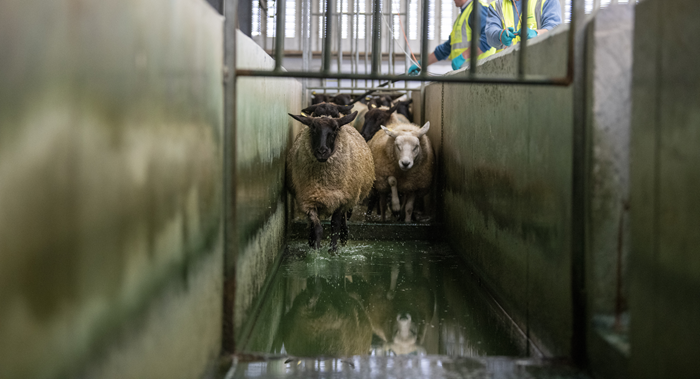
As winter approaches and many flocks have drafted a significant proportion of their lambs for sale or slaughter, Jake Delaney reminds us that this reduction in flock numbers presents an ideal opportunity to tackle the often-burdensome issue of lameness.
The first task is to assess the level of lameness within the flock, which can be done by simply observing sheep as they graze in the field.
Currently, within Irish flocks, the target for lameness prevalence is 5% or less, or more simply put, no more than five sheep lame per 100. Where this target is met, emphasis must be placed on the prompt identification and treatment of lame sheep to maintain these levels.
However, where lameness prevalence exceeds this target, enhanced intervention is required to minimise the impact of lameness on flock productivity. The following management practices should be prioritised when working to reduce lameness within our flocks:
Prompt treatment – lame sheep spread lameness
The more promptly a lame sheep can be treated reduces the opportunity for lameness spread. Longer durations of lameness also typically lead to more severe conditions, requiring more intensive and often more expensive treatment options. Vets should also be consulted to discuss the most appropriate treatment options.
Isolation
The establishment of a ‘lame group’ is a highly effective measure to reduce lameness pressure within grazing groups post-weaning. At handling, lame sheep can be drafted and placed into a separate ‘lame group’, ideally situated near the handling unit where offenders can be easily regathered for further treatment, as necessary.
Avoidance
Consistently wet and mucky underfoot conditions favour the spread of lameness. Where sheep are outwintered, the frequent moving of ring feeders or troughs can prevent disease build-up around these areas.
Applying cubicle lime along wet and mucky prone areas, such as feed barriers and water troughs, can also help to reduce lameness spread during housing, while also ensuring bedding is kept fresh and dry.
Lame sheep should be identified and treated before housing, with diseased sheep housed separately to prevent transmission. Pens should also be regularly inspected and lame sheep separated.
Cull
Although not appropriate once ewes have been submitted for breeding, persistently lame ewes (more than two separate lameness episodes with one year) should be identified for future culling.
Quarantine
Contagious ovine digital dermatitis (CODD), the most severe infectious lameness condition, is present on approximately half of Irish flocks. Typically, CODD is introduced to flocks through the purchase of sheep from infected flocks. Therefore, a closed flock should be established to minimise the risk of disease importation.
Where this is not possible, purchased sheep should be carefully examined for signs of the disease (Figure 1), foot bathed on arrival and isolated from the main flock for a minimum of 28 days. During this period, any sheep becoming lame should be promptly examined and appropriately treated.
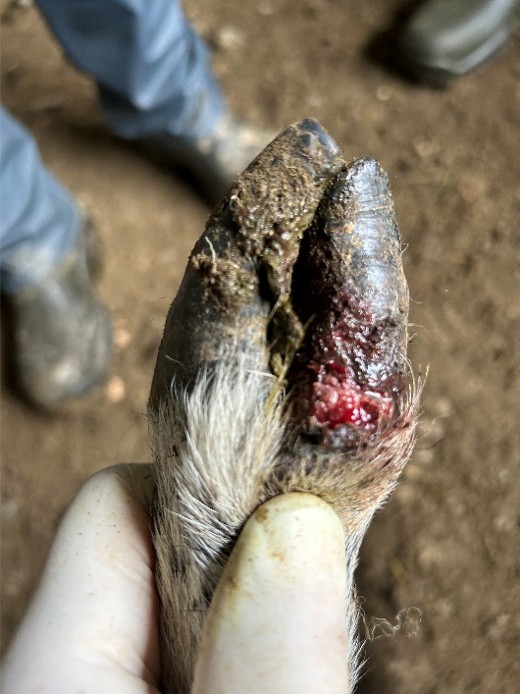
Figure 1: CODD lesion
Foot bathing
Where carried out correctly, foot bathing is one of the most effective tools for combating lameness within flocks, however this is not appropriate on every flock and is facilities dependent.
When sheep are gathered for routine tasks, such as drafting lambs, or dosing, close contact allows for the spread of lameness conditions. Therefore, to combat this and to treat conditions as mild interdigital dermatitis (scald), sheep should be placed in a 10% zinc/copper sulphate-based solution for 15-20 minutes.
Following foot bathing, sheep should ideally stand on a relatively clean, hard surface for at least 30 minutes to maximise the effective of the treatment. Foot bathing alone, however is not an appropriate treatment for footrot or CODD. These conditions require antibiotic treatment in line with veterinary advice.