
29 April 2025
Land rental price increases expected
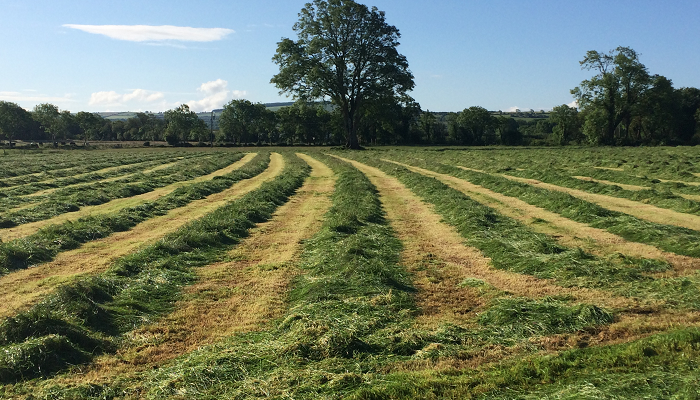
A survey of 169 auctioneers and valuers from all over the country is pointing to an increase in the average cost of rented land in 2025.
Results of the survey, which took place over February and March 2025, was published as part of the Society of Chartered Surveyors Ireland (SCSI) and Teagasc ‘Agricultural Land Market Review and Outlook Report 2025’.
From the findings, SCSI agents expect average national land rental prices to increase by 7% this year. In Munster, average rental prices are expected to rise by 8% while in Leinster and Connacht / Ulster an increase of 7% is forecast.
Last year, average land rental prices increased by 7% in Leinster, 3% in Munster and 13% in Connacht / Ulster.
Along with the increase in rental costs, the survey forecast increases in the price of purchased land. SCSI auctioneers and valuers say they expect land values to rise again primarily due to better milk prices, strong competition among farmers and investors and recent changes to Ireland’s Nitrates Action Programme. Due to the latter, some farmers require more land to meet lower stocking rate thresholds, which further increases the demand, especially among dairy farmers in Ireland.
Land rental prices
The survey also shares details of land rental costs across Ireland in 2024. In Munster, there was a mixed trend in year-on-year land rental prices. Average rental prices for grazing and meadowing /silage declined from between 3% and 5% and now stand between €284 per acre and €294 per acre. Conversely, land rental prices for other crops such as maize and beans rose by 8% on average indicating a steady demand for animal feed crop growing.
By contrast, Connacht / Ulster saw the highest provincial rental price inflation across grazing/silage and grazing-only lands, 14% and 13% respectively with the average price of the former reaching €208 per acre and the latter reaching €177 per acre.
In Leinster (excluding Dublin), land rental prices for grazing/meadowing/silage, grazing only and potato growing all increased by 9% on average to €295, €271 and €467 per acre respectively. The rental price of land for cereal crops increased by 8% to €317 per acre while rent for land rental prices for other crops such as maize and beans, increased by just 2% to €351 per acre.
Land market outlook 2025
Dr. Frank Harrington, Chair of the SCSI’s Rural Agency Committee and Discipline Lead of Real Estate and Valuations at TU Dublin, said one noticeable trend survey respondents picked up on is a significant landowner shift towards long-term leasing over short-term rentals.
“As the market continues to evolve, we believe long-term leasing will remain the preferred model, supported by government policies that encourage security of tenure and investment in land productivity.
“As a result, nearly 84% of survey respondents noted that farmers would typically pay more per acre for similar quality land on a long-term lease compared to conacre.”
Teagasc economist, Dr. Jason Loughrey, says that the strong improvement in output prices for livestock and milk which emerged last year is continuing into this year.
“Last year, we saw strong price growth for milk – up 16% – and lamb – up 18%. On average, dairy farms and sheep farms recovered from a difficult 2023. Cattle prices were also up 4.5% compared to 2023 while the picture for pigs and cereals was more mixed. At the same time, overall input prices decreased with lower prices for significant inputs such as feed and fertiliser in particular.”
“It is estimated that the average net margin per litre of milk produced increased by 84% to 13.3 cent per litre last year. Prices were higher in the first quarter of 2025 compared to the first quarter of 2024. This year, beef prices have reached record levels and were approximately 40% above the average for the first quarter of last year. So far this year lamb prices are up 19%.”
“However, the introduction of new tariffs on exports to the US is adding uncertainty for both the short and medium term. Exports of Irish butter to the US have grown rapidly in recent years and this market may become less lucrative given the imposition of 10% tariffs with the possibility that additional tariffs may be imposed.”
Dr Loughrey noted that aside from the impact of tariffs themselves, the prospect of a trade war is also affecting exchange rates and global economic growth prospects.
“Having been close to parity with the euro in January 2025, the US dollar has since weakened in value. This has negative implications for the euro value of Irish agri-food exports traded in dollars and positive implications for the cost in euro terms of imports of key agricultural inputs such as feed, fertiliser and energy, which are also traded in dollars.”