
11 December 2024
Lightening the workload through infrastructure
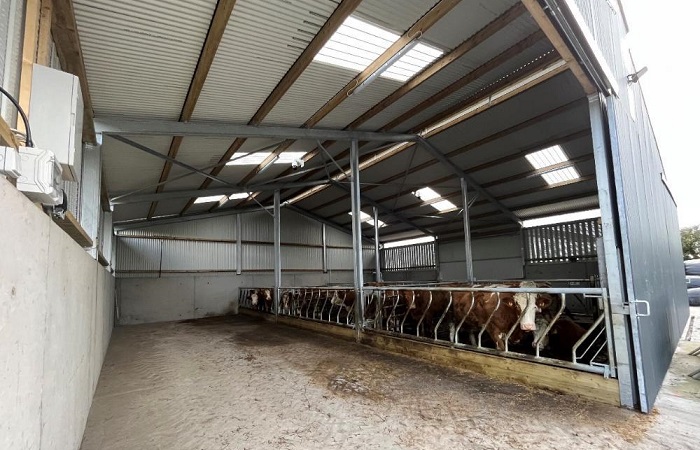
In order to maximise labour efficiency, Future Beef farmer Cathal Irwin has made a number of strategic investments on his farm over the last year.
Farming 27.7ha in Castlebar, Co. Mayo, Cathal’s beef enterprise is of a part-time nature. The progeny from his 18 spring-calving suckler cows are mainly finished off farm, while a further 20 odd suckler weanling bulls are purchased and finished at under 16 months of age.
Being self-employed and with off-farm work commitments to attend to, Cathal tries to be as labour efficient as possible when on the farm. To aid in this regard, he had been planning to upgrade his housing facilities for the last number of years.
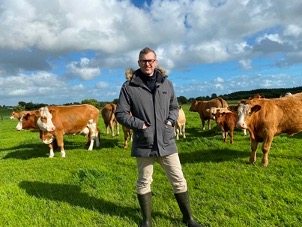
Cathal Irwin
Being self-employed and with off-farm work commitments to attend to, Cathal tries to be as labour efficient as possible when on the farm. To aid in this regard, he had been planning to upgrade his housing facilities for the last number of years.
When he took over the farm from his father, there was a four-bay slatted tank with a straw lie back for housing. This year, he has invested in a new three-bay shed with a slatted tank and lie back area. Creep gates were installed in the pens to allow calves access to the lie back area.
He has installed lights and cameras in the shed to monitor cows at calving time, but also so that he can check on them when he is away for work and see if they need silage. New lights have also been installed in the yard for safety reasons when carrying out yard work in the dark. Cathal also invested in a new dungstead, which can double up as machinery storage during the year.
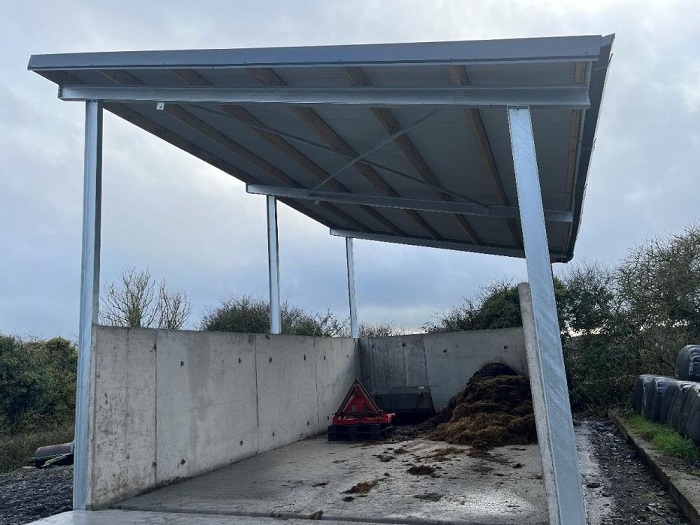
While making changes to the yard, he wanted to future proof it in order to simplify workload for himself. He put sleeves into the yard when the concrete was being poured so that poles can be added for moving cattle across the yard, both between sheds and to and from the cattle crush. He also bought second hand safety barriers, which can be moved in and out of the yard as needed.
All of these changes will make handling and housing of cattle safer, easier and hopefully more profitable for Cathal long term. The new facilities provide extra lying, feeding and air space for cattle over winter.
Grassland
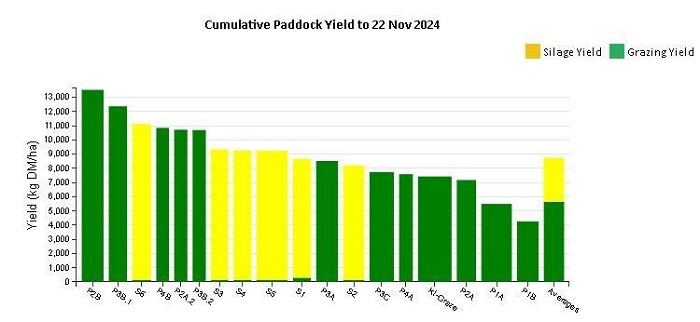
Cathal has analysed his farm summary report on PastureBase Ireland for 2024. He measured grass 25 times during the year and grew an average of 8.738t DM/ha so far this year. The average pre-grazing yield was 1,528kg DM/ha and this was as high as 2,350kg DM/ha in spring, but as low as 1,065kg DM/ha in autumn.
He reseeded 1.6ha (8%) of the farm this year. The average nitrogen/ha spread was 95kg/ha, 91 kg/ha of which was chemical nitrogen. Grazing started on 5 April and magic day (when grass growth meets or exceeds demand) was not reached on the farm until 2 May with the cold and wet spring.
The annual tonnage report on PastureBase provides a breakdown of the grass grown on each paddock for the year, with yellow representing the yield for silage and green representing the yield from grazing. This has allowed Cathal to identify his poorer-performing paddocks and can help him select any for reseeding next year. The paddock yields ranged from 4.26t DM/ha (reseeded field) up to 13.53t DM/ha.
Figure 1: Annual tonnage report 2024 for Cathal Irwin’s farm
Performance
Cathal weighed his homebred bulls (8) on 9th November. They averaged 354kg and gained 0.8 kg/day since 3rd August. Cathal was aware that they had taken over four weeks to settle after housing in mid-September and the rumen fluke burden would not have helped. They are ranging from 283kg to 425kg and he will sell the lightest two bulls if they are not meeting their target weights.
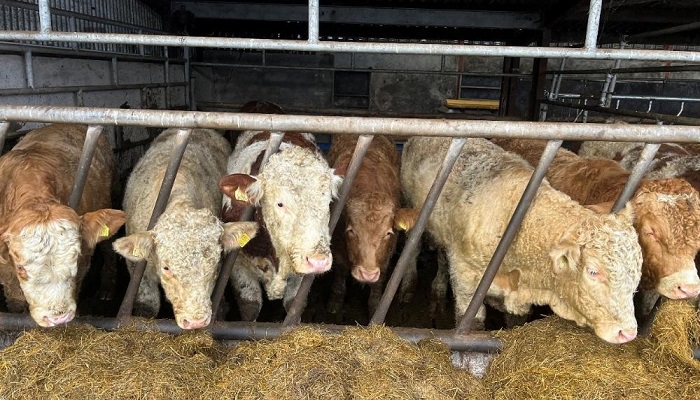
Weanling bulls on Cathal Irwin’s farm
The homebred heifers (6) averaged 334kg on 9th November, after gaining 0.87kg/day since 3rd August. They ranged from 210kg to 372kg.
Four cows were finished on 4th October. They averaged 410kg carcass weight at 108.6 months of age. They graded R=4- on average and made €1,995/head.
The above article first appeared in the Future Beef newsletter for December. Access the full December Future Beef newsletter here.
For more information on the Future Beef Programme, and to sign up for future newsletters, click here.