
Lime – the low-cost fertiliser in 2026
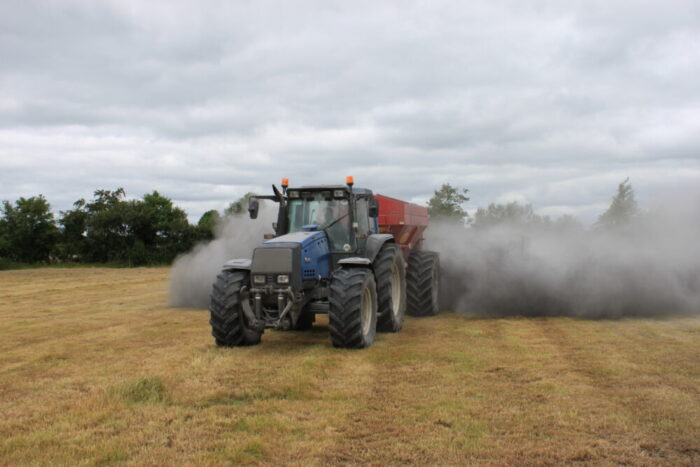
All indications are that nitrogen fertilisers will be more expensive in 2026 due to many factors from carbon taxes to trade tariffs. Mark Plunkett, Teagasc, Johnstown Castle, Wexford, writes that now is the time to plan and organise the application of lime to correct soil pH levels and reduce our dependence on imported chemical N fertilisers.
Maintaining optimum soil pHs brings extra benefits during the growing season such as increasing the efficiency of applied nutrients organic (cattle slurry) and chemical fertilisers (for example Protected Urea / 18-6-12 etc).
Soil N Supply
Liming acid mineral soils to the optimum pH 6.3 to 6.5 will result in the soil N supply increasing by up to 70kgN/ha/year. This will replace expensive N fertilisers and support grass growth from soil N sources, while controlling fertiliser N costs by up to €100/ha (€40/ac) per year. Delivering a return on lime investment in year of application.
Nitrogen Use Efficiency (NUE)
Maintaining optimum soil fertility increases the efficiency of applied N from 35% on low fertility fields to 63% on fields with optimum pH, P & K see figure 1. Correcting soil pH alone results in an improvement in N efficiency from 35 to 53%. Spending money on lime to correct soil pH will ensure a better return from each kilo of N applied. For example, for every 100 kg N/ha applied the utilisable N increases from 35 to 53kgN/ha from correcting soil pH alone.
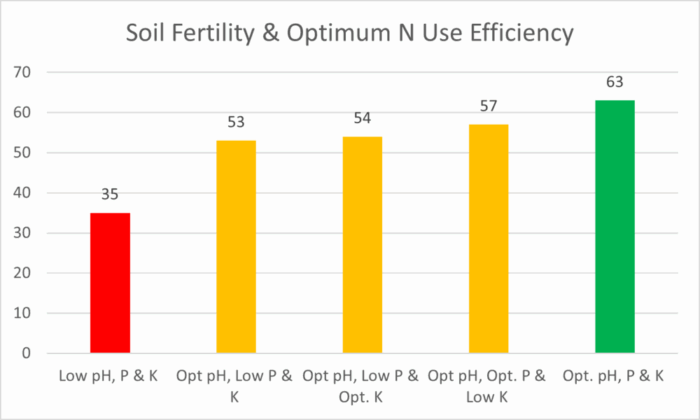
Figure 1. Percentage NUE and grass growth response to N fertiliser across grassland fields according to the status of soil pH, phosphorus (P) and potassium (K) fertility.
Soil P Availability
Correcting the soil pH increases the availability of soil P and the utilisation of P as either cattle slurry or chemical P fertiliser by the growing crop. A study completed at Johnstown Castle demonstrates how critical lime application can be for increasing soil P availability see figure 2 below. For example liming an acidic soil (pH<5.5) alone increased the soil P by ~6mg/l (2 Soil P Indexes). On many farms this would remove the cost (€375/ha) building soil P levels and increases the grass productivity (+ 1 tonne dry matter/ha) at least cost. Phosphorus is the most expensive nutrient and in a more regulated environment maintaining optimum soil pH pays many dividends for farm productivity and profitability.
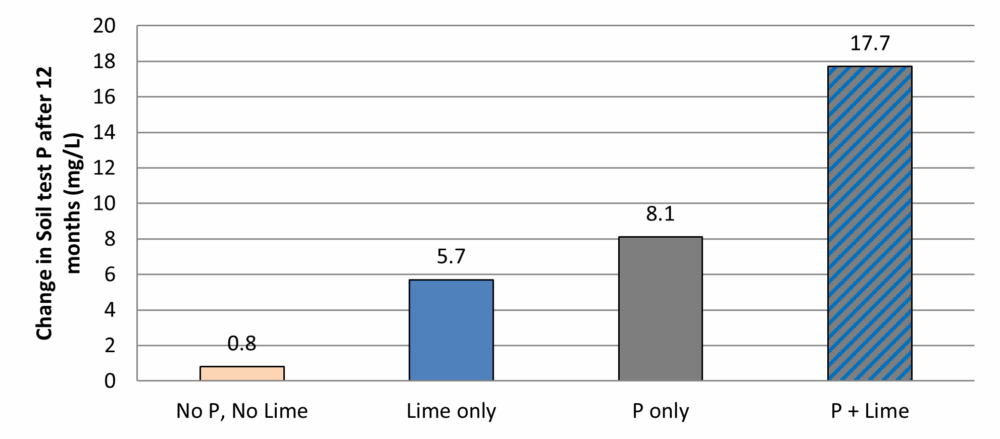
Figure 2. Average change in soil test P (Morgan’s P test) across 16 mineral soils treated with P (100 kg/ha of P), Lime (5 t/ha of lime), and P + Lime and re-tested after 12 months (Sheils, T., et al, 2013).
Take Every Opportunity to Apply Lime
Now is the time to check soil test results and calculate farm lime requirements. Put plans in place to organise lime delivery and apply lime over the coming weeks / months at opportune times. Lime can be spread any day of the year provided soil and weather conditions are suitable. Lime is a major technology to improve the productivity of our soils, health of livestock while increasing farm sustainability and profitability for a small investment.