
19 August 2022
Linking Biodiversity & Heritage on Teagasc Glanbia Signpost Future Farms
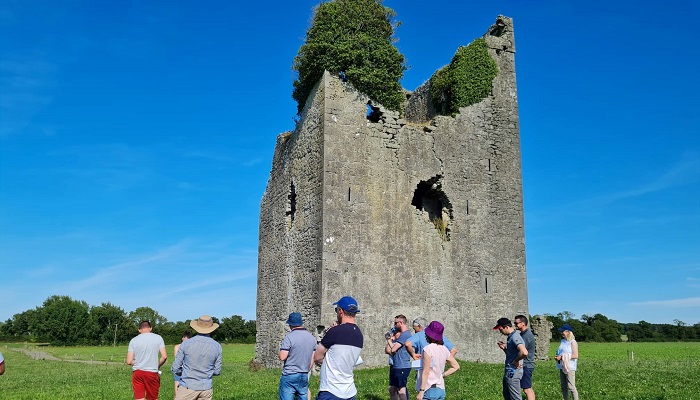
Irish Farmers work alongside historical features on a daily basis incorporating their protection into the management of their farms. In Heritage Week Aoife Leader, Teagasc/UCD Walsh Scholar, outlines how history and biodiversity are maintained and enhanced by Teagasc-Glanbia Signpost Future Farms
The Irish countryside is rich in relics of our past, from ancient settlement sites to historic hedges. These sites and features not only connect us with our past but are also strongly linked with the natural world and the biodiversity that exists in Irish countryside.
Tower Houses
Tower houses were once defended residences built of stone and usually four or more stories high. These castle like archaeological monuments are important facets of the heritage and culture of their local areas but are also biodiversity features. Although the original occupiers of these tower houses are long gone, they now often provide shelter for native birdlife. This is the case on two of the Teagasc-Glanbia Signpost Future Farms, Tom and David Fennelly Co. Laois and John Ryan, Co. Tipperary. According to the National Monuments Service’s Historic Environment Viewer Interactive Map, the tower houses on these farms date back to between the 15th and 16th Century.
On both farms the castles provide ideal nesting sites for raptors including Peregrine Falcons, Barn Owls and Kestrels. For these apex predators castles are important as they offer protection and shelter. These tower houses in combination with best management practices around hedges, watercourses, field margins and responsible rodenticide use ensure that these farms provide a safe space for birds of prey.
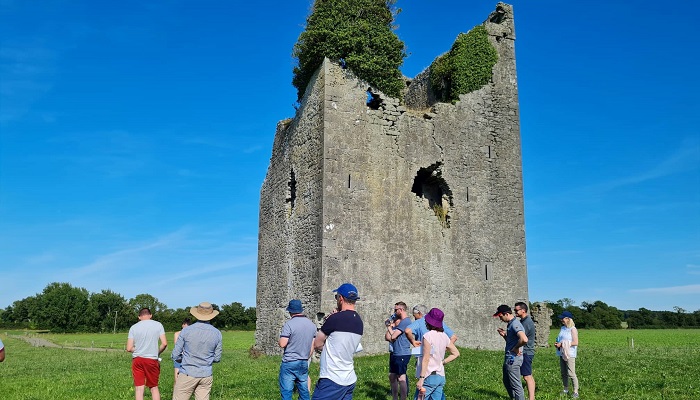
Pictured above: Teagasc-Glanbia Signpost Future Farm Group discussing the history and biodiversity of the Tower House on the farm Fennelly Family Farm, Co. Laois.
Ringfort
On the farm of Francis Nolan, Co. Kilkenny there is a ringfort. This roughly circular, grassy, ancient enclosure is defined by a bank and is slightly raised on the inside. The ringfort is managed with both the protection of biodiversity and the monument itself in mind. Grazing in this area is essential to maintain the grassy nature of the habitat but is practiced carefully to avoid poaching of the site. In addition, a whitethorn tree grows on the bank. This tree flowers in early summer providing food in the form of pollen and nectar for pollinators and produces haw berries in the autumn for birds.
Future Farms, Historic Hedges
Although there are standout heritage sites on some of the Teagasc-Glanbia Signpost Future Farms one feature that all of the farms have in common is their hedges. The hedges across Ireland are often rich in historical and cultural value with most internal hedges in place since the 1700’s and 1800’s, as John Feehan, retired lecturer Faculty of Agriculture, UCD, shared with us during Hedgerow Week 2020. These older hedgerows are richer in plant and animal species than newly planted hedges. Therefore, the management practices that the Teagasc-Glanbia Signpost Future Farmers apply to maintain and enhance the biodiversity value of their existing hedges, such as maintaining hedge height and density and retaining flowering thorn trees, also play an important role in retaining hedgerow heritage.
National Heritage Week
This week is National Heritage Week, an initiative by the Irish Heritage Council, which celebrates our heritage and builds awareness about its value.
- To find out more about our built heritage and landscape follow the link: Built heritage
- To find out more about the heritage and history of our hedges follow the link: Hedgerows
Find out more about the Signpost Programme and about the Teagasc/Glanbia Future Farm Programme