
As we enter the autumn grazing season, it’s important to remember that this period is critical to the whole grazing year and particularly to the availability of grass next spring. However, drier conditions and lower grass growth rates mean some farmers face additional challenges in building cover this year.
As part of a recent Weekly Grass10 update on the Dairy Edge podcast, Grass10 Campaign Manager, John Maher offered key tips and advice for farmers experiencing lower grass growth rates.
Grass supply varies widely across the country, John Maher explained, before adding: “The average figures for the country will read well but there is a huge variation there with people in the north of the country making bales and people in the southern coastal counties feeding bales.” This variation is largely due to rainfall differences, with some areas experiencing much better growing conditions than others.
National average figures from last week show a farm cover of around 760kg DM/ha and growth rates of 61kg DM/ha/day, which is slightly down from the previous week. Demand stood at 51kg DM/ha/day with farmers feeding 4kg of meal.
John Maher added: “Pre-grazing yield should increase as we go towards the first of September towards 1,500-1,700kg DM/ha/day. While the aim is to build grass during August, with the growth a little lower than what we would want, people are going to have to make things happen – otherwise we won’t reach the targets that we try and set out.”
As part of the Grass10 update, the stark contrast in grass growth rates were discussed, with John Maher adding: “The farms that are challenged in terms of grass growth are generally in the southern coastal counties, but you could include southern Leinster as well and south Tipperary that are really struggling with growth rate.”
Driven by an increasing soil moisture deficit and very little rain forecast, growth rates as low as 30kg DM/ha/day have been recorded on some farms, while rates of up to 70kg DM/ha/day have been recorded in northern parts of the country. These lower grass growth rates bring the need for additional management in order to hold or protect grass cover until rainfall does arrive.
As outlined on the podcast, John Maher’s key tips include:
- For farms where grass growth is lagging, reduce herd demand. This may mean feeding meal, silage, removing stock from the grazing platform, or bringing silage ground back into grazing.
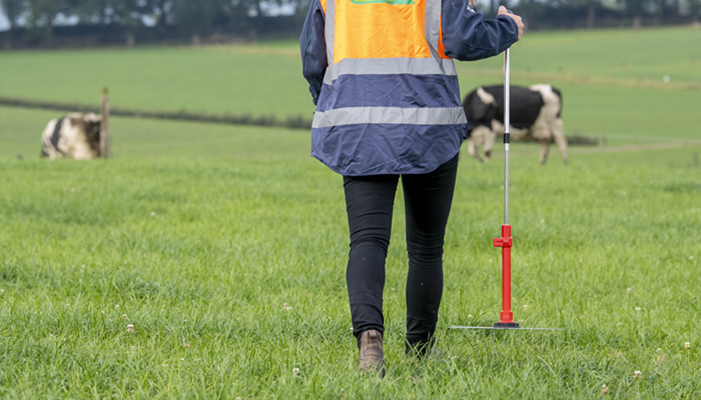
- Try to hold average farm cover in mid-August. Hold the rotation length at 25 days, use a strip wire to make sure that every piece of grass is being utilised.
- Target grazing wisely. Graze drier parts of the farm first where grass supplies and quality may be deteriorating, allowing areas that are growing to continue to grow.
- Avoid letting average farm cover run too low. If the farm cover ends up too low or the rotation length is too short, the possibility of building cover is challenged.
For full insights, listen to the Weekly Grass10 Update below:
For more tips and advice, view the Grass10 weekly newsletter here.