
Maintaining calf performance at grass – see it in practice
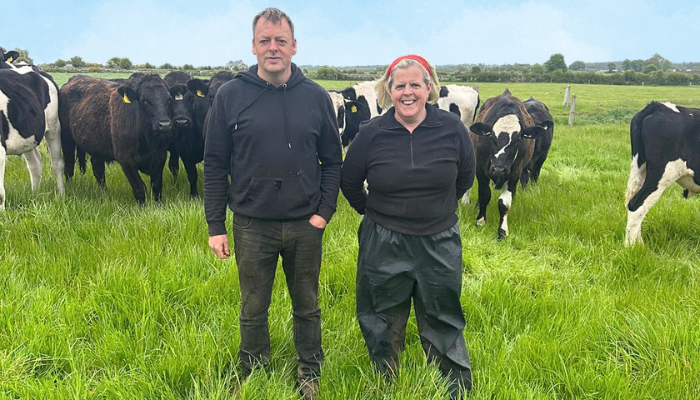
With most calves now out at grass, attention is turning to maintaining the performance achieved during the calf-rearing period. Tommy Cox visits DairyBeef 500 participants, Olivia and Keith Lowry to share some of the practices in place on their farm.
A lot of work goes into getting calves successfully through milk feeding and weaning, and it is important that this progress is maintained once they are turned out to pasture.
How best to manage calves through this stage will be one of the key topics discussed at the upcoming DairyBeef 500 farm walk on the farm of Olivia and Keith Lowry, Cappadavock, near Tuam, Co. Galway, on Wednesday, July 9th at 6:30pm.
Olivia and Keith operate a predominantly early-maturing steer system, rearing 70–80 dairy-beef calves annually on 30.6 hectares. While both work full-time off-farm, they have continued to develop a highly efficient calf-to-beef enterprise with a focus on calf health, grassland management and animal performance.
A critical period
The weeks after turnout are a crucial period for young calves. While grass is the cheapest feed available, calves still need to be managed carefully to ensure they continue to grow and thrive. Calves should be fully weaned, healthy and have a well-developed rumen before turnout. Adequate concentrate intake before weaning and a gradual transition onto grass are essential to achieving this. Post turnout the Lowrys supplement at least 2kg of concentrates per head for at least 4 weeks and after this if grass quality and weather is favourable this is reduced.
Once calves are turned out, good-quality grass is key. Very lush covers should be avoided initially, while access to straw as a fibre source can be beneficial during the first few weeks at grass. Close monitoring is also important. Calves should be checked regularly for signs of coughing, scouring, reduced appetite or poor thrive, as early intervention can prevent small issues becoming bigger problems.
Regular weighing is another useful management tool. It provides a clear picture of how calves are performing and can quickly highlight any animals that are falling behind target.
The health programme
A health programme is central to the Lowrys’ system. Calves are vaccinated against respiratory disease, IBR and clostridial infections, while parasite control is managed through a targeted programme. Parasites such as stomach worms, lungworm and coccidiosis can have a major impact on performance during a calf’s first grazing season, making prevention and early detection critical.
Investment
Visitors attending the farm walk will also see the significant investment that has been made in grazing infrastructure on the farm. One out-farm block has been transformed from five large fields with a single water point into a well-designed grazing platform with a central roadway, 16 paddocks and 14 drinkers. This has greatly improved grazing management and grass utilisation while helping to reduce labour requirements.
The event will provide farmers with an opportunity to see how Olivia and Keith are managing calves at grass while running a labour-efficient system around full-time off-farm jobs. Their target is to finish approximately 40 cattle each year at 22 months of age and a carcass weight of 300kg.
Topics on the evening will include calf health and parasite control, maintaining calf performance at grass, grassland management and grazing infrastructure, farm profitability, and reseeding and post-emergence management.
For anyone rearing dairy-beef calves, the farm walk will offer plenty of practical ideas and discussion around how to keep calves healthy, growing and performing throughout the grazing season.
For more information on this event, visit here.
For more information on the Teagasc DairyBeef 500 Programme, visit here.