

Teagasc DairyBeef 500 and Signpost Programme participant, Gareth Peoples fills us in on his approach to managing calves over the summer months, delving into his feeding and dosing protocols to ensure calf performance.
With all of the calves successfully transitioned to the outdoors since early May, it is important to ensure calf performance is maintained from now on.
Grouping and meal feeding
I find grouping calves by size and age can help ensure even competition and it makes monitoring easier; smaller or slower-growing calves definitely benefit. Concentrate feeding will be maintained for the summer. The calves will receive 1.5kg per day from now on, depending on weather and grass quality. Although an extra cost and work, I feel it pays for itself when you see calves thriving.
Grassland management
From now on, I will target pre-grazing covers of <1,000kg DM/ha to encourage intakes. Calves are generally kept in the small paddocks and are moved every 2-3 days.
Keeping fresh grass in front of calves is important, but it is just as important to get calves to graze out tight to ensure quality regrowth. Grazing down to the base of the grass plant is where the stem and fibrous material is, and doing so is important in preventing any digestive upsets. I will also keep straw with calves for the next few weeks as a buffer.
Parasite control to ensure calf performance
One particular challenge we have faced in recent years on the farm is worms, and in particular lungworm.
For gut and stomach worms, we take regular faecal samples to monitor. Instead of guessing, we test every few weeks during the grazing season. If counts are low, there’s no point dosing – you’re just wasting money and building resistance. If counts are up, we treat – simple as that.
Lungworm (hoose) is a serious one. A couple of wet, muggy days and you could have a yard full of coughing calves. It comes on quick and, if you’re not watching, it can knock calves for six.
This was a particular issue last year and from speaking to farmers in the local discussion group, it was common in the area. We put a plan in place this year in conjunction with our local vet to try and get on top of it. The advice from the vet was once 25-30% of the calves start coughing, treat with a levamisole (yellow) based product.
The reason a levamisole product was recommended by the vet is that it paralyses the worms in the lungs and the calves could cough them up slowly. About 2-3 weeks after the levamisole treatment, he then recommended to treat calves with a long acting moxidectin based product that should give approximately 100 days cover. I am slightly concerned that this will lead to calves being slightly more naïve to worms during the second year and it will be something I will need to continue to monitor.
It’s not just about dosing, either. Where you put the calves makes a big difference to calf performance. I try to give them cleaner ground – silage after-grass is ideal. I avoid following older stock too closely, especially if they weren’t dosed well.
The above article first appeared in the Farming Independent as part of a Signpost Programme update.
Climate Actions for July
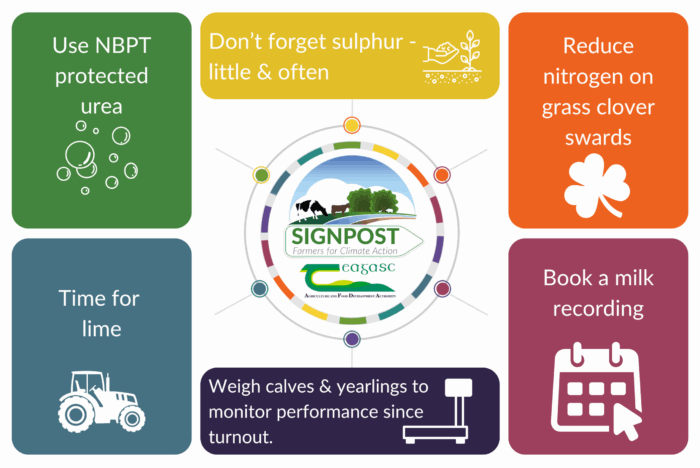
Each month, the Teagasc Signpost Programme promotes six key actions for each months. This month’s actions are:
- Use NBPT protected urea,
- Don’t forget sulphur – little and often,
- Reduce nitrogen on grass clover swards,
- Book a milk recording,
- Weigh calves and yearlings to monitor performance since turnout,
- Apply lime.
Find out more about the Teagasc Signpost Programme here.
For more information on the DairyBeef 500 Campaign, visit here.