
21 April 2025
Make reseeding a priority
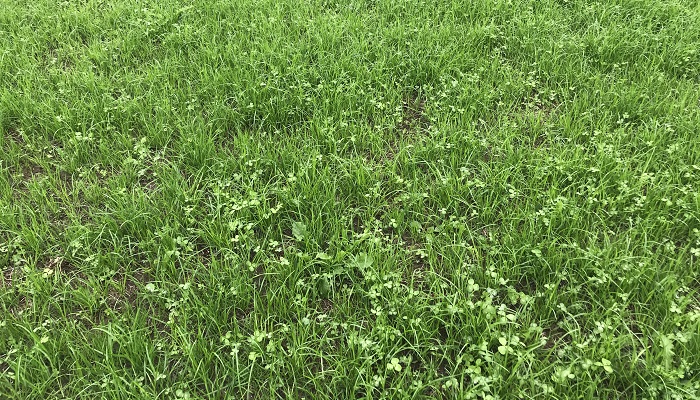
As a lot of planned reseeding was postponed due to adverse weather conditions in 2024, Teagasc Dairy Specialist, Mark Treacy tells us why reseeding is among the best paying investments you can make on your farm.
Priority should be given to reseeding this spring. Reseeded grassland has the potential to deliver higher pasture production and utilisation, better responses to fertiliser, and higher quality swards.
The increased production is usually seen at the shoulders of the year, predominantly in the spring, a time when grass supply is usually tight and very valuable.
Given the reduction in fertiliser nitrogen allowances and increased fertiliser costs, the expected 25% increase in the response to fertiliser nitrogen is also very attractive.
Increasing the quality of the sward by reseeding can also increase animal performance. For every 4% increase in sward DMD, you can expect a 5% increase in milk solids production.
Aside from these benefits, spring reseeding is also the most effective way to establish clover on your farm. Aim to reseed 10% of your grassland area each year.
Payback
Reseeding is expensive, costing approximately €1,100/ha. However, when this cost is spread over the expected 10-year lifespan of the reseeded sward, the investment becomes very small relative to the potential rewards.
Research shows that farm profitability can be expected to increase by €180/ha for each additional tonne of grass utilised per hectare. Increased grass production allows the opportunity to carry more stock on your farm, or alternatively it can be used to replace more costly feeds such as silage and concentrates.
Variety selection
When choosing grass varieties, ensure they are on the current Pasture Profit Index (PPI). Grazing mixes should be dominated by tetraploid varieties (minimum 60%), with strong emphasis put on the grazing utilisation star rating; more stars mean cows show a preference for them and will graze out paddocks easier.
Where the sward is to be used predominately for silage production, choose varieties with a high Silage Sub Index while also ensuring that the range in heading dates is kept as tight as possible.
White clover should be included in all grass mixes, with a minimum inclusion rate of 1.5kg/ha (0.6 kg/acre), but ideally at 3.75 to 5kg/ha (1.5 to 2kg/acre).
More from Teagasc Daily: Dr. Michael Egan’s tips on establishing grass/white clover swards
Well sown
Good seedbed preparation is essential prior to sowing. Seedbeds should be fine and firm, while care needs to be taken not to sow at greater than 10mm seeding depth to ensure good clover establishment. Rolling post sowing is essential.
Reseeding time is also the best time to get control of problem weeds such as docks. Where problem weeds are present, burn off with a glyphosate product before tilling, and apply a clover-safe post emergence spray on the new reseed once the clover plant has a true trifoliate clover leaf and the grass seedling has 3 leaves.
Early grazing will encourage the grass plant to tiller and thicken the sward and is also vital for clover survival. Graze once a cover of approximately 800kg DM/ha is reached and the grass plant has sufficient rooting to prevent it being pulled out of the ground by the grazing animals.
More from Teagasc Daily: Herd nutrition notes for April