
18 November 2022
Managing ash dieback in six short videos
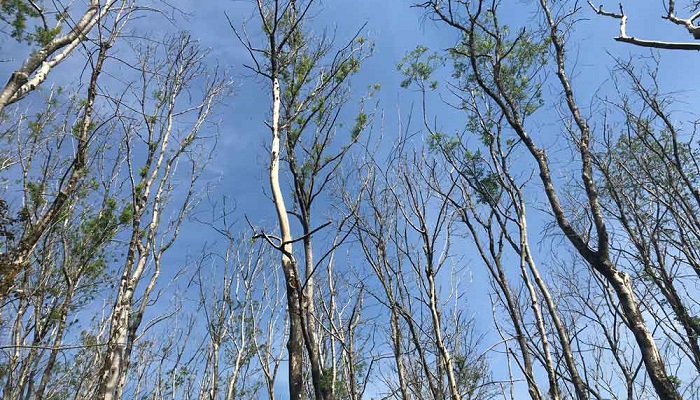
Steven Meyen, Teagasc Forestry Development Officer, provides practical guidance to forest owners on how to deal with ash dieback.
Teagasc’s Forestry Development Department has produced a series of videos to provide objective advice to forest owners whose ash plantations have been affected by ash dieback (Hymenoscyphus fraxineus) and to highlight the important factors that need to be considered when removing the infected ash trees and replacing them with alternative tree species.
In this series, practical advice and information is provided by Teagasc’s Forestry Development Officers on
- The life cycle and symptoms of the fungal disease ash dieback, with descriptions of how this fungal disease spreads and how to recognise the symptoms of this disease of our ash trees.
- The importance of access into and through a plantation infected by ash dieback. The necessity of adequate forest roads providing access for timber harvesting operations is emphasised.
- The challenges faced when carrying out timber harvesting operations in ash dieback-infected plantations, in particular the important health and safety considerations when harvesting dead or dying ash trees.
- Species selection, planting and tree protection are also considered when it comes to replanting an ash dieback-infected plantation.
The series also provides an overview of the important research work that is being carried out by Teagasc investigating solutions to the ash dieback fungal disease. Teagasc has developed two research projects on ash dieback of common ash (Fraxinus excelsior). Unfortunately, it is expected that the disease will affect most ash trees in Ireland, causing the majority of them to die over the next two decades.
A very small proportion of ash trees show natural tolerance to the pathogen. This means that they show minor symptoms and the disease does not have a noticeable impact on their growth or health. Teagasc is working to identify such trees and build up a gene bank with the ultimate goal of producing tolerant ash seed and plants restoring ash trees to Irish forests and hedgerows.
Dr Ian Short gives an overview of his remedial silvicultural research over more than a decade supporting forest owners in managing their ash dieback-infected plantations. He discusses alternative silvicultural management options including coppicing, underplanting, free-growth, and felling of small coupes.
Dr Dheeraj Rathore, tree improvement researcher with Teagasc discusses the Teagasc tree improvement programme to breed tree genotypes that are resilient to the ash dieback disease, productive and adapted for a changing climate.
This important series on how to deal with ash dieback is made up of six short videos. They can be viewed here.
These and other forestry-related videos can be viewed on the Teagasc Forestry YouTube Channel.
The Teagasc Forestry Department issues an article on a Forestry topic every Friday here on Teagasc Daily Subscribe to: Forestry e-News Keep up-to-date with the Teagasc Forestry Department or follow them on Social Media