
Managing autumn grass supplies following drought conditions
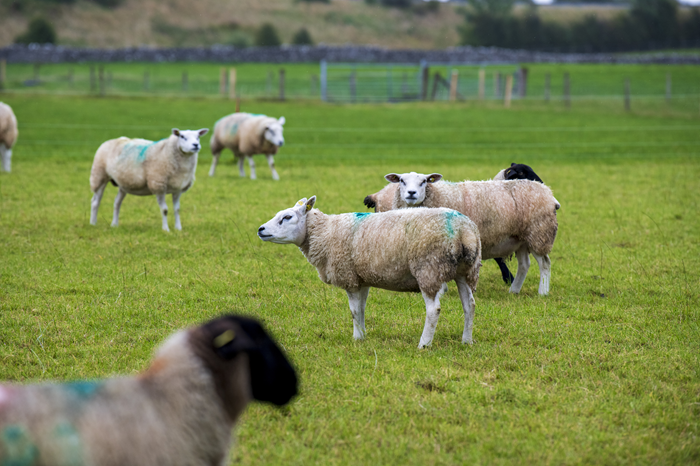
September's grassland management approach will vary considerably between farms, writes Ciaran Lynch, Teagasc Sheep Specialist, who details the various strategies sheep farmers should employ when facing a grass shortage or target supplies.
Grass supplies range from farms still severely affected by drought with very little grass available, to farms where growth has recovered but covers remain behind target, and those where growth has returned to more normal levels and covers are on target.
The first step is to assess the current grass supply on the farm. This can be done by measuring covers or, at a basic level, walking the farm and estimating the number of grazing days available in each paddock.
Under normal conditions, the targets for average farm covers to build grass supplies through the autumn are outlined in Table 1. These targets may appear unrealistic on farms affected by drought, but they are designed to build sufficient grass supplies to meet livestock demand as growth rates naturally decline through the autumn.
The priority on drought-affected farms should be to allow grass covers to rebuild rather than grazing newly established regrowth too soon.
Table 1. Autumn farm grass supply targets
| Target | kg DM/LU | Days ahead |
| Early September | 250 | 20 |
| Mid September | 300 | 25 |
| Early October | 350 | 30 |
| Mid October | 400 | 40 |
Protecting regrowth
Where grass supplies are limited, every effort should be made to protect newly established regrowth. Avoid grazing paddocks as soon as sufficient grass becomes available; allow covers to build before returning to them. Continuing to feed ewes and lambs now for a short period to build covers will be easier than re-introducing feed later in the autumn or housing stock earlier.
Where possible, use temporary fencing to reduce the grazing area and keep stock on the available grass. This improves control of grazing and allows other areas to continue building covers. Paddocks that have been grazed should be given sufficient time to recover before being grazed again.
The aim should be to build a bank of grass ahead of stock, rather than simply responding to improving grass growth rates. Where grass growth has recovered but days ahead remain low, supplementation may need to continue while covers rebuild.
Match stock demand to your grass supply
Where grass supplies are restricted, there are two main options:
- Continue supplementation while allowing grass covers to build.
- Reduce or re-prioritise demand, allocating available grass to stock that will benefit most from it.
Where grass is particularly scarce, priority should be given to thin ewes (BCS <3), replacement ewe lambs and the breeding flock, aiming to have sufficient covers by mating. Where appropriate, finishing lambs can be maintained on a more intensive concentrate- and fibre-based diet, reducing their demand on limited grass supplies.
Use the ‘Days Ahead’ guide below as a suggested way of prioritising what grass supplies are there to manage your flock:
Table 2: Managing according to grass supply
| Grazing days ahead | Ewes | Lambs |
| 0-10 days | Supplement all ewes. Thin ewes: silage/hay + concentrate. Fit ewes: silage/hay with or without concentrate. | Concentrate + fibre source. |
| 10-15 days | Thin ewes: grass + concentrate. Fit ewes: silage/hay with or without concentrate. | Concentrate + fibre source. |
| 15-20 days | Thin ewes: grass with supplementation as required, Fit ewes: grass. | Concentrate + fibre source. |
| 20+ days | Grass-based diet. | Grass-based diet, with supplementation as required. |
Fertiliser
Where sufficient rain has fallen, soil moisture deficits have eased and grass growth has resumed, fertiliser can be used to help rebuild grass covers. Walk individual paddocks before spreading, as the response will vary depending on rainfall, soil moisture and the condition of the sward.
Where grass is actively growing, apply fertiliser in line with the demand on the farm and the farm nutrient management plan. A rate of approximately 20 kg N/ha (16 units/acre) can be used where there is sufficient moisture and a response is expected. It is essential to ensure full compliance with the September chemical fertiliser closing deadline. Target applications at paddocks with the greatest potential to respond and where additional grass is required to build autumn covers.
Do not spread fertiliser on severely moisture-stressed ground in the expectation that rain will arrive. Fertiliser should be applied when conditions are suitable and grass is actively growing.
The aim is not simply to increase growth rate; it is to build sufficient grass ahead of stock. Fertiliser use should therefore be combined with controlled grazing and supplementation where necessary to allow covers to recover.
Key points
- Assess grass supplies now – know how many grazing days are available.
- Protect regrowth – don’t graze newly established grass too soon.
- Continue supplementation where necessary while covers rebuild.
- Use temporary fencing to reduce grazing area and protect regrowth.
- Prioritise available grass for thin ewes, the breeding flock and replacement ewe lambs.
- Consider all concentrate-based finishing or store options for lambs where grass is particularly scarce.
- Apply fertiliser strategically once rainfall and soil moisture allow a grass growth response.
- Build grass ahead of stock rather than reducing supplementation as soon as growth rates improve.