
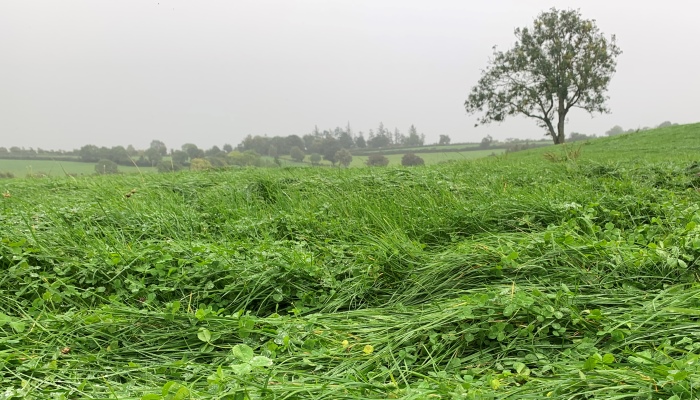
Bloat is a common concern when grazing white clover swards, particularly during specific high-risk periods.
These include when the sward clover content exceeds 45%, during damp or wet mornings, and when animals enter paddocks extremely hungry. Identifying these risk periods is critical to preventing bloat.
To minimise the incidence of bloat, preventive measures can be implemented. For example, adding bloat oil to the water or using a ‘breakfast break’ – a small, two-hour grazing allocation when introducing animals to a new paddock – can effectively reduce bloat risks and ensure animal health.
To reduce the risk of bloat occurring, farmers need to be consistent, reemploy the strip wire when allocating grass, use bloat oil, include fibre in the diet and manage the grazing group to avoid gorging.
High risk times for bloat:
- Swards with a high clover content – >40%,
- Turning animals from grass-only swards to graze grass-clover swards,
- Turning hungry animals to graze mixed green grass-clover swards – tight post-grazing sward height (<4cm) on previous grazing,
- Low dry matter percentage in grass – wet weather or heavy dew on the pasture,
- Very lush grass – low pre-grazing herbage mass (after grass etc.).
In the below video, Dr. Áine Murray shares some key tips on maintaining white clover in swards, including some advice to lessen the risk of bloat:
Tips when grazing high clover content paddocks (>40%)
When grazing paddocks with a high clover percentage (>40%), there are a number of management techniques farmers need to employ.
Firstly, make sure cows enter the paddock as a full herd. Hold cows in the collecting yard to achieve this. The water trough present in this yard should also be supplied with bloat oil, as should the water trough in the paddock.
To introduce an element of fibre into the diet, cows should be supplied with 2-3kg DM/ha of silage at milking. This will also serve to slow down grazing upon turnout and to avoid gorging.
The under feeding of cows, often determined by too low of a post-grazing sward height, should also be avoided. In addition, strip wires should be used to provide 2-3 hours breaks. Finally, if possible, avoid switching from grass to high clover content paddocks.
For more tips and advice on grassland and clover management, visit the Grass10 webpage here.