
05 May 2025
Managing Rainwater on the Farm
Kieran Kenny, Teagasc ASSAP Advisor, explores how to manage excess rainwater on farms to protect productivity and water quality.
The Impact of Rainwater on Farms
The increasing intensity of rainfall due to climate change is an additional challenge for farmers to adapt to particularly as this can occur at any time during the year. While the impacts on productivity and day to day activity are obvious, farmers need to consider how best to manage their farms so as the farm infrastructure can cope with this excess water and minimise the risk to water quality. This is particularly important in the farmyard and on land that is highly connected to the drainage network.
Understanding Water Flow on Your Farm
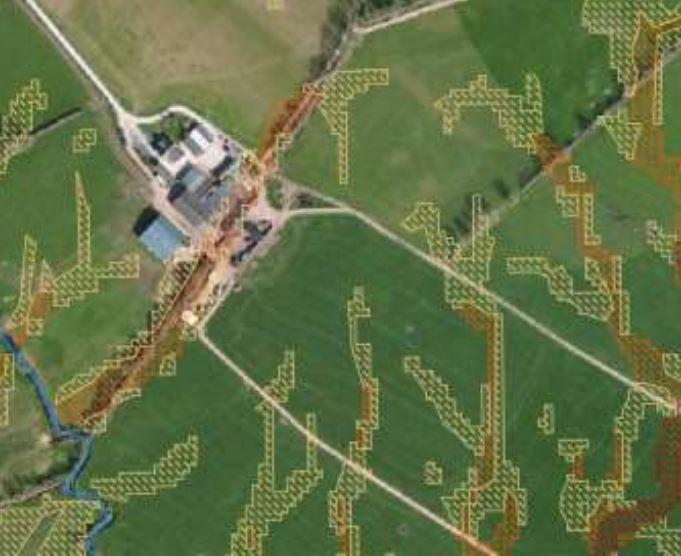
To help manage this excess water on your farm you first need to know how it flows through your farmyard or fields. The Environmental Protection Agency (EPA) provides maps showing water flow paths of water over land and these are a useful guide. They also show where water enters the drainage network (drains, watercourses, etc.) and this is important as farmers can then locate measures to help minimise contaminant losses to water.
Establishing riparian zones and planting trees, retaining or installing wetlands, hedgerows, ponds or bunds all can help block or capture nutrient and sediment from reaching the watercourse.
Managing Rainwater in the Farmyard
Rain water moves across the yard and typically is channelled to a drain that takes the water away from the yard and into the drainage network. If this water flows across soiled yard areas then this water can become contaminated with nutrients, sediment and pathogens. By spending time to assess where the water moves through the yard you can then take actions to minimise the losses of contaminants.
The first thing a farmer should do is to try reduce the volume of clean water that flows though soiled areas. Having gutters and downpipes from shed roofs in proper working order and having the water piped directly to an outfall drain is a simple and effective method of controlling clean water.
Where surface water flows across the yard from clean areas, install diversions to prevent it from entering soiled areas. This will help reduce the volume of contaminated soiled water that needs to be collected and land spread.
Support from ASSAP
The Agricultural Sustainability Support and Advisory Programme (ASSAP) is available to farmers in Priority Areas for Action. The service offers advice on farming and water quality. More information on ASSAP is available here.