
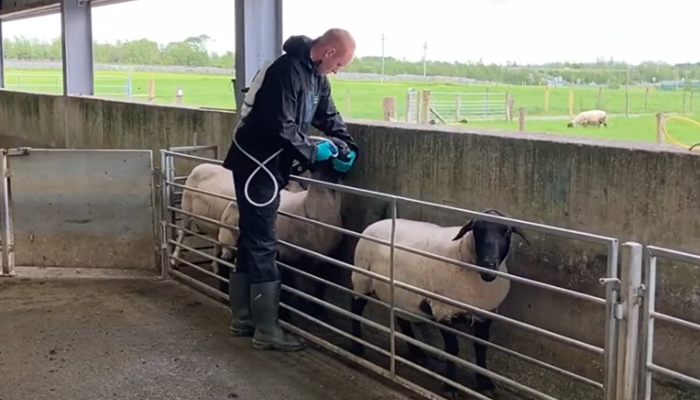
Ram purchase costs have risen this year and every extra season you get from a ram significantly reduces the cost per lamb sired. In this article, Teagasc Sheep Specialist, Ciaran Lynch shares some key management guidance to minimise ram losses and extend working life.
Many farms only get 1.5-3 seasons from rams. In a year where rams are a dearer investment, post-mating management becomes even more important – not just for animal welfare, but for the economics of flock performance.
Rams work intensely during the breeding period, often losing substantial condition and picking up knocks or health issues. The weeks immediately after mating are a critical recovery phase, and how they are managed now will directly influence longevity, fertility and future reliability. The following guidance outlines some of the key management to minimise ram losses and extend working life.
1). Minimising fighting and reducing injury risk
As the main breeding activity winds down, rams often become more unsettled and competitive. This is when fighting is most likely to occur, and injuries sustained at this stage can shorten a ram’s working life.
Avoid unnecessarily long joining periods
Extending mating beyond six weeks rarely improves overall pregnancy rate substantially, but it does increase the chance of:
- More aggressive behaviour as rams become bored or frustrated,
- More injuries and bruising,
- More weight loss – particularly for younger rams,
- A prolonged lambing season for relatively few late-cycling ewes.
Safe regrouping after mating
When rams are removed from ewes and regrouped, they should be:
- Confined together initially in a tight space e.g. small pen or trailer
- Put obstacles such as square bales in the pen to break line-of-sight and reduce charging
- If turning out do so later in the evening, when they are hungry and naturally less inclined to fight. Darkness further reduces activity and gives the group time to settle.
Pre-breeding grouping pays off later
Rams that are allowed to run together for several weeks before the breeding season tend to fight far less afterwards. Establishing a social order early is one of the simplest ways to reduce chronic injuries and stress.
2). Post-Mating Health Checks
Rams must be closely inspected once the breeding period ends. Early identification and treatment of problems improves recovery and significantly impacts long-term viability.
Check for physical injuries
- Look for bruising or inflammation on the brisket
- Assess for head and neck swelling from head-to-head clashes
- Treat wounds promptly and segregate badly injured animals and consult your vet to see if any further treatment is needed
Foot health
Lame rams will struggle to regain condition, and the cause of the lameness needs to be treated early and effectively. Aside from physical injuries, check for any infectious causes such as scald, footrot, CODD and treat effectively.
Parasite control
Active rams tend to eat less, lowering immunity and making them vulnerable to parasites.
Stomach worms:
Particularly an issue for ram lambs as there still naive, many of these may carry high burdens post-mating. Treat using an effective wormer and confirm treatment based on faecal testing where possible.
Liver fluke:
In fluke-prone areas:
- Use a product that targets immature fluke
- Consider a follow-up treatment in spring if grazing high-risk ground
Vaccinations
- Ensure rams are enrolled and included in the farm’s vaccination plan:
- The annual clostridial booster and/or pasteurella vaccination (where used)
- Remember, purchased rams may still require the second dose of a primary course.
Watch for iceberg diseases
Be alert for general signs of ill health, particularly in newly purchased rams, as it could indicate possible underlying problems. Health issues such as:
- Persistent weight loss,
- Recurring pneumonia,
- Lumps around head/neck,
- Poor thrive not explained by worms or nutrition
These symptoms may be indicative of conditions such as CLA, Johne’s disease, MV and OPA and can slowly undermine ram productivity. Suspected cases should be isolated and veterinary advice sought.
3). Nutrition and body condition rebuilding
Rams can lose 15-20% of their bodyweight during a typical 5–6-week mating period. Rebuilding condition is essential for fertility, immunity and winter survival.
Why winter grass alone isn’t enough
Autumn and winter grass is a low dry matter, low energy feed when available, but more often limited in quantity and poorly utilised in wet weather. On this diet, a ram weight gain will be low – less than 50g/day, grass alone could take months to regain the weight lost during mating.
Concentrate supplementation
To meet this shortfall, adding some supplementation will help regain weight faster. As a guide:
- Feed 0.5 kg/day of a ram or lamb nut containing ammonium chloride
- Continue until rams reach target body condition (3+), longer for ram lambs still growing
Relative to the cost of replacing a ram, 25-50kg of concentrate per ram is a small investment.
Housing or supplementary forage
If grass supply is limited:
- House rams and provide good-quality silage/hay
- Alternatively, supplement outdoors with forage and provide a sheltered, dry lie
- Comfort and shelter significantly improve recovery and reduce disease risk.
4). Key takeaways
Many farms only get 1.5–3 seasons from rams. Prolonging this to even four seasons sharply reduces cost per lamb sired.
- Rams are more expensive this year – protect the investment
- Minimise fighting and injuries, especially during regrouping
- Carry out thorough post-mating health checks and treat early
- Supplement nutrition to rebuild condition efficiently
- Prioritise disease prevention, parasite control and vaccination
- Better pre-mating preparation and post-mating care significantly reduce ram wastage