
Managing Salmonella in Irish Pig Production
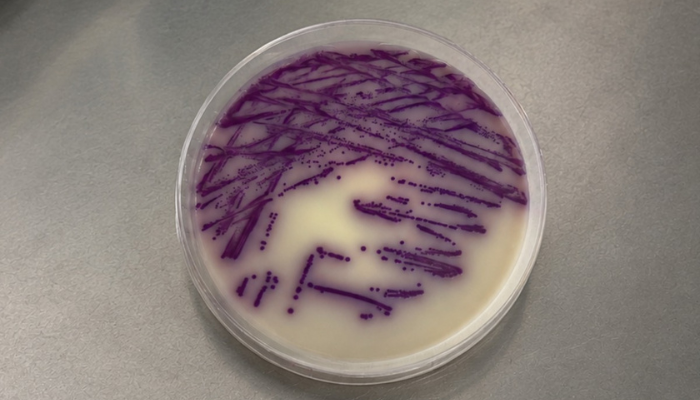
Bárbara Terezo, Teagasc Walsh Scholar, discusses some of the current approaches to Salmonella control in Irish pig production.
Salmonella is a group of bacteria with over 2,000 serotypes, some adapted to specific animal species. It colonises the digestive tract of many animals, including pigs, and can survive in the environment (including dust) for years. Pigs may become infected at any age, often without clinical signs, although stressors such as weaning or concurrent disease can lead to diarrhoea, poor growth, or in rare cases septicaemia and death.
Salmonella is shed in faeces, making faecal contamination the primary route of transmission. Control aims to reduce bacterial shedding and pigs’ exposure to contaminated faeces through vaccination, acidification of feed or water, stress reduction, and good biosecurity, including cleaning and disinfection, all-in/all-out production, and controlled staff movement. Antibiotics may be used during clinical outbreaks, although antimicrobial resistance is an increasing concern.
Diagnosis relies on bacterial culture of faecal or post-mortem samples, while meat juice serology is used to identify previous exposure through antibody detection.
Salmonella, particularly S. Typhimurium, can be transmitted from pigs to humans through contaminated pork, causing foodborne illness that can be severe in vulnerable individuals. In 2024, the Republic of Ireland recorded 391 human salmonellosis cases.
National Monitoring
Under Irish legislation and the National Pig Salmonella Control Plan, farms slaughtering more than 200 pigs annually must undergo monthly meat juice serology at slaughter and develop a Salmonella control plan with their veterinarian. In addition, Animal Health Ireland introduced the voluntary Salmonella TASAH programme in 2022. Free faecal testing has shown that approximately two thirds of participating farms tested positive for Salmonella, highlighting the need for improved control.
The TICSalmPig Project
The TICSalmPig project aims to reduce Salmonella on Irish pig farms by investigating Salmonella epidemiology and farmers’ perspectives across 27 commercial Salmonella-positive farms (20 in the Republic of Ireland and 7 in Northern Ireland). The project is also working with half of these farms to implement practical control measures, evaluate their economic impact, and develop recommendations for the wider industry.
Initial sampling found Salmonella-positive samples ranging from 4% to 58% between farms. Weaner pigs had the highest prevalence (35%), followed by finishers (17%), while breeders had the lowest (14%). The most common serotypes were the monophasic variant of S. Typhimurium (22.8%), S. Rissen (19.6%), S. Typhimurium (14.7%), and S. Derby (12.5%), with 13 serotypes identified overall.
These findings provide baseline data for the project. Further sampling will take place in 2026 and 2027, while participating farmers, veterinarians, and stakeholders will continue developing and evaluating practical Salmonella control measures that can be adopted more widely across the Irish pig sector.