
Managing yearling ewes with lambs at foot
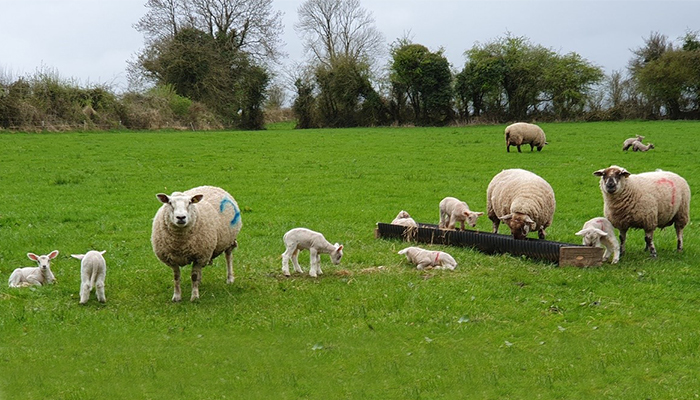
One of the keys to success in yearling ewes rearing lambs is managing them as a separate group for appropriate nutrition, Damian Costello, Sheep Specialist at Teagasc, shares some key management advice.
Research carried out at Teagasc Athenry indicates that, when managed correctly, maternal breed replacements lambing down at one year old can produce around one extra lamb during their lifetime compared to the more traditional system of ewes producing their first lambs at two years of age. It’s not, however, a practice that suits all sheep farmers due mainly to the higher level of labour and management required to successfully operate the system.
Extra management required
One of the keys to success in yearling ewes rearing lambs is managing them as a separate group for appropriate nutrition from pre-mating right through to next year’s breeding season. Other important factors include having ewe lambs at least 60% of their potential mature weight when being joined with the ram for the first time as well as having the required labour and facilities needed for lambing.
Yearling ewes post lambing
After lambing, yearling ewes with lambs at foot have extremely high nutritional needs to support milk production, regaining body condition and maintaining her own skeletal growth. They should continue to be managed as a separate group post turnout to facilitate meeting this high feed requirement.
The level of concentrate supplementation required will depend on grass availability and the number of lambs they are rearing. Where grass supply and quality are sufficient, yearling ewes rearing twins should be fed 500g/head/day concentrates for the first five weeks after lambing. Those rearing single lambs have a lower nutritional demand but concentrate supplementation at a rate 300g/head/day for three weeks is advisable.
The concentrate levels will need to be upped where grass supply is tight, feeding twice daily when feeding more than 500g/head/day.
Unlike adult ewes that have good immunity to stomach worms and do not require routine treatment, lactating yearling ewes are compromised while rearing lambs. They can therefore warrant a dose for stomach worms at similar time points to their progeny up to weaning.
Management of lambs
Lambs born to yearling ewes should be given access to creep feed from three weeks of age to reduce the pressure on the ewe, helping her to grow and maintain body condition. A good quality lamb creep feed containing 18% crude protein should be offered at 300g/lamb/day rising to 500g/lamb/day where grass supply is an issue.
It is good practise to wean these lambs at 10-12 weeks of age, allowing the ewe an extra month to rebuild body reserves and achieve target weights before the next breeding season.
It is common on Irish sheep farms to introduce rams to the ewe lamb group 2 -3 weeks after mature ewe group meaning effectively that when mature ewes are weaned at around 14 weeks of age, lambs can be removed from yearling ewes at that time also.
Summary
Lambing yearling ewes is not for everyone but for farms that do it successfully, it’s about appropriate feeding and good management right through from before first mating to the subsequent breeding season. The reward will be seen in how long well managed yearling ewes remain productive in the flock and ultimately in the number of lambs they produce in their lifetime.