
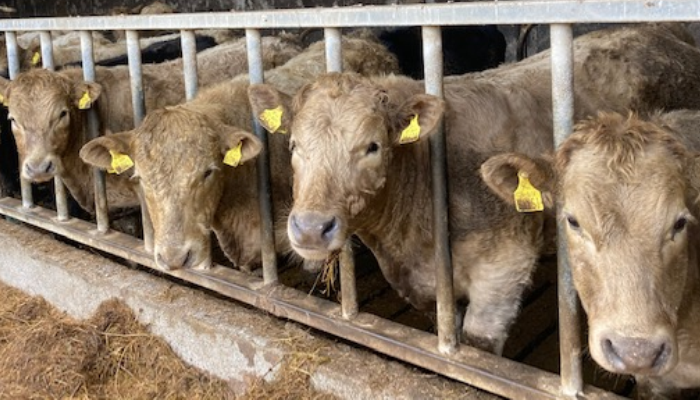
Maximising weanling performance starts with careful preparation before housing, this article outlines the most important checklist items you should have in order.
Weaning
Have calves weaned a month before housing to reduce stress levels and therefore illness. Calves should be on 1kg of concentrate per day for four weeks pre-weaning, and 2kg per day for the two weeks post-weaning, as per the Beef Welfare Scheme.
Pre-housing dose
Dose weanlings four weeks before housing to ensure their lungs are healed from any infection when housed. Use a product with persistency. Consult your local vet in relation to the best plan for your herd. Always read the data sheet for up-to-date information.
Vaccinations
Ensure that weanlings are vaccinated against respiratory diseases such as pneumonia (IBR, RSV, and PI3). Pneumonia can be a major issue after housing due to stress and close confinement. All injectable vaccines should have their course completed a month before housing. Intranasal vaccines are faster acting, but the duration of immunity is shorter. Talk to your vet about a suitable programme for your farm.
Silage testing
The results will determine the quality, energy levels, protein levels, dry matter, and stability of the silage. These all matter because they will be a good indicator of what performance can be expected from the forage on its own. This will determine what level of supplementation may be needed and allow you to make an informed decision.
Ventilation
Ensure housing is well ventilated but not draughty. Proper air circulation reduces the risk of respiratory diseases, especially pneumonia.
Clean and dry bedding
Provide clean, dry bedding (straw or alternative materials) to maintain comfort and reduce the risk of infection.
Space
Ensure there is adequate space for each weanling to lie down (1.5–2.0m² per head) and eat (400–500mm) comfortably. Overstocking can reduce performance and increase stress and disease risk.
Clean and disinfect
Thoroughly clean and disinfect the housing area before bringing in the weanlings to reduce the risk of infection from previous livestock.
Complete maintenance works on sheds
Ensure barriers, gates, pens, plugs, etc., are all working. It is easier and safer to complete these works in daylight and when sheds are empty.
Water
Check that water drinkers are working correctly and detect any leaks. Replace and repair as required to avoid issues at housing.
Tidy your yard
Winter is coming, and with it are dark evenings. Clean the yard to avoid trip hazards. Fix existing lighting, check for any dark spots, and install lighting before winter.