
Maximising sexed semen success
Relative to 2021, the use of sex-sorted semen on Irish dairy farms has increased 400%. To optimise conception rates from this technology, there are several important factors dairy farmers need to consider.
As part of the recent ‘Countdown to Breeding Webinar’, Professor Stephen Butler shared some of the key considerations for maximising success with sex-sorted semen.
“We’ve really had a sudden and marked increase in the usage of sexed semen in Ireland in the last few years,” Professor Butler said.
Using sexed semen on maiden heifers is an obvious choice, particularly when combined with synchrony programmes to reduce heat detection and the drafting of animals that do not visit the yard every day.
“When we think about our heifers in seasonal calving systems,” Professor Butler explained, “they are really on the clock. The first calving is going to occur at 22-24 months of age and that means they need to be pregnant by 13-15 months of age. What really drives this is achieving target weights at housing, turnout and mating start date.”
To concentrate the breeding season, maximise submission rates and to get heifers bred earlier, Teagasc recommends the use of synchrony programmes. Either prostaglandin-based protocols or fixed time AI protocols are effective, with Professor Butler noting that both protocols can be used to incorporate sex-sorted semen into the breeding programme.
When farmers are deciding which animals to target use of sexed semen straws on, Professor Butler said heifers should be prioritised.
“Heifers should be the first port of call. These are generally going to be in the top 50% of the herd for EBI. They should be at target weight, cycling regularly and be showing strong heats on the day of AI. If they are not doing that, then they are not good candidates for sex-sorted semen.”
For cows, he said farmers should select cows that are in the top 50% of the herd for EBI. Young cows, between parity one and four are preferred, and earlier calving cows – at least 50 days in milk at the point of breeding – should be prioritised. Additionally, these cows should have a body condition score of 3 or greater, be cycling regularly, have not had any health problems and should be exhibiting strong bulling activity.
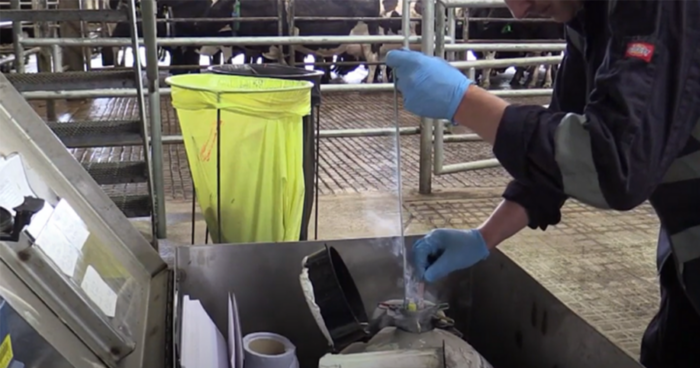
“The timing of AI is critical,” Professor Butler commented, with mating preferrable 14-20 hours after the onset of standing heat. Additionally, straw handling, thawing temperature, thawing time and the time from thawing to insemination are critical for sex-sorted straws.
The above is just a taste of Professor Butler’s presentation on the ‘Countdown to Breeding’ Webinar. For more detailed insights, a full recording is available to view below: